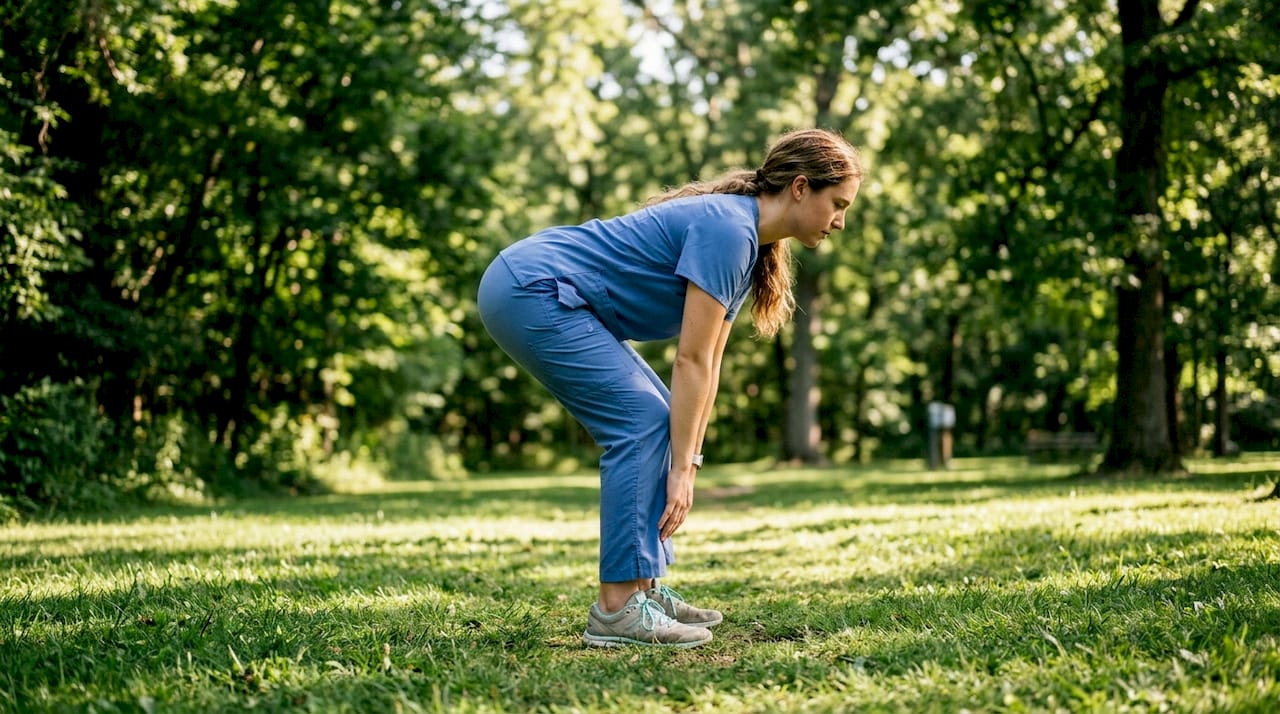
Why Nurses Need Functional Training in 2026
Why Nurses Need Functional Training in 2026
Functional training for nurses is defined as structured practice of real-world movement patterns that build the strength, coordination, and endurance required to perform clinical tasks safely and sustainably. The importance of functional training for nurses has never been clearer: musculoskeletal disorders are a leading cause of absenteeism in nursing, and multimodal ergonomic programs that include movement training significantly reduce back injury rates. Registered nurses face physical demands that rival those of construction workers, yet most nursing education ignores the body mechanics that determine career longevity. Functionalacademy addresses this gap directly, offering board-certified programs that connect functional medicine principles to daily clinical practice.
Why nurses need functional training in 2026
The case for functional training in nursing is built on injury data, career sustainability, and patient outcomes. Muscle mass decline begins at age 25, and nurses who do not train the movement patterns they use at work accumulate cumulative damage that shortens careers. Functional training corrects this by targeting the specific motions nurses repeat every shift: lifting, pivoting, bending, and sustained standing.
The standard industry term for this approach is “functional movement training,” which differs from general fitness in one critical way. It trains multiple muscle groups together in patterns that mirror real tasks, not isolated exercises on a machine. A nurse who trains a deadlift pattern builds the same posterior chain strength needed to reposition a patient safely. That direct transfer from training to clinical task is why functional fitness in nursing produces measurable results where generic gym programs do not.
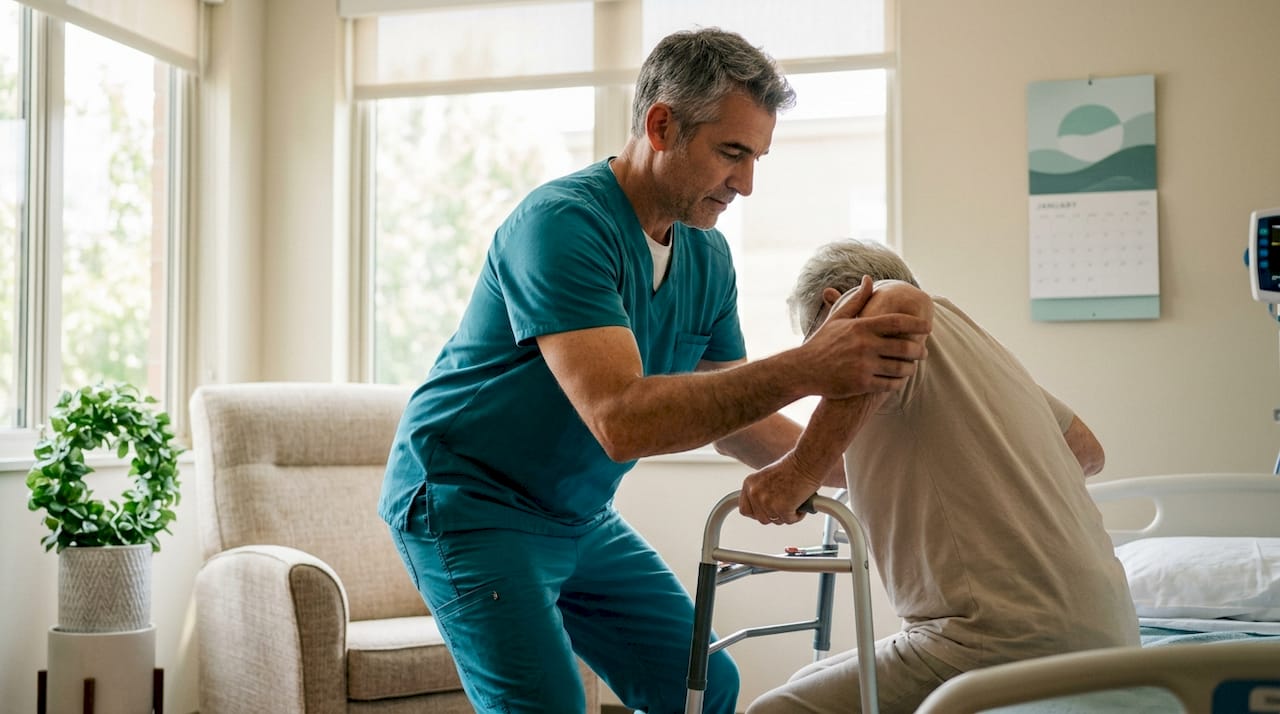
Functionalacademy’s Institute for Functional Nurses recognizes this connection and builds it into its curriculum, giving nurses a framework that applies immediately on the floor.
What are the main benefits of functional training for nurses?
The benefits of functional training in nursing fall into three clear categories: injury prevention, physical performance, and patient safety.
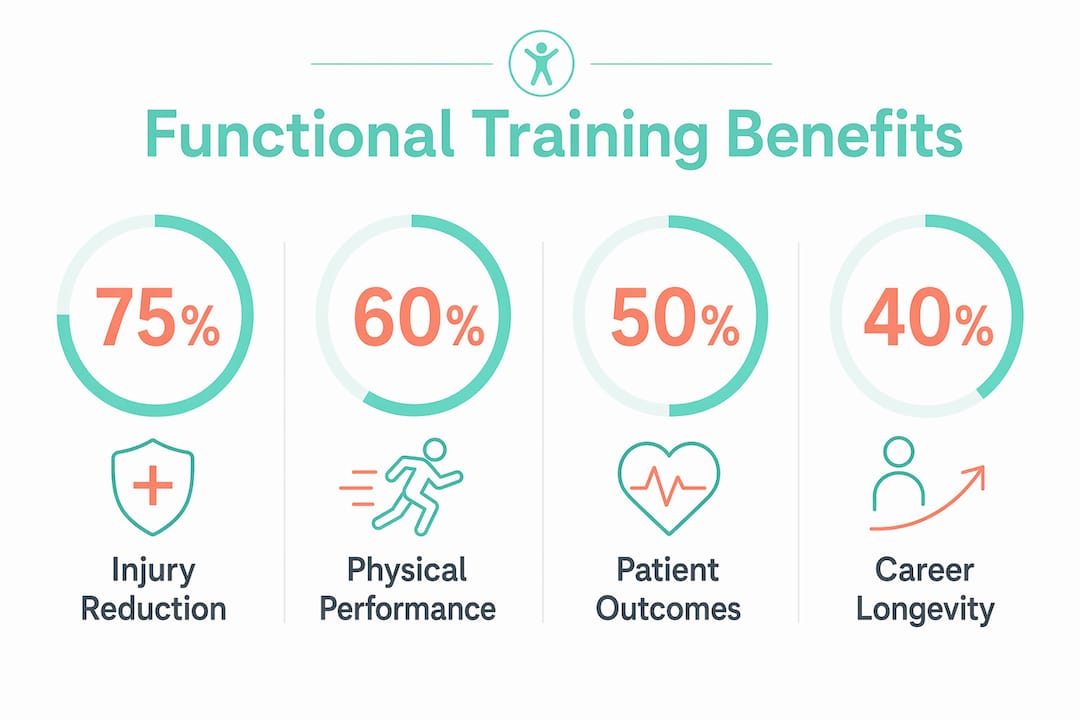
Injury prevention is the most documented benefit. A review of ten studies involving 1,875 nurses confirmed that ergonomic interventions including fatigue-informed training significantly reduce back injury incidence. That scale of evidence means this is not a trend. It is a proven clinical strategy.
Physical performance improves because functional training builds coordination alongside strength. Training multiple muscle groups together reflects the actual physical demands of nursing tasks, which rarely involve a single isolated muscle. A nurse with better hip stability moves more efficiently during a 12-hour shift and arrives at the end of it with more left in reserve.
Patient safety rises when nurses move with control. Poor body mechanics during patient transfers create risk for both the nurse and the patient. Functional training corrects movement patterns before they become habits that cause harm.
- Reduced incidence of lower back and shoulder injuries
- Improved endurance across long shifts
- Safer patient handling and transfer techniques
- Better posture under load, reducing cumulative joint stress
- Faster physical recovery between shifts
Pro Tip: Start with a single movement pattern per week. Practice the hip hinge before every patient lift for two weeks, then add a thoracic rotation drill. Small, consistent changes build durable habits faster than overhauling your entire routine at once.
How does functional training address challenges unique to nursing work environments?
Nursing work environments create physical and cognitive demands that standard fitness programs were never designed to address. Functional training for healthcare professionals works precisely because it is built around those specific demands.
-
Fatigue-informed training builds error prevention. Simulation-based fatigue-informed training improves skill retention and error prevention in high-risk nursing tasks. Fatigue impairs both motor coordination and cognitive processing, which means a nurse who has trained under simulated fatigue conditions responds more safely when real fatigue hits at hour ten of a shift.
-
Human factors engineering reduces environmental risk. Integrating human factors engineering into training teaches nurses to read their environment, adjust equipment height, and position their bodies before a task rather than reacting after strain occurs. This proactive approach prevents the micro-injuries that accumulate into career-ending damage.
-
Real-world motion mastery transfers directly to the floor. Functional training drills the exact patterns nurses use: squat-to-stand for picking up equipment, lateral shuffle for moving around beds, and overhead reach for IV lines. Practicing these patterns with intention builds the neuromuscular memory that protects joints when the same motion happens under load and time pressure.
-
Adaptive decision-making improves under pressure. Nurses who understand their own movement capacity make better real-time decisions during high-acuity tasks. They recognize when a lift requires a second person, when a posture is unsustainable, and when to call for mechanical assistance. That self-awareness is a direct product of functional movement education.
The nursing skills enhancement that comes from addressing these four areas compounds over time. A nurse who trains with these principles in year one of their career builds a physical foundation that protects them in year twenty.
What role does functional nursing play in managing chronic disease and patient rehabilitation?
Functional training extends well beyond nurse self-care. It reshapes how nurses coach patients, lead rehabilitation, and address the chronic disease epidemic driving healthcare costs upward.
Functional nurses provide patient coaching and health advocacy that helps lower healthcare costs and improve chronic disease outcomes. This moves nursing beyond the traditional sick-care model into proactive, individualized care that addresses root causes. A nurse trained in functional principles can design exercise coaching conversations, identify movement deficits in patients, and coordinate with physical therapists using shared clinical language.
Nurse-led pulmonary rehabilitation is one of the clearest examples of this expanded role. Standardized training and certification are required for nurses to lead programs that integrate pharmacological, nutritional, and psychosocial interventions with respiratory therapy. Nurses without functional training competencies cannot fill these roles effectively.
| Functional nursing role | Patient population | Key competency required |
|---|---|---|
| Pulmonary rehabilitation lead | COPD, post-COVID patients | Respiratory therapy integration |
| Chronic disease coach | Diabetes, obesity, hypertension | Individualized exercise prescription |
| Mobility assessment specialist | Post-surgical, elderly patients | Biomechanics and kinetic chain knowledge |
| Interdisciplinary care coordinator | Complex multi-condition patients | Functional movement communication |
Mastering foundational biomechanics enhances nurses’ ability to assess patient mobility, support rehabilitation, and communicate clinical findings accurately. That communication skill matters in interdisciplinary rounds, where a nurse who can describe a patient’s movement deficit in precise terms drives faster, better care decisions.
How can nurses practically incorporate functional training into daily routines?
Practical integration of functional training does not require a gym membership or an hour before your shift. The most effective habits are small, repeatable, and tied directly to tasks you already perform.
- Hip hinge before every lift. Before repositioning a patient or picking up equipment, set your hips back and brace your core. This single habit, practiced consistently, is the most protective movement pattern in nursing.
- Thoracic rotation between tasks. Spend 30 seconds rotating your upper back between patient rooms. Nurses who sit at workstations or lean over beds for extended periods lose thoracic mobility, which forces the lower back to compensate.
- Single-leg balance during charting. Stand on one foot for 30-second intervals while at a standing workstation. This builds the hip stability that protects your knees and lower back during lateral movement.
- Structured recovery exercises post-shift. Proper lifting mechanics, posture awareness, and recovery exercises significantly reduce injury risk and alleviate musculoskeletal pain. A 10-minute post-shift routine targeting the hip flexors, thoracic spine, and shoulders reverses the postural compression of a long shift.
- Continuing education in functional movement. The lifestyle medicine tools available to nurses in 2026 include structured courses that build functional movement competency alongside clinical knowledge.
Pro Tip: Treat your movement habits the same way you treat medication protocols. Write them down, schedule them, and track them. Nurses who document their own physical maintenance are significantly more consistent than those who rely on motivation alone.
Integrating ergonomic and movement-correction habits into daily routines is effective in preventing chronic injuries. The key word is “integrating.” These habits work because they attach to existing clinical routines, not because they require extra time.
Key Takeaways
Functional training is the single most proven strategy for protecting nurse health, extending career longevity, and improving patient outcomes across every clinical setting.
| Point | Details |
|---|---|
| Injury prevention is documented | Ten studies with 1,875 nurses confirm ergonomic and movement training reduces back injury rates. |
| Fatigue training prevents errors | Fatigue-informed simulation training improves skill retention and reduces mistakes in high-risk tasks. |
| Functional nursing expands patient care | Nurses trained in functional principles lead rehabilitation programs and chronic disease coaching. |
| Daily habits outperform gym routines | Small, shift-integrated movement habits build durable protection against cumulative musculoskeletal damage. |
| Certification builds career value | Board-certified functional training competencies increase nurse marketability in a high-demand specialty. |
What I’ve learned after years watching nurses burn out before they should
The most frustrating pattern I see in nursing is this: a nurse spends 15 years delivering exceptional care, then leaves the profession at 42 because their back gave out. Not because they were careless. Because nobody taught them that their body was a clinical tool that required the same maintenance as any other piece of equipment.
Functional training is not a wellness trend. It is a career-sustainability strategy that the nursing profession has been slow to adopt, and that slowness has real costs. The functional movement training principles that protect nurses are the same principles that make them better clinicians. When you understand how a kinetic chain works in your own body, you see it in your patients. You assess mobility differently. You communicate findings more precisely. You become a more complete practitioner.
The nurses I see thriving in 2026 are not the ones who are toughest or most stoic about pain. They are the ones who treated their physical capacity as a professional asset worth protecting from day one. The opportunity to build that foundation is available right now, and the nurses who take it will still be practicing at full capacity when their peers are filing disability claims.
— Lauren
Advance your nursing practice with Functionalacademy
Functionalacademy’s Institute for Functional Nurses offers a fully accredited, board certification program built specifically for registered nurses and healthcare professionals who want to practice at the highest level.
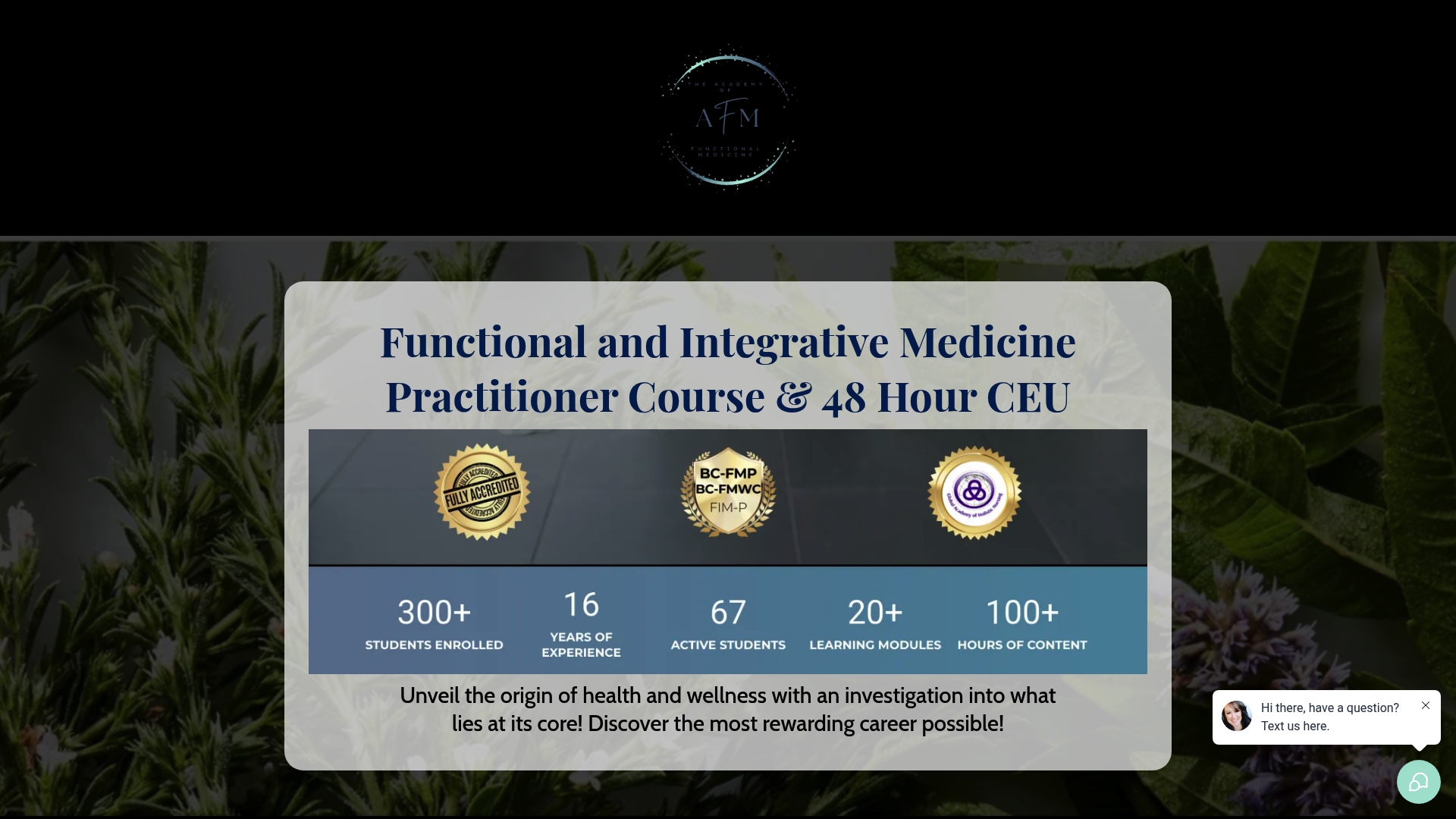
The program delivers evidence-based functional medicine training you can apply immediately, without stepping away from your current role. You will build competency in root-cause clinical thinking, patient coaching, and movement-informed care. Graduates report stronger clinical confidence, greater marketability, and the ability to take on expanded roles in chronic disease management and rehabilitation. This is the credential that positions you for where healthcare is going, not where it has been.
FAQ
What is functional training in nursing?
Functional training in nursing is the practice of building strength, coordination, and endurance through movement patterns that directly mirror clinical tasks. It reduces injury risk and improves physical performance across long shifts.
How does functional training reduce nurse injuries?
Multimodal ergonomic interventions including movement training have been confirmed across ten studies involving 1,875 nurses to significantly reduce back injury incidence. Consistent practice of correct lifting and posture habits prevents the cumulative damage that causes most nursing injuries.
Can functional training improve patient care outcomes?
Yes. Nurses trained in functional movement principles assess patient mobility more accurately, communicate clinical findings more precisely, and lead rehabilitation programs more effectively. These competencies directly improve patient outcomes.
How long does it take to see results from functional training?
Nurses who integrate movement habits into existing clinical routines typically notice reduced fatigue and improved posture within four to six weeks. Injury prevention benefits build over months of consistent practice.
Is board certification in functional nursing worth it in 2026?
Board certification in functional nursing builds clinical competency and career marketability in one of healthcare’s fastest-growing specialties. Functionalacademy’s accredited program is designed to deliver both without requiring nurses to leave their current positions.