What Is Holistic Medicine Explained: a Full Guide
What Is Holistic Medicine Explained: a Full Guide
Holistic medicine is one of the most misunderstood concepts in healthcare today, and that misunderstanding costs people real results. What is holistic medicine explained simply? It is a philosophy of care that treats the whole person, including physical health, mental state, emotional wellbeing, social connections, and spiritual life, rather than isolating a single symptom. It is not anti-science and it is not a rejection of conventional medicine. It is a broader lens for understanding why people get sick and how they truly heal. This guide breaks it all down clearly so you can apply what you learn.
Table of Contents
- Key takeaways
- What is holistic medicine explained at its core
- The five pillars of holistic health
- Sorting out the terminology
- What holistic treatment actually looks like
- Holistic vs. conventional medicine: where each wins
- My honest take on what holistic medicine delivers
- Take your holistic health knowledge further
- FAQ
Key takeaways
| Point | Details |
|---|---|
| Whole-person philosophy | Holistic medicine addresses physical, mental, emotional, social, and spiritual dimensions together, not in isolation. |
| Root cause focus | Practitioners look for underlying drivers of illness rather than treating symptoms alone. |
| Complementary, not replacement | Holistic approaches work alongside conventional medicine, especially for chronic conditions and prevention. |
| Patient is an active partner | Success depends on the patient committing to lifestyle changes and tracking progress daily. |
| Growing mainstream acceptance | Use of complementary approaches among U.S. adults nearly doubled from 19.2% in 2002 to 36.7% in 2022. |
What is holistic medicine explained at its core
Understanding holistic medicine starts with one idea: the body does not work in isolated compartments. A person dealing with chronic fatigue might have a sleep disorder, yes. But they might also be carrying unprocessed grief, eating a diet that spikes inflammation, and living in social isolation. Treat only the fatigue and you miss three of the four drivers.
Holistic medicine traces its roots back thousands of years. Ancient Greek, Chinese, and Ayurvedic traditions all operated from the premise that the mind and body are inseparable. What modern holistic health does is bring that philosophy forward into a scientifically aware framework, one that uses advanced testing, evidence-based nutrition, and personalized care plans alongside or in coordination with conventional treatments when necessary.
The core difference from standard Western care is focus. Conventional medicine excels at acute intervention: setting a broken bone, treating a bacterial infection, stabilizing a heart attack. Holistic medicine asks what came before the crisis. It looks for root causes of chronic illness including lifestyle patterns, nutritional deficiencies, and environmental stressors that slowly erode health over years.
- Treats the whole person, not a single complaint
- Asks WHY the symptom exists, not just WHAT it is
- Builds a long-term wellness plan, not just a short-term fix
- Values prevention as much as treatment
- Respects the patient’s lived experience and personal context
Pro Tip: When evaluating a holistic practitioner, ask directly how they approach root cause analysis. A good practitioner will map the biological, psychological, and social contributors to your condition before recommending any therapy.
The five pillars of holistic health
The five core pillars of holistic health are physical, mental, emotional, social, and spiritual health. These are not five separate boxes. They are five dimensions of one interconnected system, and weakness in any one area pulls down the others.
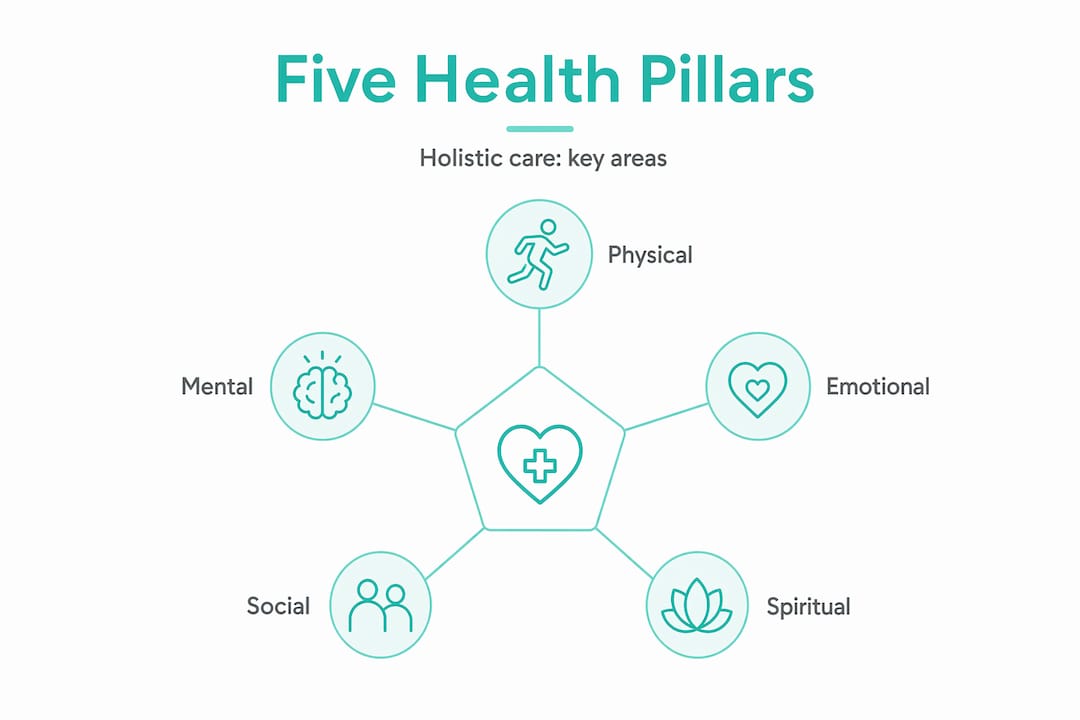
Physical health covers nutrition, sleep, movement, and how the body processes toxins and stress hormones. Mental health includes cognitive function, belief systems, and how a person processes information and adversity. Emotional health goes deeper, covering how you feel and express emotions, manage trauma, and maintain resilience. Social health reflects the quality of your relationships and community. Spiritual health is about purpose and meaning, whether through religion, nature, creativity, or personal values.

Here is why the interconnections matter so much:
| Pillar | What it covers | Example of imbalance |
|---|---|---|
| Physical | Nutrition, sleep, movement | Chronic inflammation from poor diet triggering depression |
| Mental | Cognitive health, beliefs | Anxiety from negative thought patterns disrupting sleep |
| Emotional | Trauma processing, resilience | Unresolved grief suppressing immune function |
| Social | Relationships, community | Isolation raising cortisol and cardiovascular risk |
| Spiritual | Purpose, meaning, values | Lack of purpose contributing to burnout and chronic fatigue |
Research in psychoneuroimmunology, the field studying how the nervous system and immune system communicate, confirms that emotional states directly alter immune response. Chronic stress elevates cortisol, which suppresses white blood cell activity. Social isolation raises cardiovascular risk at rates comparable to smoking 15 cigarettes a day. These are not metaphors. They are measurable biological pathways.
Pro Tip: Start with a pillar audit. Rate each of the five areas from 1 to 10 and identify which is pulling your overall health down. Most people are surprised to find the lowest score is rarely the one they originally went to the doctor for.
Sorting out the terminology
If you have ever heard the terms alternative medicine, complementary medicine, integrative medicine, and functional medicine all used interchangeably, you are not alone. They mean different things, and getting them straight changes how you navigate your care.
Complementary medicine is used alongside conventional treatments, while alternative medicine is used instead of them. That distinction is significant. A cancer patient using acupuncture to manage chemotherapy side effects is using complementary medicine. A patient who refuses chemotherapy entirely in favor of herbal therapy is using alternative medicine. Holistic medicine, practiced responsibly, almost always falls into the complementary category.
Integrative medicine is a term used in mainstream healthcare settings to describe programs that formally combine conventional and evidence-based complementary approaches. Major academic medical centers now run integrative medicine clinics. This represents one of the most significant shifts in American healthcare in the past two decades.
Functional medicine deserves its own mention because it is the approach most aligned with true holistic health principles in a clinical setting:
- It uses systems biology to understand how the body’s networks interact
- It runs advanced diagnostics like micronutrient panels, hormone profiles, and gut microbiome assessments
- It designs personalized protocols based on individual biochemistry, not population averages
- It treats chronic conditions like type 2 diabetes, autoimmune disease, and thyroid dysfunction at the root
Many patients initially misunderstand holistic medicine as inherently anti-conventional. The reality is that responsible holistic and functional medicine practitioners refer patients for conventional care when needed and collaborate with specialists. The goal is never ideological purity. The goal is the best outcome for the patient.
What holistic treatment actually looks like
You walk into a holistic or functional medicine appointment. The first thing you notice is the time. Initial visits can run 60 to 90 minutes and cover ground that a typical 15-minute primary care visit never touches: your sleep history, diet patterns, stress load, relationship quality, childhood health history, environmental exposures, and spiritual practices.
That depth of assessment is the foundation everything else is built on. Here is what a holistic treatment plan might include:
- Nutritional therapy. Personalized eating protocols based on lab work, food sensitivities, and metabolic patterns. Not generic healthy eating advice.
- Mind-body practices. Meditation, breathwork, yoga, or biofeedback to regulate the nervous system and reduce stress hormone output.
- Acupuncture. Used for pain management, hormone regulation, and nervous system support. Well-researched for certain conditions including chronic low back pain and migraines.
- Herbal and botanical medicine. Adaptogenic herbs like ashwagandha for stress response or berberine for blood sugar regulation. Always reviewed against any conventional medications.
- Lifestyle restructuring. Sleep hygiene, movement programming, and stress reduction as non-negotiable pillars of the treatment plan, not afterthoughts.
The benefits of holistic medicine are clearest in chronic conditions where conventional care manages symptoms without resolution: autoimmune conditions, metabolic dysfunction, chronic pain, anxiety, and burnout. That said, holistic health success depends heavily on patient engagement. You cannot outsource this process. The practitioner maps the road, but you drive.
One practical disadvantage to acknowledge: access and cost. Holistic and functional medicine visits are often not covered by insurance, and licensed naturopathic doctors undergo 8 to 11 years of training, which is reflected in their fees. Vet practitioners carefully and look for board-certified credentials before committing to a protocol.
Pro Tip: Ask any holistic practitioner for evidence-based references supporting their recommended therapies. A good practitioner welcomes that question. One who deflects it is a red flag.
Holistic vs. conventional medicine: where each wins
Neither model is complete without the other. That is the honest position, and it is backed by outcomes data. Holistic medicine fills gaps in prevention, root cause work, and chronic disease management. Conventional medicine is unmatched in emergencies, acute infections, trauma, and surgical intervention.
| Factor | Conventional medicine | Holistic medicine |
|---|---|---|
| Best for | Acute illness, emergencies, surgery | Chronic disease, prevention, root causes |
| Approach | Diagnose and treat symptoms | Identify and address underlying drivers |
| Visit style | Short, focused, condition-specific | Long, comprehensive, whole-person assessment |
| Patient role | Passive recipient of care | Active partner in the care plan |
| Use of diagnostics | Standard panels and imaging | Advanced functional testing |
The most forward-thinking care models today combine both. An integrative oncology program might use chemotherapy alongside acupuncture for nausea management and nutrition therapy to reduce inflammatory markers. Combining holistic with conventional medicine targets underlying factors like inflammation or nutrient deficiencies rather than suppressing symptoms alone.
The power dynamic in holistic healthcare is also different. Patients share responsibility in setting goals and designing care plans based on their lifestyle and values. That is a profound shift from the traditional model where the doctor dictates and the patient complies.
My honest take on what holistic medicine delivers
I have spent years watching patients cycle through conventional care with managed symptoms but no real resolution, and then discover holistic and functional medicine. The transformation is not always fast. That is the part nobody warns you about enough.
What I have learned is that people who come into holistic medicine expecting a passive experience, where they take a supplement the way they took a pill, get frustrated and quit. The patients who thrive are the ones who genuinely accept that their daily choices are medicine. Sleep is medicine. Food is medicine. The quality of your relationships is medicine.
What strikes me most about this field is how it forces patient engagement in a way conventional medicine rarely does. There is no shortcut, and honestly, that is its greatest strength. A person who takes ownership of their health at that level does not just manage their condition. They often change the trajectory of their life.
My strongest advice: do not wait until the conventional system has exhausted its options. Explore the Institute for Functional Nurses if you are a healthcare professional ready to practice this way. And if you are a patient, find a practitioner who sees you as a partner, not a case number.
— Lauren
Take your holistic health knowledge further
If this article sparked something in you, whether you are a healthcare professional wanting to practice with more depth or someone passionate about whole-person wellness, the next step is education. Functionalacademy’s Institute for Functional Nurses offers a fully accredited, board-certification-eligible program built precisely around the principles covered here.
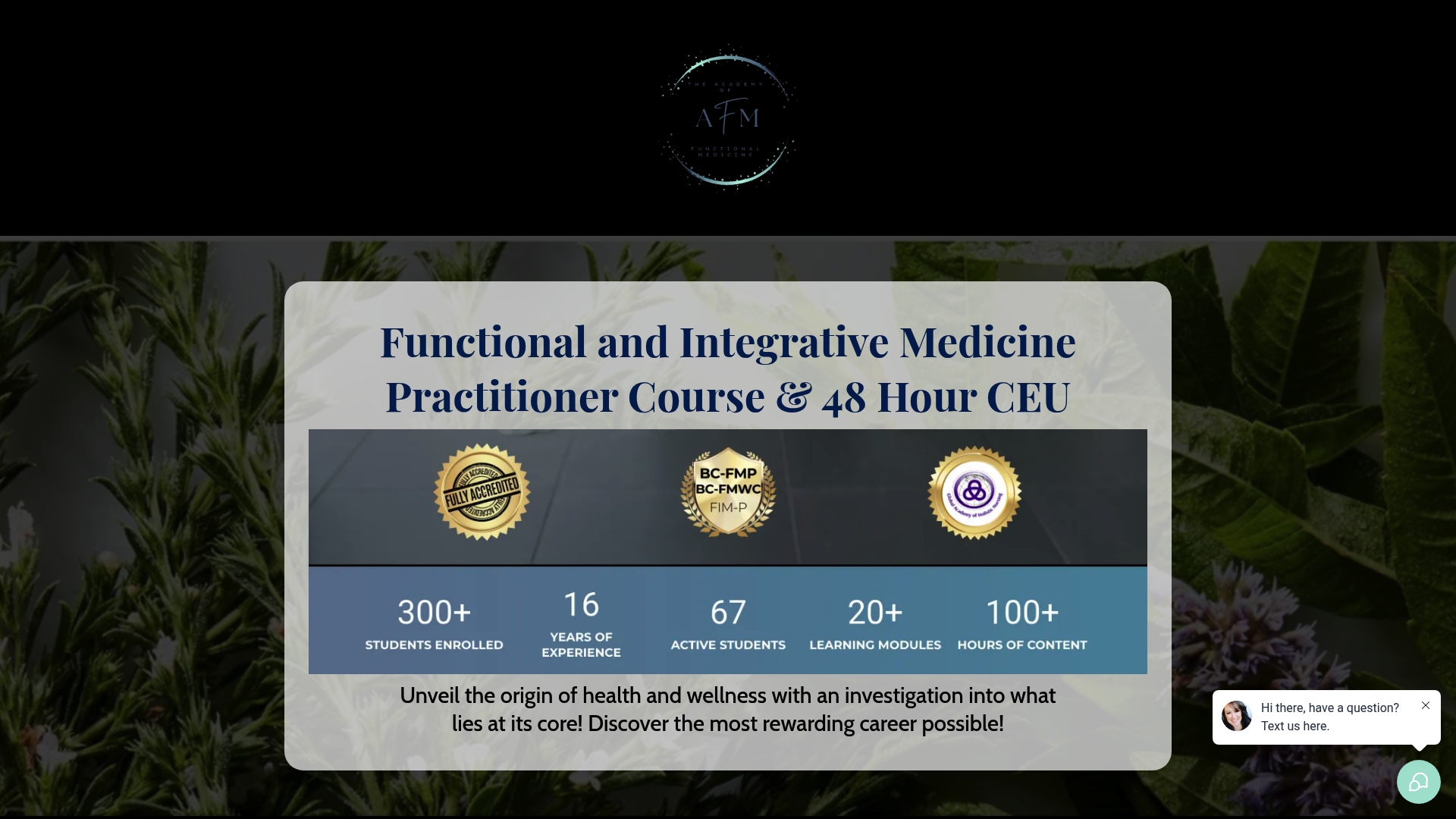
Functionalacademy’s programs teach practitioners to identify root causes, apply evidence-based functional medicine protocols, and deliver the kind of care that actually changes patient outcomes long-term. The curriculum blends clinical application with practical knowledge you can use immediately in your existing practice. If you are ready to stop managing symptoms and start transforming health, explore what Functionalacademy has built for professionals who think the way you do.
FAQ
What is holistic medicine in simple terms?
Holistic medicine is an approach to healthcare that treats the whole person, addressing physical, mental, emotional, social, and spiritual health together rather than focusing on a single symptom or disease.
How does holistic medicine differ from alternative medicine?
Complementary and holistic medicine work alongside conventional treatments, while alternative medicine replaces them. Most responsible holistic practitioners coordinate with conventional care rather than rejecting it.
What conditions does holistic medicine treat best?
Holistic medicine shows the strongest results with chronic conditions like autoimmune disease, metabolic dysfunction, chronic pain, and burnout, where conventional care manages symptoms without addressing root causes.
Is holistic medicine scientifically supported?
Yes, many holistic practices including nutrition therapy, acupuncture, and stress management are backed by clinical research. The integrative medicine overview within major academic medical centers reflects growing mainstream acceptance and evidence-based application.
How do I find a qualified holistic practitioner?
Look for board-certified credentials, verify training background, and ask how they approach root cause analysis. Licensed naturopathic doctors typically complete 8 to 11 years of education, which is a strong baseline for credentialing.