
Integrative Wellness Coaching Methods That Actually Work
Integrative Wellness Coaching Methods That Actually Work
Integrative wellness coaching is defined as a whole-person approach that treats physical, mental, emotional, and spiritual health as interconnected layers, not separate problems to fix one at a time. Unlike conventional health advice that targets a single symptom or behavior, integrative wellness coaching methods pull together nutrition, sleep, movement, relationships, purpose, and stress into one personalized plan. The industry term for this model is integrative health coaching, and it draws on proven behavior-change science including motivational interviewing, bio-individuality, and the primary food framework. If you want real, lasting change, this is where to start.
What are the core principles of integrative wellness coaching?
Integrative health coaching is built on the idea that no single dimension of health operates in isolation. Physical fatigue can trace back to emotional stress. Poor nutrition can amplify anxiety. Spiritual disconnection can undermine every other healthy habit you try to build. Whole-person health coaching addresses all of these dimensions simultaneously, which is what separates it from conventional disease management.
The foundational principles that guide these holistic coaching techniques include:
- Bio-individuality: No two people thrive on the same plan. What works for one person’s metabolism, stress response, or sleep schedule may actively harm another. A skilled coach treats your unique biology, history, and lifestyle as the starting point, not a template.
- Primary food framework: This concept, central to integrative coaching, holds that non-nutritional nourishment, including career satisfaction, relationships, physical activity, and spiritual practice, feeds you just as powerfully as what is on your plate. Neglecting these areas creates a hunger that no diet can satisfy.
- Patient-centered collaboration: The coach does not prescribe. The coach partners. Empowering patient autonomy means aligning every goal with the client’s own values, not the coach’s preferences.
- Empowerment over dependency: The goal is to build your capacity to make informed decisions independently, not to create reliance on a coach indefinitely.
Pro Tip: Before your first coaching session, write down three areas of your life where you feel consistently drained. Bring that list. It tells a coach more about your primary food gaps than any intake form.
These principles are not abstract philosophy. They directly shape which tools a coach reaches for and how every session is structured.
Which practical techniques are used in integrative wellness coaching?
The specific methods that define integrative wellness coaching methods in practice are grounded in health-behavior-change theory. Motivational interviewing, goal-setting, and problem-solving form the technical core of most evidence-based programs. Here is how each plays out in a real coaching relationship:
- Motivational interviewing (MI): MI is not casual conversation. It is a structured process that resolves ambivalence and helps clients find their own reasons for change, then builds a concrete action plan around that motivation. Originally developed for addiction treatment, MI now drives behavior change across chronic disease, weight management, and mental health coaching.
- Collaborative goal-setting: A coach and client co-create goals that are specific, time-bound, and personally meaningful. The client’s ownership of the goal is what makes follow-through possible. Generic targets like “eat healthier” get replaced with “prepare three home-cooked dinners per week using ingredients from the farmers market.”
- Reflective listening and powerful questioning: A coach trained in reflective listening mirrors back what a client says in a way that deepens self-awareness. Powerful questions like “What would your life look like if this problem disappeared?” open doors that direct advice never could.
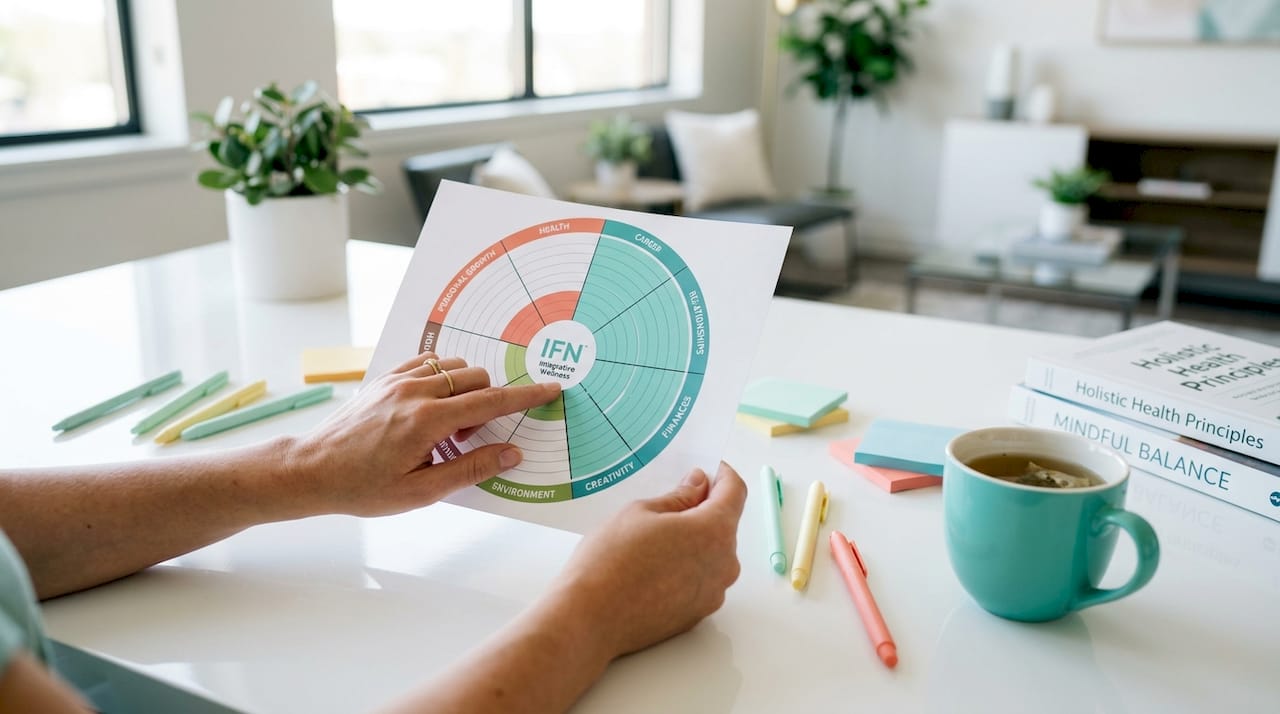
- Lifestyle assessments: A thorough integrative assessment covers nutrition, sleep quality, movement patterns, relationship health, sense of purpose, and physical environment. This 360-degree view reveals the root causes that a single-focus approach misses entirely.
- Mind-body integration: Techniques like breathwork, body scanning, and mindfulness are woven into coaching sessions to help clients recognize how emotional states manifest physically, and vice versa.
Pro Tip: Ask your coach to use the “circle of life” assessment tool in your first session. It maps all wellness dimensions visually so you can see at a glance where your energy is leaking.
Programs like the University of Utah Health’s 15-week coaching certificate train practitioners in exactly these methods, combining practical coaching sessions with mentoring to build real collaboration and goal-setting skills. The quality of the coach’s training matters enormously. High-quality coaching interventions correlate with a 92% positive treatment effect compared to 63% for low-quality programs. That gap is not small. It represents the difference between transformation and wasted effort.
How to structure an integrative wellness coaching program for personal use
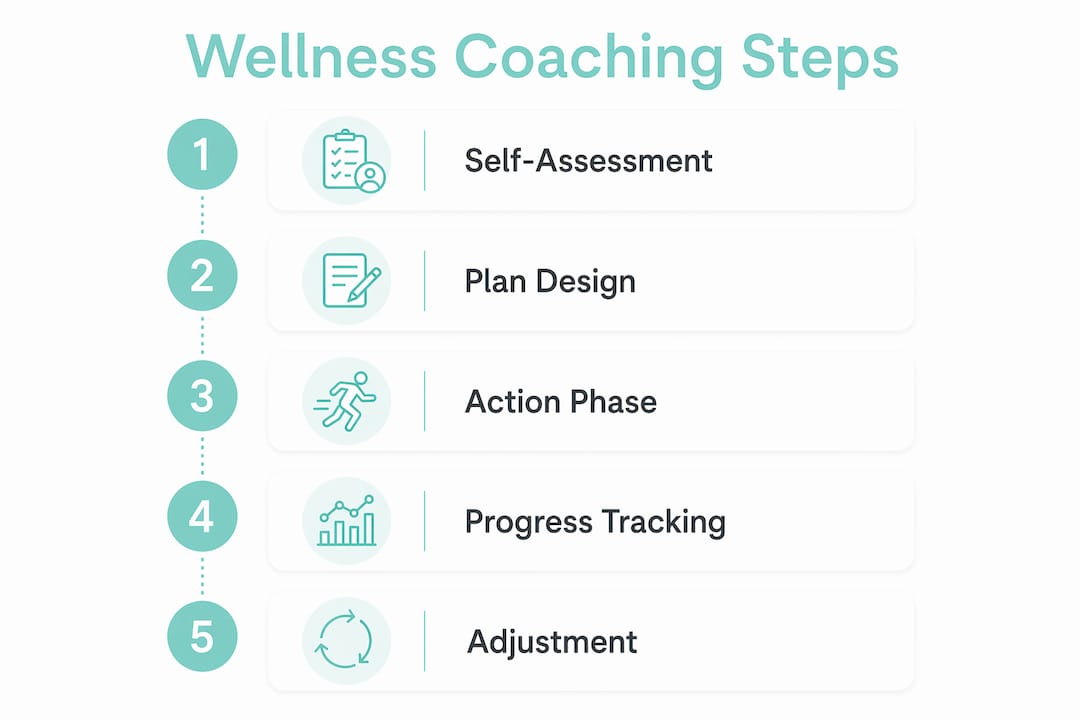
Whether you are working with a certified coach or building your own wellness framework, structure is what turns good intentions into measurable results. The table below maps the key phases of an integrative program against what each phase requires from you.
| Phase | What you do | What to expect |
|---|---|---|
| Self-assessment | Complete a lifestyle audit covering sleep, nutrition, movement, relationships, and purpose | Clarity on your biggest leverage points for change |
| Goal design | Co-create 2 to 3 specific, values-aligned goals with your coach | A written plan with clear milestones and timelines |
| Implementation | Execute daily habits tied to each wellness dimension | Early friction followed by growing ease as habits compound |
| Progress review | Track outcomes weekly and adjust the plan based on real data | Flexibility to pivot without abandoning the overall direction |
| Sustained engagement | Use tools like journaling, community support, and accountability check-ins | Long-term behavior change that does not require constant willpower |
The self-assessment phase is where most people underinvest. Skipping it means building a plan on assumptions rather than evidence. A thorough assessment should take at least one full session and cover every dimension of the primary food framework, not just diet and exercise.
Designing your plan means choosing one or two actions per wellness domain rather than overhauling everything at once. Research on lifestyle coach satisfaction shows that ease of implementing advice increases significantly between the initial consultation and follow-up, meaning the plan gets easier as you build momentum. Start narrow, then expand.
Monitoring progress requires honest tracking. A simple weekly journal that rates energy, mood, sleep quality, and adherence to your goals gives you the data to make smart adjustments. Flexibility is not failure. Adjusting a plan based on real feedback is exactly what integrative coaching is designed to do.
For those applying these methods in home-based care settings, personalized home care plans offer a practical model for extending nutrition and lifestyle coaching beyond the clinic and into daily life.
What are common challenges in integrative wellness coaching?
Even the best-designed coaching program runs into real-world friction. Knowing the most common obstacles in advance puts you ahead of them.
- Ambivalence about change: Most people want the outcome but resist the process. Motivational interviewing exists precisely to address this. A skilled coach does not push through resistance. The coach explores it, which is what turns “I know I should” into “I actually want to.”
- Overwhelm from multiple dimensions: Addressing physical, emotional, mental, and spiritual health simultaneously can feel paralyzing. The fix is sequencing. Identify the one dimension with the most leverage and start there. Progress in one area creates momentum that spills into others.
- Access and logistics: Real-world barriers like food access, time constraints, and lack of social support derail even motivated clients. A produce prescription program studied through the RE-AIM framework found that flexible delivery options and individual counseling were critical for sustained engagement. The lesson: your coaching plan must account for your actual life, not an idealized version of it.
- Narrow focus and burnout: Coaches and clients who fixate on one dimension, usually nutrition or exercise, while ignoring relationships, purpose, or sleep, often burn out or plateau. The integrative model works because it distributes the load across multiple wellness levers.
- Lack of social support: Social connection and environment are not soft factors. They are structural requirements for sustained behavior change. Build your support network deliberately, whether that means a coaching group, an accountability partner, or a community program.
The health coach scope of practice also matters here. Knowing what a coach can and cannot address helps you set realistic expectations and seek additional professional support when a challenge falls outside coaching boundaries.
Key takeaways
Integrative wellness coaching works because it addresses the root causes of poor health across physical, emotional, mental, and spiritual dimensions simultaneously, using proven methods like motivational interviewing and bio-individualized goal-setting.
| Point | Details |
|---|---|
| Whole-person focus | Address all wellness dimensions together, not one at a time, for lasting results. |
| Motivational interviewing | Use structured MI to resolve ambivalence and build client-owned action plans. |
| Primary food framework | Non-nutritional factors like relationships and purpose are as vital as diet. |
| Coaching quality matters | High-quality programs produce a 92% positive effect vs. 63% for low-quality ones. |
| Account for real-world barriers | Build social support and logistical flexibility into every coaching plan from day one. |
Why integrative coaching changed how I think about wellness
I spent years watching people follow technically perfect wellness plans and still fail to sustain them. The plans addressed calories, macros, and exercise frequency with precision. What they missed was everything else: the job that was draining the client’s will to live, the marriage that was quietly eroding their sleep, the absence of any sense of purpose beyond getting through the week.
Integrative coaching reframed the entire problem for me. The body is not a machine that breaks down in isolated components. It is a system, and systems respond to the whole environment, not just the part you are currently fixing. When I started applying the primary food framework and motivational interviewing together, the results were not just better. They were categorically different. Clients stopped white-knuckling their habits and started building lives they actually wanted to live inside.
The uncomfortable truth is that most wellness programs fail not because of bad information but because they ignore the person holding the information. Integrative coaching puts the person back at the center. That is not a soft, feel-good idea. It is the most evidence-based thing you can do.
— Lauren
Ready to build real expertise in integrative wellness coaching?
If this approach resonates with you, the next step is formal training that goes beyond surface-level wellness advice.
Functionalacademy’s Institute for Functional Nurses offers a fully accredited, board-certification-eligible program built for medical professionals who want to apply integrative and functional medicine principles in real clinical settings. The program blends evidence-based strategy with practical application so you can implement these methods without rebuilding your entire practice from scratch. You will graduate with the skills, credentials, and confidence to deliver the kind of personalized, whole-person care that actually moves the needle on patient outcomes. Learn more about functional medicine outcomes and what this training can do for your practice.
FAQ
What is integrative wellness coaching?
Integrative wellness coaching is a whole-person health approach that addresses physical, mental, emotional, and spiritual health as interconnected systems. It uses methods like motivational interviewing, bio-individualized goal-setting, and the primary food framework to support sustained behavior change.
How does motivational interviewing work in wellness coaching?
Motivational interviewing is a structured process that helps clients identify their own reasons for change and resolve ambivalence, then builds a concrete, personalized action plan around that motivation. It goes well beyond reflective conversation to produce measurable commitment and follow-through.
What is the primary food framework in integrative coaching?
The primary food framework holds that non-nutritional factors, including career satisfaction, relationships, physical activity, and spiritual practice, nourish health as powerfully as diet. Neglecting these areas creates deficits that no eating plan alone can correct.
How do I know if a wellness coach is high quality?
High-quality coaching programs are defined by coach training length, use of behavior-change techniques, and formal qualifications. Research shows that high-quality interventions produce a 92% positive treatment effect compared to 63% for low-quality programs, so credentials and methodology matter significantly.
Can I apply integrative coaching methods on my own?
Yes. Start with a full lifestyle self-assessment covering sleep, nutrition, movement, relationships, and purpose. Then design two to three specific, values-aligned goals and track your progress weekly. Working with a certified coach accelerates results, but the framework itself is accessible to anyone willing to apply it consistently.