Top 4 instituteforfunctionalnurses.com Alternatives 2026
Top 4 instituteforfunctionalnurses.com Alternatives 2026
Finding a functional medicine certification training that delivers credible clinical hours, actionable protocols, and direct business support is confusing for nurses who want to open a private practice or expand their clinical scope. Many programs hide tuition costs, require heavy time commitments with inflexible scheduling, or lack targeted support for nurse-led business models. This comparison focuses on accreditation, curriculum depth, and practical guidance so you can select a certification that fits your nursing background and independent practice goals.
Table of Contents
- Institute for Functional Nurses
- Functional Medicine Coaching Academy
- Integrative and Functional Nutrition Academy
- Institute for Functional Nursing
- Comparison of Functional Medicine Certification Options
Institute for Functional Nurses
At a Glance
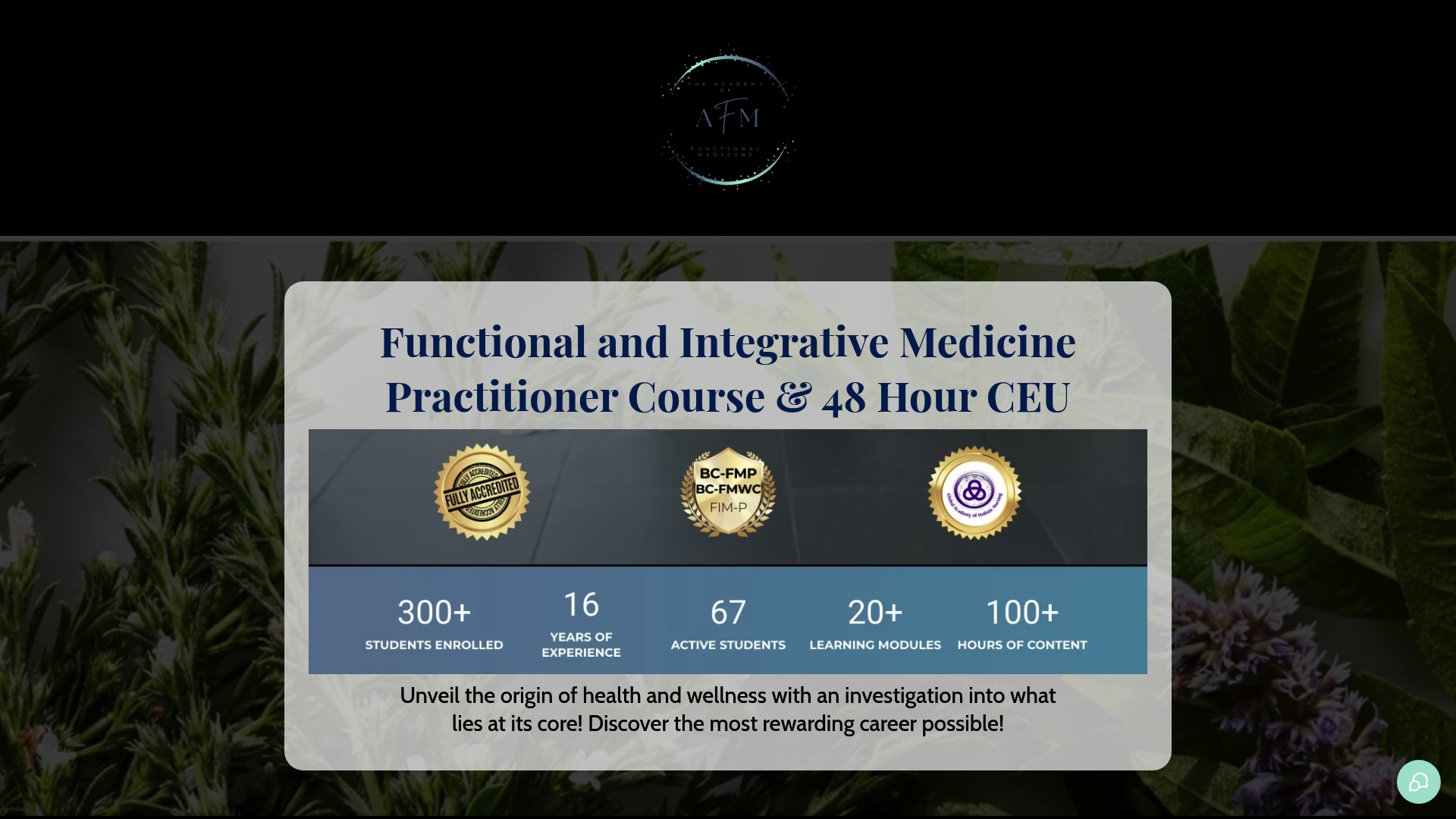
The Institute advertises 48 contact hours/CEUs for its core certification courses, a concentrated package aimed at clinicians juggling shifts and study. The program pairs clinical modules with business coaching designed for nurses building independent practices.
Core Features
- 48 contact hours/CEUs for certification pathways that fit part-time study schedules.
- Practical, evidence-based clinical modules covering gut health, autoimmune conditions, and hormone optimization.
- FIM-P, BC-FMP, BC-FMWC personalized certification tracks for formal credentialing.
- Business and marketing coaching tailored to nurse entrepreneurs who want to open or grow a private practice.
- The Academy advertises a fully accredited Board Certification pathway available online for medical professionals.
Key Differentiator
The Institute combines nurse-focused functional medicine training with explicit practice-building support. That mix helps nurses translate clinical skills into billable services rather than leaving business development as an afterthought. Clinical content emphasizes root-cause assessment alongside case-based application for day-to-day use.
Pros
- Offers direct clinical application. Course material includes real-world case studies so you can map new protocols to existing patient panels quickly.
- Flexible, self-directed learning fits shift work and on-call schedules without fixed classroom hours.
- Supports independent practice growth by teaching both clinical modules and patient acquisition strategies.
- Business coaching reduces guesswork on pricing, service packaging, and referral pathways for nurse-led clinics.
- Recognized certifications bolster credibility when applying for functional medicine roles or marketing specialty services.
Cons
- The vendor provides limited pricing detail; course fees are not published and the programs are likely to require a meaningful financial investment.
Who It’s For
Registered nurses, nurse practitioners, and licensed healthcare clinicians who want to adopt functional medicine methods and build a nurse-led practice. Also suited to practitioners seeking credentialed certification paths that pair clinical training with practice management guidance.
Unique Value Proposition
Pairing that 48-hour certification structure with targeted business coaching changes the economics of training. Instead of standalone CME hours, you get a workflow that teaches a clinical protocol and then teaches how to package it as a marketable service. The vendor’s marketing materials state graduates experience increased competency and marketability when they apply these combined skills.
Real World Use Case
A registered nurse completes the 48-hour certification, applies case-study protocols for autoimmune and hormonal patients, and uses the included marketing coaching to define a niche, set service fees, and launch a private practice. Early referrals and structured intake reduce the typical ramp time.
Website: https://functionalacademy.org
Functional Medicine Coaching Academy
At a Glance
FMCA reports it is approved by the NBHWC and UKIHCA and developed in collaboration with the Institute for Functional Medicine. The program mixes functional medicine theory with coaching methods so graduates can work alongside clinicians, in private practice, or inside corporate wellness teams.
Core Features
- Accredited certification developed with the Institute for Functional Medicine, pairing clinical frameworks and coaching practice.
- Curriculum that covers nutrition, positive psychology, mind-body medicine, and coaching science across modular units.
- A hybrid learning model that blends online coursework with live coaching demonstrations and practice sessions.
- An active community and alumni network for peer support, case review, and career referrals.
- Multiple approvals and industry recognitions cited in the program materials.
Key Differentiator
Built with the Institute for Functional Medicine and carrying the approvals mentioned above, FMCA focuses on training coaches to apply functional medicine principles directly in client work. The curriculum emphasizes behavior change techniques and coaching skill development rather than only clinical theory.
Pros
- Industry-recognized credential. The partnership with established institutions gives graduates a credential that many clinics and wellness employers recognize.
- Practical skill focus. Live coaching demonstrations and practice labs move learners from theory to client-ready coaching techniques.
- Strong peer network. The alumni community supports referrals, supervision, and continuing professional development after certification.
- Flexible pacing. Self-paced elements let working professionals fit coursework around clinic shifts and patient schedules.
- Clear pathway to credentialing. The approvals above open routes to NBHWC-aligned roles and registry opportunities.
Cons
- Users report the Canvas learning platform can be hard to navigate for some learners, which adds friction to course progress.
- The volume of modules is heavy; several students say content would benefit from tighter editing or bite-sized delivery.
- The program structure can be demanding for learners without a background in health sciences or digital study skills.
When It May Not Fit
If you want a short, light continuing education unit or a single-module certificate, FMCA is likely more than you need. The course workload and platform orientation require time and some comfort with online learning.
If your priority is a quick credential without live practice hours, look elsewhere. The program presumes you will commit to supervised coaching practice and cohort interaction.
Who It’s For
Healthcare professionals, nutritionists, and aspiring health coaches who want a credential that positions them to collaborate with clinicians and lead lifestyle-based care. Best for learners ready to invest time in skill practice and peer supervision.
Real World Use Case
A registered nurse adds FMCA certification to expand her outpatient practice. She uses coaching techniques to help patients implement dietary and sleep changes, documents outcomes for the referring physician, and receives client referrals through the alumni network.
Pricing
The vendor lists pricing as “Not applicable — informational only.” Prospective students should contact the program directly for current tuition, cohort schedules, and any scholarship or payment options.
Website: https://functionalmedicinecoaching.org
Integrative and Functional Nutrition Academy
At a Glance
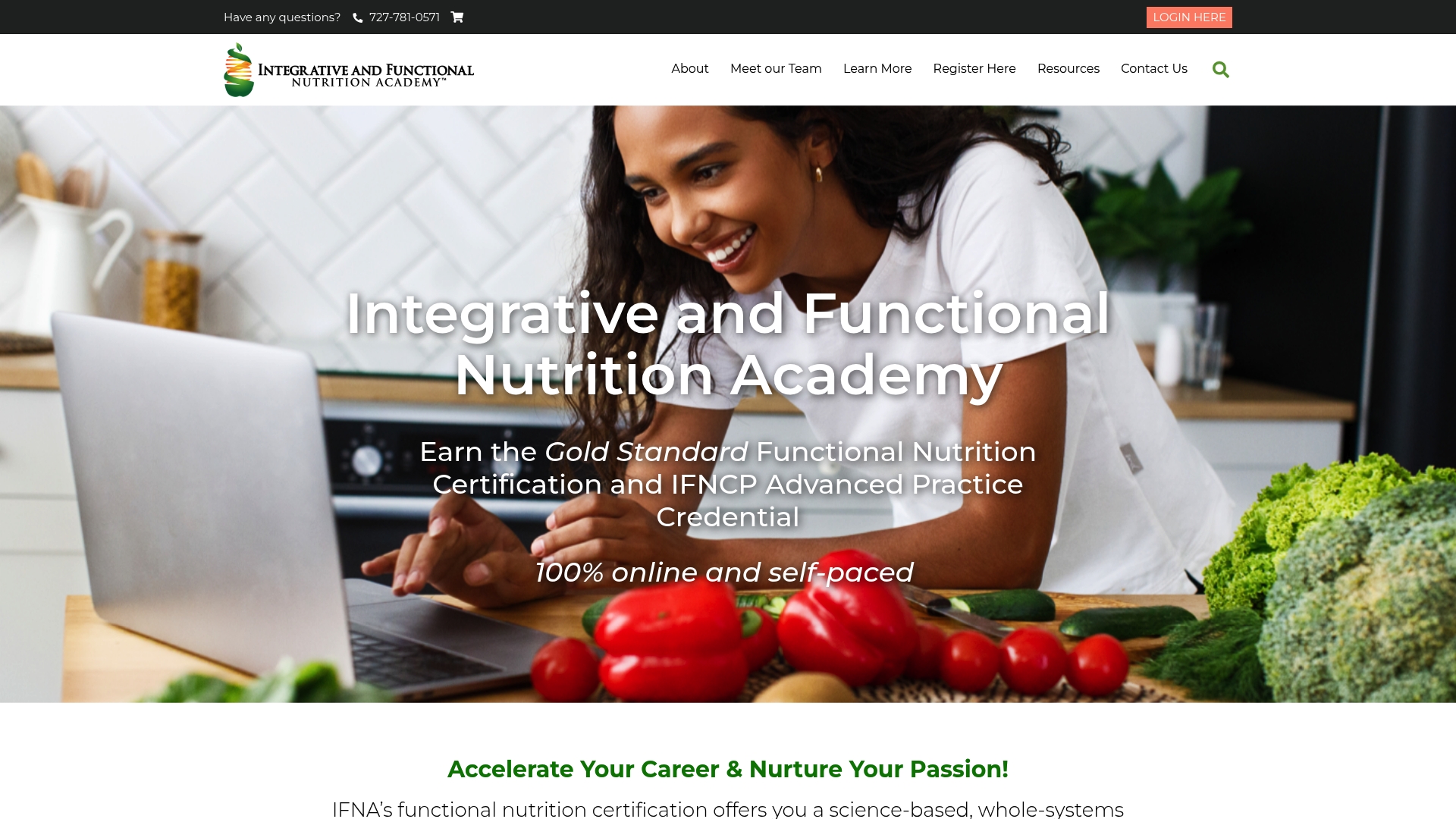
The program includes an IFNCP advanced practice credential, which the vendor says is recognized by leading healthcare institutions. The curriculum is 100% online and self paced, with pathways for foundation training, advanced certification, and continuing education.
Core Features
- 100% online and self paced modules that let clinicians study around clinic hours.
- Access to clinical protocols and laboratory tools for case workups and treatment planning.
- Multiple training paths: foundational coursework, advanced IFNCP preparation, and continuing education units.
- Mentoring programs available in both individual and group formats to support clinical application.
Key Differentiator
The program stacks a credential path with clinical resources and mentoring so clinicians can move from theory to applied care within the same provider. That credential claim above is the organizing element; the course material and mentoring are built to support credential completion and clinical use.
Pros
- Flexible study model fits clinicians balancing patient loads and family life; modules are self paced and accessible anywhere.
- Clinical resource set includes lab interpretation tools and treatment protocols that reduce the guesswork when applying functional nutrition in practice.
- Mentoring options help convert coursework into documented clinical experience rather than leaving trainees to figure out implementation alone.
- The program attracts learners from multiple professions, so conversations and case examples reflect dietitians, physicians, NDs, and health coaches.
- The IFNCP pathway gives a credential clinicians can reference when marketing specialty services.
Cons
- The self paced format demands strong self motivation; dropped progress is common for learners who prefer cohort pacing.
- Cost can be a barrier for some clinicians, despite available payment plans and tiered pathways.
- Content and credentialing are aimed at professionals; the curriculum does not target general consumer education.
When It May Not Fit
If you are a casual learner looking for basic meal plans or nonclinical nutrition tips, this program is not aimed at you. Also avoid this provider if you need instructor paced cohorts or free public-facing content rather than professional certification.
Who It’s For
Healthcare practitioners who want to add functional nutrition to their diagnostic and treatment toolkit. Typical students are dietitians, physicians, naturopathic doctors, and clinical health coaches seeking credentialed training that supports evidence informed clinical practice.
Real World Use Case
A registered dietitian completes the IFNA pathway to specialize in root cause analysis and targeted nutritional therapies. After finishing the credential and mentoring, the clinician integrated lab-guided protocols into visits and expanded referral conversations with primary care colleagues.
Website: https://ifnacademy.com
Institute for Functional Nursing
At a Glance
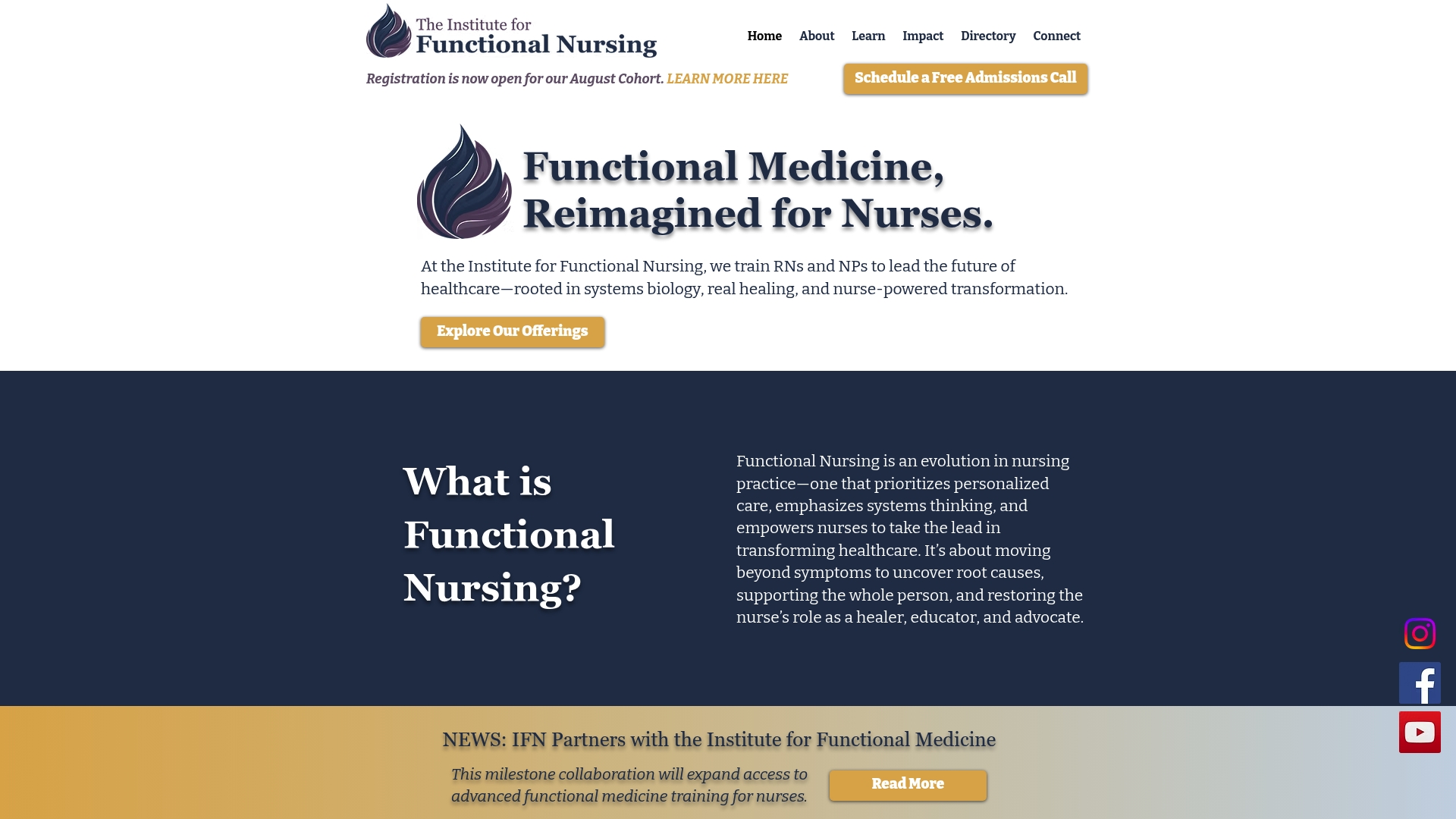
The vendor advertises 152 nursing contact hours delivered across a two semester, clinically focused program. The curriculum pairs live cohort meetups with self paced material and ongoing community support, all framed for registered nurses and nurse practitioners.
Core Features
- Two semester clinical training designed around systems biology and root cause care.
- The vendor advertises 48 live meetups, mentorship, and practical resources for case based learning.
- Self paced courses that the vendor states carry AHNCC accreditation for select offerings.
- Ongoing community membership, peer discussions, and resources tailored to nursing scope of practice.
Key Differentiator
Programs are explicitly structured to fit nursing scope and workflow rather than a generic clinician audience. The curriculum focuses on translating functional medicine concepts into nursing actions you can use during a typical shift or in advanced practice encounters.
Pros
- Courses are created by experienced nurses who understand scope, documentation, and clinical constraints. That nursing-first design reduces friction when you apply new approaches.
- The blend of live meetups and self paced modules supports skill practice and reflection, which helps move theory into charted care.
- The 152-hour figure above gives a clear contact hour target for employers and credentialing conversations.
- Case based learning and mentorship emphasize clinical translation rather than abstract theory, which matters when you are changing treatment plans.
- Community support helps sustain practice change and offers peer consults for complex cases.
Cons
- Pricing details are not provided in the source material, so budgeting requires direct inquiry rather than self service enrollment.
- Technical platform requirements and accessibility options are not specified, which can complicate rollout across health systems with strict IT policies.
- The program focuses on education and community; it does not function as a clinical service or replace formal clinical certifications outside nursing scope.
When It May Not Fit
If you are not a nurse or nurse practitioner this offering is outside its intended audience. If your health system requires explicit platform compliance details before adoption, the lack of published technical specs may slow procurement. If you need non nursing clinical certification, look elsewhere.
Who It’s For
Registered nurses and nurse practitioners aiming to adopt systems based, root cause approaches within their nursing scope. The program fits clinicians who want mentor led case practice, nursing contact hours, and a peer network focused on holistic nursing care.
Real World Use Case
A nurse completes the Functional Nursing Program™ then restructures follow up visits to include systems biology screening and targeted labs. Over three months the nurse documents clearer care plans and uses the community for second opinions on complex metabolic cases.
Pricing
Pricing is not specified in the provided content. Contact the Institute for Functional Nursing directly for current tuition, payment plans, and any scholarship or employer support options.
Website: https://fxnursing.com
Comparison of Functional Medicine Certification Options
Selecting the right certification program in functional medicine depends on your specific professional goals, preferred learning format, and career trajectory. Below is a comparative analysis of four primary providers.
Focus on Integrated Skill Development
functionalacademy.org uniquely blends intensive clinical training with practice-building coaching. Its modules are structured to provide immediate applicability in patient care settings and also to guide entrepreneurial nurses in establishing private practices. This explicit pairing addresses a critical gap for those looking to transition from traditional nursing roles into independent clinical work. Furthermore, its certifications are recognized, adding credibility for practitioners promoting specialized services.
In contrast, Functional Medicine Coaching Academy (FMCA) emphasizes behavioral change methodologies and coaching practice, equipping participants mainly for collaborative roles with clinicians or wellness programs. While FMCA provides extensive peer support and clear credentialing pathways through recognized institutions, its curriculum leans towards coaching methodologies rather than direct clinical application.
Depth and Flexibility of Training
Integrative and Functional Nutrition Academy (IFNA) merits attention for its focus on nutrition-driven functional medicine. With tools for lab interpretation and evidence-based nutrition protocols, this program suits dietitians and those emphasizing nutritional therapies. The self-paced format of IFNA is conducive for busy professionals but might challenge those needing structured timelines and accountability.
Institute for Functional Nursing offers a significant number of contact hours coupled with live meetups and a peer network, designed with nurses’ workflow and documentation needs in mind. However, its focus tends more on continuing nursing education rather than practice-building tactics like marketing or service structuring.
Best Fit Recommendations
- For clinicians keen on independent practice development and flexible, nurse-focused training: functionalacademy.org.
- For those prioritizing coaching methodologies integrated with functional medicine principles: Functional Medicine Coaching Academy.
- For professionals focusing on nutritional treatment within functional medicine frameworks: Integrative and Functional Nutrition Academy.
- For nurses desiring peer mentorship and contact hours designed explicitly for nursing workflows: Institute for Functional Nursing.
Our Pick
functionalacademy.org distinguishes itself through its combined focus on practical clinical education and explicit guidance for private practice entrepreneurship. It’s especially suitable for registered nurses and nurse practitioners ready to pivot into independent, functional medicine-focused practice. However, those interested in a coaching career or primarily in nutritional therapy should consider FMCA or IFNA, respectively.
Functional Medicine Certificate Programs Compared
Choosing the right functional medicine training program depends on aligning the program’s focus and offerings with your professional goals.
| Program Name | Core Focus | Key Differentiator | Best For | Notable Limitation |
|---|---|---|---|---|
| Institute for Functional Nurses | 48 contact hours integrating clinical and business skills | Combines certification with practical business coaching | Nurses building private practices | Pricing details not disclosed |
| Functional Medicine Coaching Academy | Accredited behavioral coaching combined with functional principles | Strong alumni network for career support | Aspiring health coaches and clinicians | Canvas platform usability issues reported |
| Integrative and Functional Nutrition Academy | Online, modular functional nutrition training | Includes tools for lab interpretation and treatment plans | Dietitians seeking advanced credentials | Self-paced format demands high self-motivation |
| Institute for Functional Nursing | Two semester program tailored for nurses | Nursing-specific functional medicine education | Nurses integrating systems biology | Platform requirements and accessibility not specified |
Discover a Functional Nursing Program Designed for Your Clinical Success
Choosing among instituteforfunctionalnurses.com alternatives can feel daunting when you need practical functional medicine education that fits your nursing schedule while boosting your clinical impact. Functionalacademy offers a fully accredited, 48-contact-hour certification that blends root-cause clinical modules with tailored business coaching. This approach helps registered nurses and healthcare practitioners not only master evidence-based strategies but also confidently build or expand nurse-led practices.
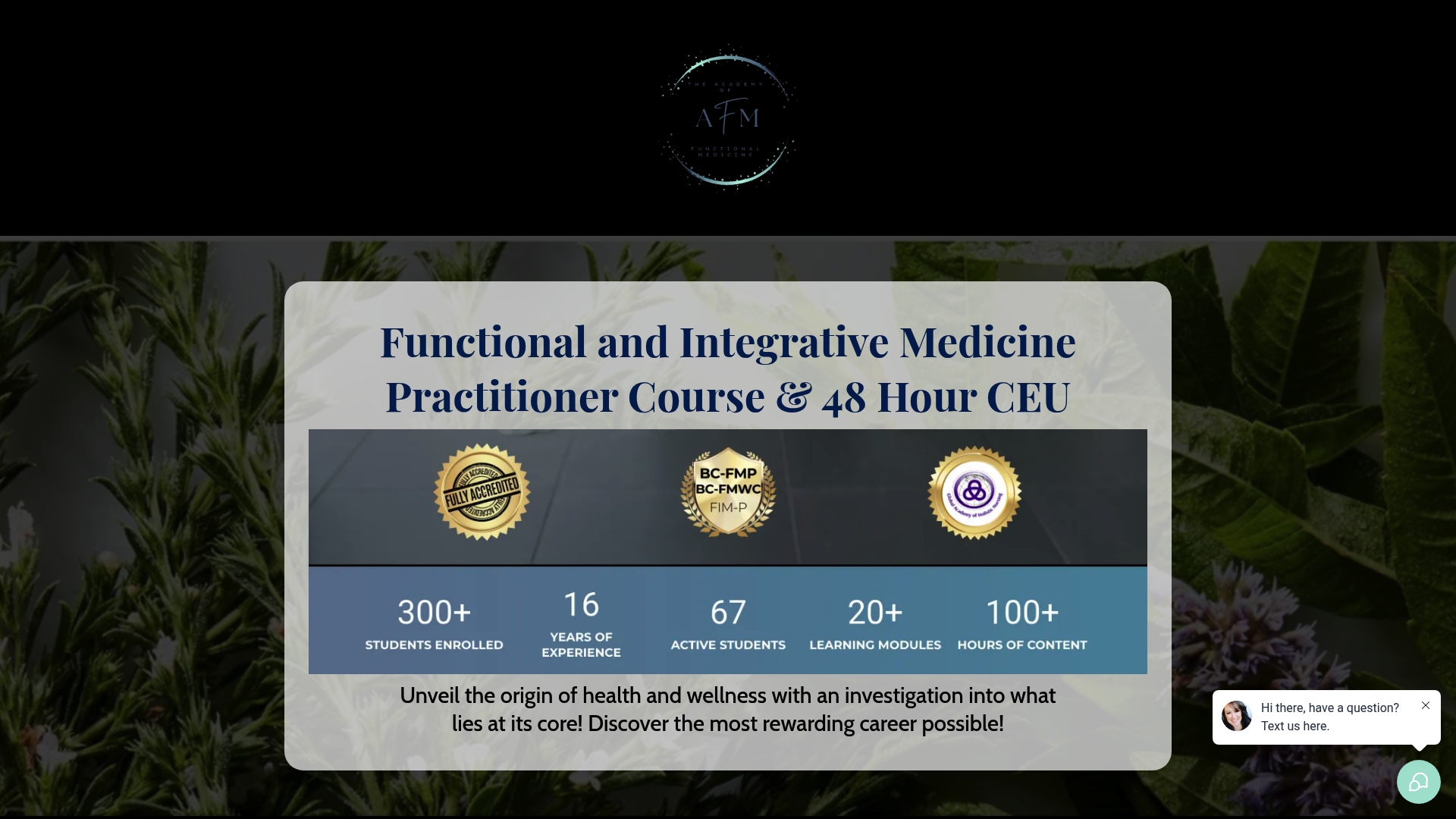
Explore how Functionalacademy’s program increases both your competency and marketability in the growing functional medicine field. Visit Functionalacademy to learn more and take the next step toward integrating meaningful, patient-centered care into your nursing practice with expert-led clinical and business training.
Frequently Asked Questions
How does Functionalacademy support flexible learning for busy nurses?
Functionalacademy offers a flexible, self-directed learning model that fits around shift work and on-call schedules. The program includes 48 contact hours/CEUs designed for part-time study, making it ideal for registered nurses and nurse practitioners managing a busy lifestyle. Consider enrolling in this program to enhance your functional medicine skills while balancing other commitments.
What is the difference between Functionalacademy and the Integrative and Functional Nutrition Academy?
The Integrative and Functional Nutrition Academy provides a broad range of modules aimed at multiple healthcare practitioners, whereas Functionalacademy is specifically tailored for nurses and nurse practitioners. Functionalacademy combines clinical training with business coaching to help nurses build their independent practices more effectively. If you’re focused on enhancing your nursing skills specifically in a functional medicine context, Functionalacademy may be the better fit for your needs.
Can I use the business coaching resources from Functionalacademy to start my own practice?
Yes, Functionalacademy includes business and marketing coaching tailored for nurse entrepreneurs looking to open or grow a private practice. This coaching helps you navigate pricing, service packaging, and acquiring patients, crucial for launching your independence successfully. Leverage these resources to get started on your path to independent practice.
Does Functionalacademy offer a certification pathway recognized by employers?
Functionalacademy provides personalized certification tracks such as FIM-P, BC-FMP, and BC-FMWC that are recognized in the field of functional medicine. The Board Certification pathway available online helps bolster your credibility when applying for functional medicine roles. You can confidently pursue those roles knowing you’re backed by recognized certifications.
How does the pricing of Functionalacademy compare to other training programs?
Pricing details for Functionalacademy are not published openly, which may require inquiry for specifics. The lack of transparency on costs can make it harder for you to budget compared to other options that clearly state their tuition up front. It’s advisable to contact them directly for the most current information on pricing and available payment options.