
Top 4 functionalnursing.blog Alternatives 2026
Top 4 functionalnursing.blog Alternatives 2026
Choosing a functional medicine certification program that balances clinical training with business support and community can feel impossible for nurses and clinicians seeking career advancement. Many programs restrict open access through strict verification or offer limited business integration, while others lack visible outcomes or third-party reviews for trust. This side-by-side review details contact hours, community features, mentoring, and cost structure across four certification options so you can select a pathway that fits your clinical goals and practice growth needs.
Table of Contents
- Institute for Functional Nurses
- The Institute for Functional Medicine
- Kresser Institute
- School of Applied Functional Medicine
- Comparative Analysis of Functional Medicine Certifications
Institute for Functional Nurses
At a Glance
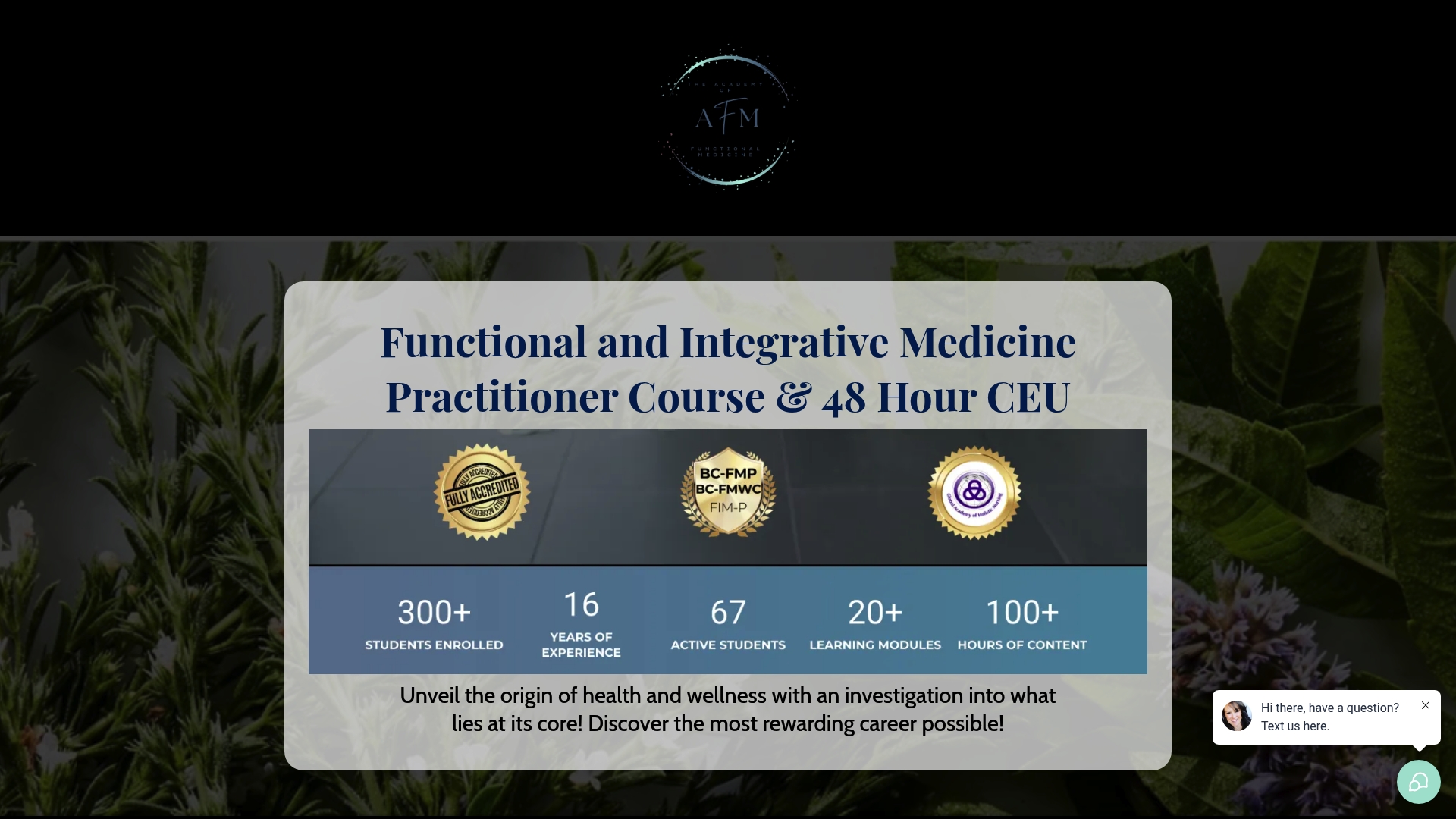
48 contact hours/CEUs is the standard course length for the core modules, a concrete credential nurses can list on a resume. The vendor advertises a fully accredited Board Certification program for medical professionals, a claim I will reference below.
Core Features
-
48 contact hours/CEUs of on-demand training modules and real-world case studies designed for clinical learning.
-
Professional certification pathways including FIM-P, BC-FMP, and BC-FMWC, presented as completion tracks.
-
Personalized business coaching and marketing strategies to help clinicians convert skills into billable services.
-
A mentorship network and peer community for clinician-to-clinician referral and support.
-
On-demand coursework formatted for self-paced study, with clinical and practice-building content.
Key Differentiator
The program pairs clinical instruction with business coaching and explicit certification tracks tailored for nurses. That combination targets clinicians who want both the clinical competencies and the practice-building know-how to launch or expand a functional medicine service.
Pros
-
The curriculum is practice oriented, focusing on case studies and clinical application rather than abstract theory, so you can use material in patient visits quickly.
-
Self-paced modules work around shift schedules; you can complete 48 contact hours/CEUs without blocking weekdays.
-
Recognized certification pathways add formal credentials that enhance marketability and professional credibility.
-
Business and marketing coaching helps convert clinical skills into a revenue model, from concierge visits to virtual consults.
-
The community and mentorship network reduces isolation and speeds up practical problem solving when you implement new protocols.
Cons
- Limited detail on specific clinical protocols and intervention tools means clinicians seeking exhaustive intervention playbooks may need supplementary resources.
Who It’s For
Nurses, nurse practitioners, and licensed healthcare practitioners who want to adopt functional medicine principles while also building a practice or service line. Best for clinicians who value credentials plus business guidance rather than pure clinical deep dives.
Unique Value Proposition
A 48-hour CEU course bundled with one-to-one business coaching and a mentorship network creates a single pathway from education to practice. For a clinician, that means not only adding certification to a CV but gaining a marketing and operational plan you can implement the week after finishing.
Real World Use Case
A registered nurse completes the 48-hour course, follows the certification track, and uses the business coaching to set up a concierge wellness practice. The nurse applies case-study material in initial client visits and markets a specialty service using templates from the program.
Pricing
Not applicable — informational only. The site presents the curriculum, certification options, and coaching as program components rather than a transparent SaaS price list.
Website: https://functionalacademy.org
The Institute for Functional Medicine
At a Glance
Much of the site’s educational material sits behind security verification, so direct access to course pages and member resources is limited to verified accounts. Public pages summarize offerings but do not expose full curriculum or member forums.
Core Features
- Educational resources for healthcare professionals and patients that outline functional medicine principles and clinical approaches.
- Certification programs aimed at formalizing practitioner competence and providing credential pathways.
- Information and research on functional medicine principles including position papers, reference lists, and practice frameworks.
Key Differentiator
The Institute for Functional Medicine concentrates on advancing the field through formal education and credentialing rather than running an open discussion forum. Compared with Functionalacademy, IFM tilts toward institutional certification and professional standards for clinicians.
Pros
-
Provides a clear professional pathway. The certification tracks are organized for clinicians seeking formal recognition within functional medicine.
-
Serves both clinicians and patients. Public resources give practitioners a concise reference to share with clients and students.
-
Research-oriented content. Reference lists and educational outlines help instructors build curricula or lectures without starting from scratch.
-
Structured as a professional body. The organization format makes it straightforward to cite policies, position statements, or recommended practice guides.
Cons
-
Limited visibility into user experience. There are no substantive third-party reviews on major review platforms, so published satisfaction and outcomes are not publicly documented.
-
Gatekeeping of content. Security verification and membership requirements restrict casual browsing and slow initial exploration.
-
Engagement friction. The verification step and lack of open forums make peer discussion and rapid community feedback harder than on open community platforms.
When It May Not Fit
If you need an open, public forum for fast peer feedback or community-sourced protocols, IFM will feel restrictive. Also avoid it if you want extensive third-party user reviews or an immediately browsable library without membership verification.
Who It’s For
Healthcare practitioners, educators, and students who want formal certification pathways and reference materials tied to professional standards. It fits clinicians planning to integrate functional medicine into licensed practice or academic programs.
Real World Use Case
A registered nurse pursuing functional medicine certification uses IFM outlines to plan a continuing education schedule. The nurse references IFM position statements in patient care plans and cites IFM reading lists when proposing protocol changes to an interdisciplinary team.
Website: https://ifm.org
Kresser Institute
At a Glance
Founded by Chris Kresser, the institute runs cohort-based and self-paced clinician courses that emphasize lab interpretation and systems thinking. The institute describes its curriculum as evidence-based, blending clinical frameworks with applied skills for patient care.
Core Features
- Practitioner training focused on applied Functional Medicine and lab interpretation for clinical practice.
- Self-paced modules alongside cohort-based cohorts that include live discussions and mentor feedback.
- Specialized course tracks in blood testing, nutrition, and hormone health to fill common gaps in primary care.
- Community and mentorship programs that keep clinicians connected after coursework ends.
- A curriculum that pairs systems biology concepts with practical patient workflows.
Key Differentiator
The chief distinction is its clinical focus led by Chris Kresser and expert faculty. Courses aim to teach judgment and clinical frameworks rather than only protocols, so clinicians can adapt laboratory data and patient context to individualized care. That evidence-based claim frames the course design.
Pros
- The curriculum is widely praised for clinical depth and practical orientation. Graduates report clearer decision pathways for complex cases.
- Training builds systems-based judgment and patient workflows instead of only offering checklists. You learn how to weigh labs against symptoms and history.
- The mix of self-paced content and cohort learning offers flexibility while still providing live mentor access for complex questions.
- Community channels help with case discussion and peer feedback, which reduces isolation when applying new approaches in practice.
- The program list includes focused topics clinicians ask for most: blood chemistry, nutrition strategies, and hormone management.
Cons
- Several users report slow or unclear customer service for administrative matters and store orders, which can delay access to materials.
- Responsiveness for course support varies by cohort and staff availability, so expect to follow up proactively for timely answers.
- Onboarding communications and logistics occasionally feel disorganized, especially when shipping physical materials or scheduling live sessions.
When It May Not Fit
If you need guaranteed, high touch administrative support for onboarding or prompt fulfillment of shipped materials, this platform may frustrate you. Teams that require uniform, predictable response SLAs for student services should evaluate support timelines before enrolling.
Who It’s For
Licensed clinicians and allied health professionals seeking to add functional medicine skills to clinical practice. The platform suits practitioners who want deeper lab interpretation skills and a community to refine clinical judgment.
Real World Use Case
A family physician completes the blood interpretation track to identify early metabolic imbalance in patients with vague symptoms. After the course and mentor sessions the physician adjusts care plans earlier and tracks objective lab shifts over six to twelve months.
Pricing
Pricing varies by program and delivery format. Course costs range from a few hundred dollars for short modules to several thousand for practitioner training tracks. Payment plans are offered for many programs and pricing details are posted per course.
Website: https://kresserinstitute.com
School of Applied Functional Medicine
Snapshot
Progression through four structured programs leads to the Applied Functional Medicine Certification, the vendor states. The curriculum emphasises case practice, clinical coaching, community masterminds, and business mentoring for clinicians who want deeper clinical skills and practice growth.
Core Capabilities
- The vendor states the education is accredited and focused on clinical application, with modules that move from fundamentals to advanced case practice.
- Four program levels let learners scale training across clinical complexity and experience.
- Ongoing clinical coaching and case study work simulates real patient workflows and diagnostic reasoning.
- Community forums and mastermind groups provide peer feedback and practice management mentoring.
Primary Advantage
The vendor claims this program is the only offering that ties continuous case practice to business mentoring and a branded certification. That claim positions the course as a long term clinical training pathway rather than a single seminar or short course.
Strengths
- Practical case focus improves diagnostic confidence. Clinicians report more hands-on exposure to complex presentations than typical lecture series.
- Large library of digital resources makes review between sessions simple and keeps reference material at hand for patient visits.
- Peer community spans multiple modalities and countries which helps when you need cross-disciplinary perspectives on difficult cases.
- Business training is built into the pathway so clinicians can apply clinical gains to practice management and patient acquisition.
Limitations
- Independent third-party reviews are not readily available; program reputation rests primarily on the vendor’s materials and alumni word of mouth.
- Some learners find the pace and scope vary depending on prior clinical background which can lengthen the time to competency for clinicians new to functional frameworks.
- There are no listed platform integrations for clinical software or EHR tools which may require manual workflow mapping for digital charting.
When This Might Not Be Right
If you are not a licensed or certified health practitioner this program is not aimed at you. If you need a short workshop rather than a multi-level training pathway the time commitment may not match your schedule. If institutional budgets demand independent third-party validation, the review gap above could be an obstacle.
Ideal Audience
Licensed or certified clinicians who want in-depth applied training in functional medicine and who plan to use case practice and practice-building mentoring to expand clinical services. Best for practitioners comfortable with multi-month learning commitments.
Example in Practice
A licensed naturopath completes progressive case modules and clinical coaching. After applying the protocols and lab interpretation techniques from the program she manages more complex chronic cases independently and grows referrals by offering targeted functional assessments.
Cost and Plans
The vendor lists pricing starting at $300/month with flexible payment options. That entry point makes longer term enrollment financially manageable for clinicians planning staged progression through multiple program levels.
Website: https://schoolafm.com
Comparative Analysis of Functional Medicine Certifications
Navigating the variety within functional medicine certification programs requires analyzing key features tailored to professional goals. Here, we compare Functionalacademy.org, The Institute for Functional Medicine, Kresser Institute, and the School of Applied Functional Medicine across dimensions essential to clinicians.
Clinical and Practical Training
The depth of clinical training influences how readily practitioners can integrate learned skills. Kresser Institute focuses on lab-based systems thinking, equipping learners with specific diagnostic approaches. Meanwhile, Functionalacademy.org combines case studies with business acumen, offering practical application through the 48 contact hours aimed at credentialing and practice expansion. In contrast, the School of Applied Functional Medicine emphasizes extended case practice and community-driven mentoring, suitable for diverse clinical interpretations.
Mentorship and Networking
Mentorship enhances decision-making in multidisciplinary teams. Functionalacademy.org stands out with mentorship networks emphasizing peer collaboration and guidance for private practice development. The School of Applied Functional Medicine, however, draws on its large community for cross-disciplinary insights, providing diverse clinical perspectives. Depending on a clinician’s needs for specific or broad networking, each program offers varied benefits.
Best Fit Recommendations
- Clinicians prioritizing rapid certification and practical implementation should consider Functionalacademy.org for its structured 48-hour program blending clinical and entrepreneurial insights.
- For those valuing specialized lab interpretation skills and flexible cohorts, Kresser Institute provides targeted training areas.
- Practitioners desiring extended, detailed mentoring programs might prefer the School of Applied Functional Medicine for its balance of applied clinical coaching and structured certification paths.
Our Pick: Functionalacademy.org
Functionalacademy.org uniquely provides a tailored combination of body-specific certification and entrepreneurial guidance, perfectly matching professionals expanding their credentials and services. While options like Kresser Institute excel in domain-specific training, the structured integration of clinical and business education within Functionalacademy.org offers readiness for launching or enhancing practice services.
Functional Medicine Certification Programs Comparison
Choosing the right functional medicine certification program depends on finding the platform offering comprehensive clinical training combined with practical mentorship.
| Program Name | Core Feature or Use Case | Key Differentiator | Best For | Pricing | Notable Limitation |
|---|---|---|---|---|---|
| Functionalacademy | Self-paced 48-hour CEU training with certifications | Clinical training with integrated business mentorship | Nurses and NPs building functional medicine practices | Not disclosed | Limited detail on specific intervention protocols |
| Institute for Functional Medicine | Formal education and credentialing in functional medicine | Focus on institutional standards and formal certification | Healthcare practitioners seeking accredited credentials | Not disclosed | Restricted content access with required membership verification |
| Kresser Institute | Applied lab and clinical training for clinicians | Systems-based frameworks and cohort mentorship | Professionals needing advanced lab interpretation skills | Varies by program | Reports of slow response times for customer service or support issues |
| School of Applied Functional Medicine | Progressive certification through case-based learning | Combination of clinical coaching and business mentoring | Clinicians planning staged skill development | $300/month | Lack of integration with clinical EHR software |
Discover a Functionalnursing.blog Alternative Built for Nurses Ready to Lead
Healthcare professionals face the challenge of adopting functional medicine without sacrificing time or clarity. If you want a practical, accredited program focused on identifying root causes instead of just managing symptoms, Functionalacademy answers that call. Unlike generic options, this program blends clinical case studies with business coaching so nurses can implement skills quickly and confidently.
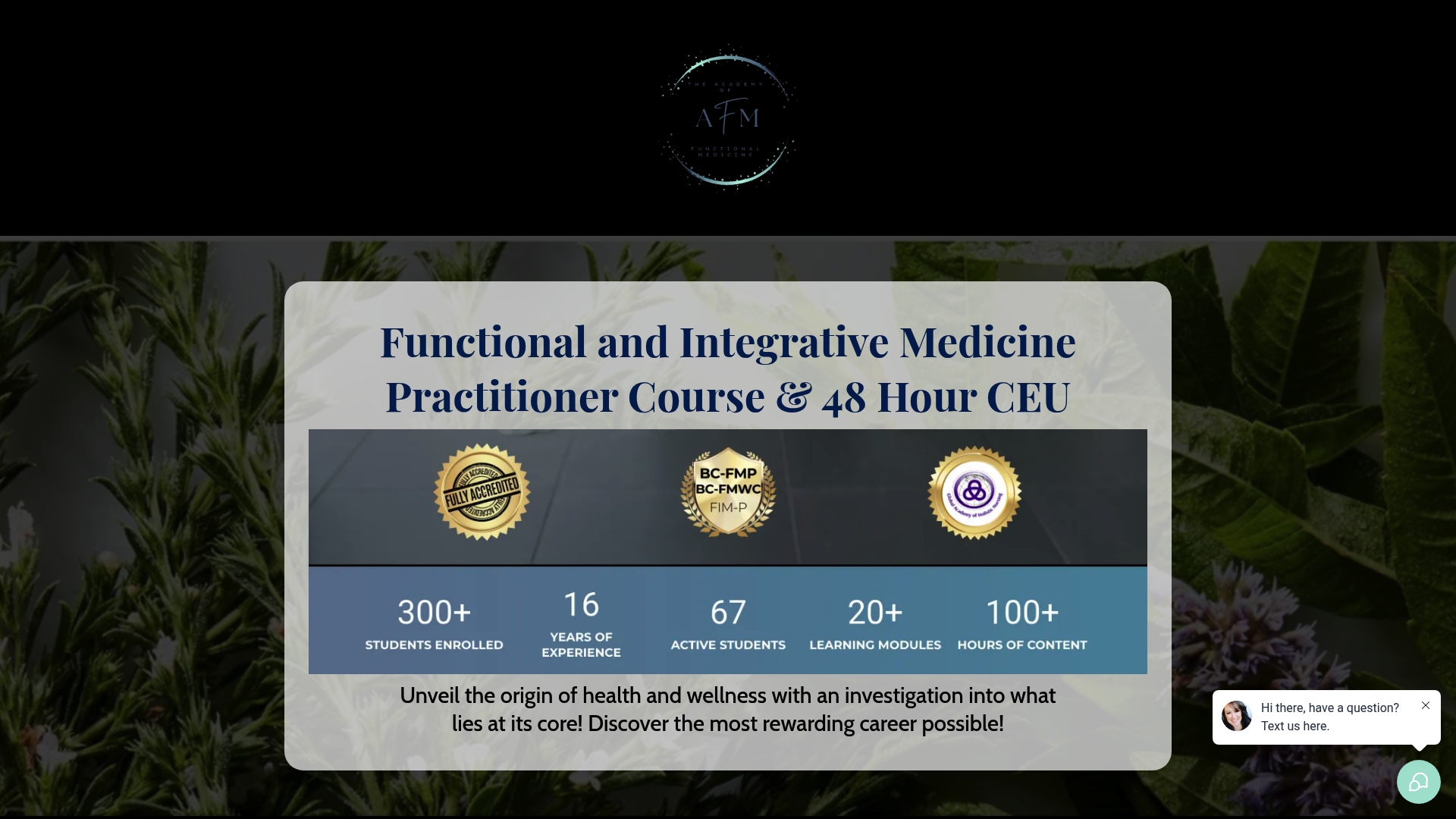
Explore how you can earn 48 contact hours/CEUs, gain Board Certification credentials, and join a supportive clinician community designed just for you. Don’t let overwhelming choices delay your transition into functional nursing. Visit Functionalacademy now and unlock precise clinical tools paired with practice-building strategies you can apply the week after finishing.
Frequently Asked Questions
What advantages does Functionalacademy offer for practical clinical skills development?
Functionalacademy provides a curriculum that emphasizes case studies and real-world applications, enabling quick use of the material in patient visits. The program includes 48 contact hours/CEUs of on-demand training designed for clinical learning. This practical focus allows clinicians to apply their skills immediately in their practice.
How does Functionalacademy compare to the Kresser Institute regarding lab interpretation training?
The Kresser Institute offers specialized training in lab interpretation and systems thinking, helping clinicians effectively analyze lab data within the context of patient care. Conversely, Functionalacademy provides a broad mix of clinical competencies along with business coaching for practice growth. This makes Functionalacademy a better fit for clinicians wanting to integrate business strategies into their practice alongside functional medicine skills.
Which platform offers better community support for clinicians?
Functionalacademy stands out with its mentorship network and peer community, which provide essential clinician-to-clinician referral and support. While the School of Applied Functional Medicine also incorporates community elements, Functionalacademy’s structured mentorship more directly assists clinicians in implementing new protocols effectively.
What is the pricing structure for Functionalacademy compared to its alternatives?
Functionalacademy offers a transparent pricing structure for its courses, starting with specific tiers for different program features, such as personal business coaching. In contrast, some competitors like the School of Applied Functional Medicine state pricing begins at $300/month without detailed tier breakdowns, making the total cost perception less clear for prospective students.
Does Functionalacademy provide formal certification pathways?
Yes, Functionalacademy presents recognized certification pathways, including FIM-P, BC-FMP, and BC-FMWC, as part of its core modules. This formal credentialing helps enhance marketability and professional credibility for clinicians aiming to validate their competencies in functional medicine.