Top 6 Functional Medicine Academy Alternatives 2026
Top 6 Functional Medicine Academy Alternatives 2026
Choosing a functional medicine certification program that balances clinical depth, flexible learning, and business practice support feels riskier than it should for clinicians and nurse practitioners. Most options either lack hands-on mentorship, skip business coaching, or restrict access to licensed clinicians only without transparent pricing details. This list compares curriculum, certification, mentorship, and pricing so clinicians and nurse practitioners can pick a program that fits their career goals and budget without guessing.
Table of Contents
- Institute for Functional Nurses
- School of Applied Functional Medicine
- Kresser Institute
- Functional Medicine Coaching Academy
- American Academy of Functional Health
- Institute for Functional Nursing
- Comparison of alternatives
Institute for Functional Nurses
At a Glance
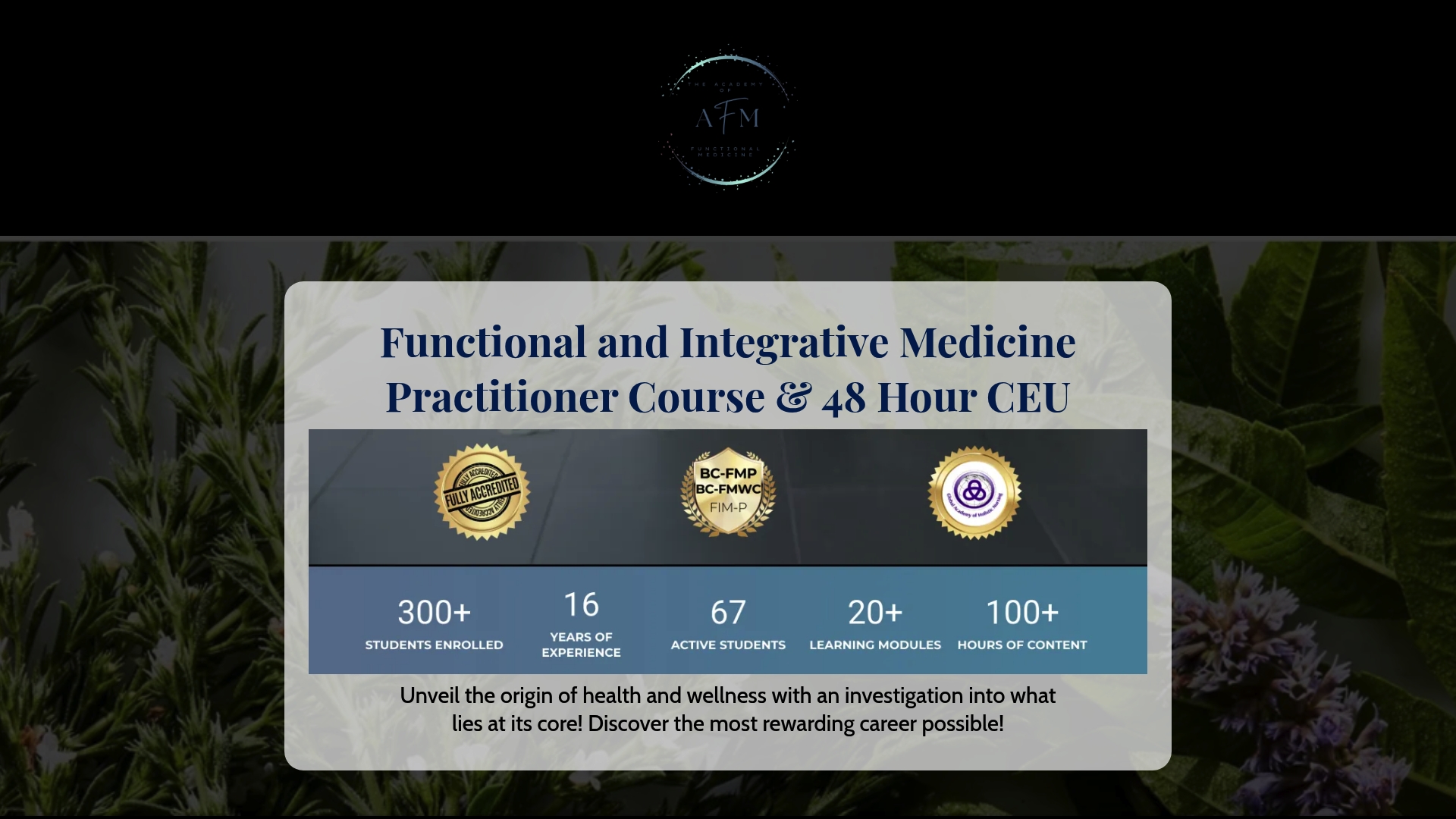
48 contact hours/CEUs form the core of the Institute for Functional Nurses curriculum, packaged into self-directed modules for busy clinicians. The program targets nurses and licensed practitioners who want certification plus practice-building support. The course combines clinical topics with business coaching to help clinicians launch or grow a functional medicine practice.
Core Features
The program bundles self-directed, flexible learning modules with specialty certifications such as Functional Integrative Medical Practitioner (FIM-P), Board Certified Functional Medicine Practitioner (BC-FMP), and a Wellness Coach credential. Training covers root-cause health, gut health, hormonal balance, autoimmune conditions, and related clinical protocols. The offering also includes business coaching and marketing support aimed at clinicians who plan to start or expand a functional medicine practice.
Key Differentiator
The program focuses specifically on nurses and clinician-practitioners, pairing nurse-focused certification tracks with practice development coaching. That combination ties clinical skill development directly to building referral flow and client services. The nurse specificity helps clinicians translate functional medicine concepts into nursing workflows and billing realities.
Pros
The curriculum delivers practical clinical content that nurses can apply during patient encounters, and it emphasizes case studies and real-world scenarios to support clinical adoption. Recognized certification pathways increase professional credibility and marketability for clinicians pursuing board certification. Business coaching and marketing modules help clinicians convert new skills into revenue, which makes the program useful for nurse entrepreneurs who want clinical competence plus practice growth tactics.
Cons
- Requires self-motivation and discipline for online learning; clinicians who prefer in-person, hands-on training may find the format limiting.
Who It’s For
This offering fits nurses, nurse practitioners, and licensed healthcare providers who want certification and clinical skills in functional medicine. It also suits practitioner-entrepreneurs planning to add functional medicine services to their existing clinic or to launch a new practice. Clinicians who need flexible, self-paced education will find the delivery model compatible with shift work.
Unique Value Proposition
The provider states the program is fully accredited for Board Certification, and that accreditation sits alongside targeted nurse certifications and business coaching. That mix lets clinicians pursue recognized credentials while learning how to package services, set fees, and attract patients. For nurses who want both clinical credentials and practice development, the program links certification milestones to revenue-focused skills.
Real World Use Case
A registered nurse completes the certification, integrates functional medicine protocols into her primary care clinic, and expands services to include gut and hormonal care. She uses the business coaching to design a package, prices services, and markets to an existing patient base. That approach produces more referral opportunities and expands scope of practice.
Pricing
Pricing is not listed publicly here. Prospective learners should verify course fees, CEU costs, and certification expenses directly with the provider before enrolling. The site is informational and does not display tiered software pricing or subscription details.
Website: https://functionalacademy.org
School of Applied Functional Medicine
At a Glance
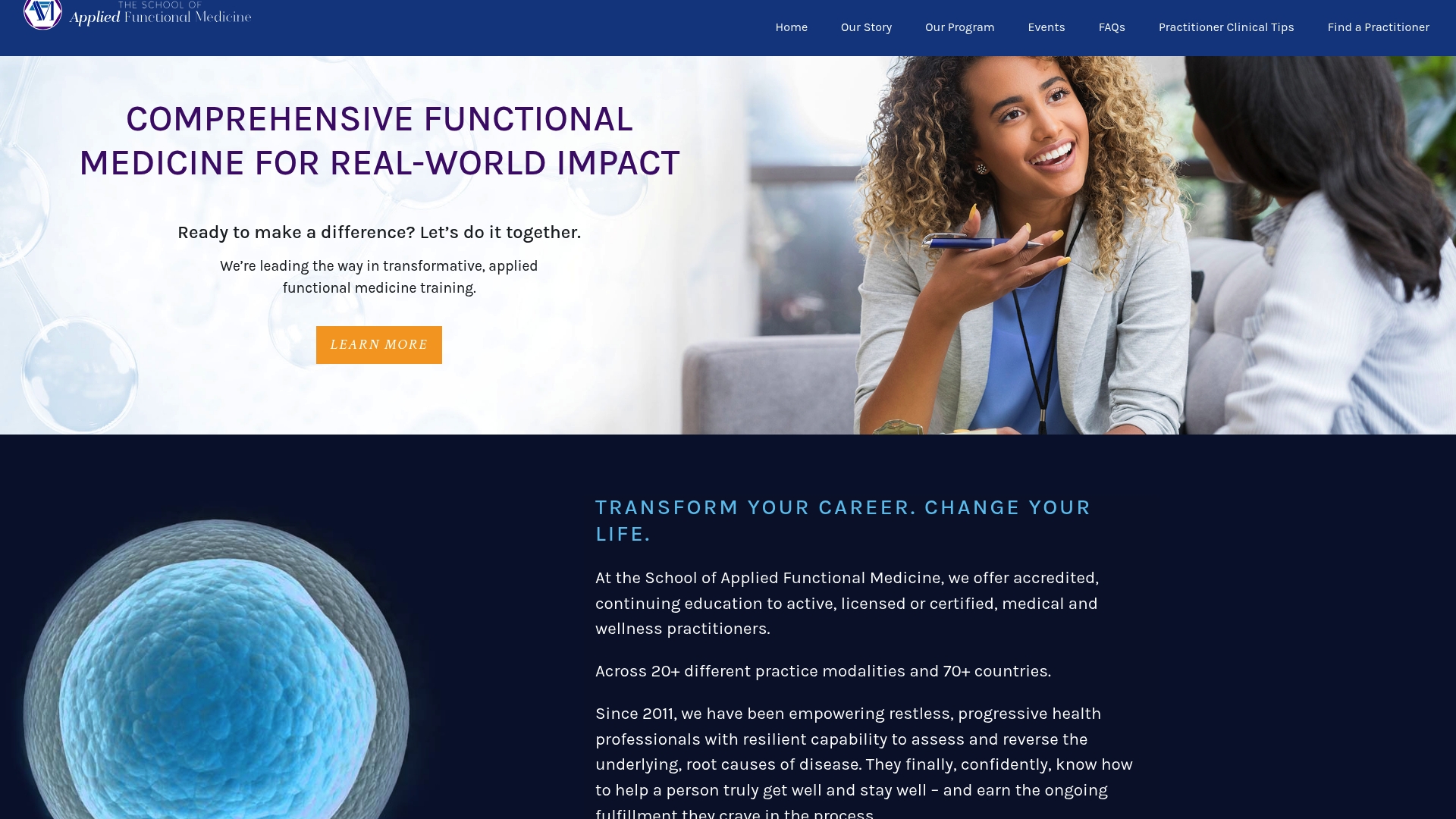
SAFM reports training clinicians in more than 70+ countries since 2011. The program centers on repeated real case practice and ongoing mentorship to build clinical skill. It targets licensed medical and wellness practitioners who want deeper applied training than short certificate courses.
Core Features
SAFM pairs accredited continuing education with practice-focused courses that use live case work and peer review to sharpen clinical judgment. The curriculum includes community masterminds and business skills modules that help clinicians translate clinical gains into viable practice models. Continuous complex case mentorship keeps learning active rather than episodic.
Key Differentiator
The standout feature is sustained, hands-on case practice that integrates systems physiology with clinical reasoning. That training model trains clinicians to manage real complexity rather than follow fixed protocols. Graduates leave with practiced capability and a portfolio of case experience.
Pros
SAFM emphasizes practical application and long term clinical skill building rather than short, checklist training. Its community and mentorship network supports case review and peer feedback over months and years, which helps maintain clinical growth. Course content mixes foundational science with detailed clinical pearls and business training to help clinicians convert new skills into practice income and credibility.
Cons
- Does not offer modality specific certification. The program issues a general AFMC certification only.
- The high level of clinical detail may overwhelm practitioners without prior healthcare background.
- Curriculum avoids quick protocol templates and shortcuts, focusing instead on clinician capability and individualized approaches.
When It May Not Fit
If you need a narrowly focused credential tied to a single modality this will likely fall short. New entrants without basic clinical training may find the depth hard to absorb quickly. Clinicians seeking templated protocols or fast turnkey systems should look elsewhere.
Who It’s For
Licensed medical and wellness practitioners who want sustained clinical mentorship and real case practice will benefit most. Mid career clinicians seeking to upgrade diagnostic reasoning and expand treatment scope will see immediate value. Those aiming to integrate functional medicine into an existing practice and build patient trust will find the format practical.
Real World Use Case
A mid career nutritionist completed SAFM coursework, applied detailed lab interpretation methods, and improved chronic patient outcomes. The clinician used peer review forums to refine cases and gradually expanded services into a group practice. AFMC certification served as a credibility marker when converting referrals into long term clients.
Pricing
SAFM lists plans starting as low as $300/month with monthly and annual payment options. Pricing aims to support ongoing mentorship rather than one time access to recorded lectures. Ask the vendor about exact billing terms and any additional mentoring fees.
Website: https://schoolafm.com
Kresser Institute
At a Glance
Kresser Institute reports a global community of over 2,000 practitioners across 30+ countries. The vendor also advertises a 4.9/5 content rating from user feedback. These figures reflect a strong peer network and high user satisfaction as presented by the company.
Core Features
The platform delivers cohort style, virtual practitioner training that pairs live mentorship with recorded modules and case study reviews. It offers on demand courses in Functional Blood Testing, Nutrition, and Hormone Mastery alongside a certification track for clinicians. The curriculum targets clinical reasoning and systems thinking so clinicians can apply methods directly to patient care.
Key Differentiator
The standout is mentorship tied to live patient case studies and practicing clinicians guiding discussion. That model trains clinical judgment rather than only theory. For clinicians seeking applied training, this emphasis on supervised case work separates Kresser Institute from purely lecture driven programs.
Pros
The training focuses on real world clinical application and clinical reasoning, which helps clinicians translate concepts into patient visits. Large international membership supports ongoing peer consultation and referral connections. Courses run online so clinicians across time zones can access mentorship and on demand modules. The program benefits from founder Chris Kresser name recognition and an experienced educator network that many participants cite as a value add.
Cons
- The depth and breadth may overwhelm clinicians without prior functional medicine experience.
- Cost may be prohibitive for individual clinicians or small practices.
- Self paced courses require strong personal discipline to finish on schedule.
- Limited direct in person options reduce hands on practice for those who prefer live labs.
When It May Not Fit
Clinicians without prior healthcare licensure will not qualify for the core practitioner track. Those unable to commit to a 12 month program will struggle with longitudinal mentorship and cohort obligations. Small clinics on tight budgets may find the financial commitment hard to justify compared with shorter, lower cost workshops.
Who It’s For
Licensed clinicians including MDs, NPs, PAs, DOs, chiropractors, and nutritionists who want a platform that teaches applied Functional Medicine. The offering suits practitioners ready to adopt systems based clinical reasoning and to invest time in a year long cohort model. Health coaches with clinical affiliations can use on demand modules for deeper specialty knowledge.
Real World Use Case
A licensed clinician completes the Adapt Practitioner Training and uses case study review to refine diagnostic workflows for chronic conditions. Mentorship sessions accelerate clinical judgment so the clinician implements targeted labs and individualized nutrition plans with greater confidence. That approach improves patient follow up and helps sustain a practice focused on root cause care.
Pricing
See program website for details. Pricing reflects a substantial investment consistent with long term mentorship, cohort access, and certification preparation. Payment plans or institutional rates may be listed on the program site.
Website: https://kresserinstitute.com
Functional Medicine Coaching Academy
At a Glance
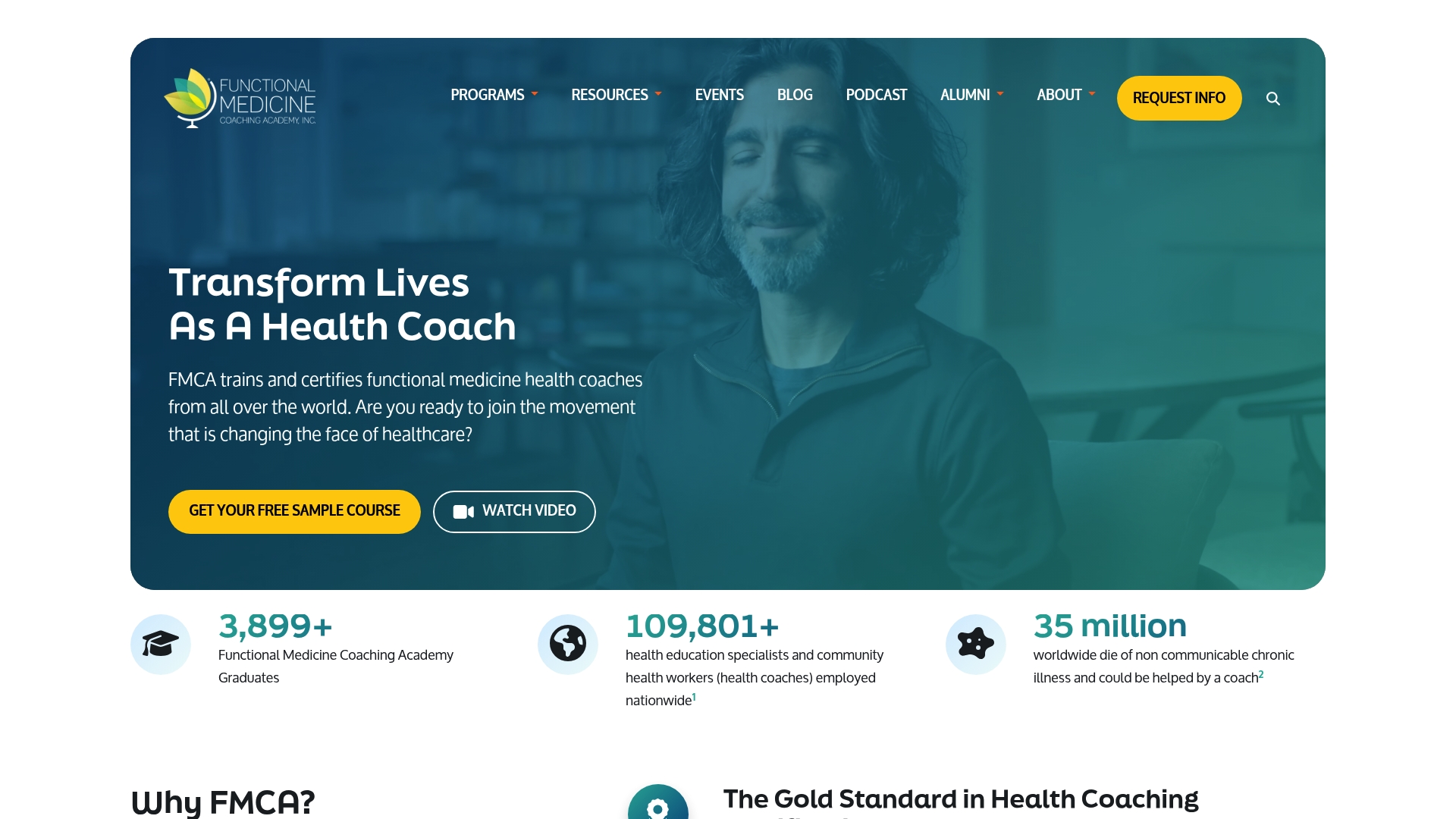
FMCA reports it has certified over 4,000 coaches since 2014. The vendor advertises NBHWC approval and a curriculum collaboration with the Institute for Functional Medicine. That scale and those approvals position the program as a recognized route to board exam eligibility and clinical coaching roles.
Core Features
The program pairs an accredited certification framework with a fully online, flexible schedule and cohort-based learning. Coursework covers functional medicine principles, nutrition, positive psychology, and coaching science, while a community and alumni network support career development. That mix aims to prepare coaches for clinical and private practice settings.
Key Differentiator
FMCA’s primary distinction is its curriculum development relationship with the Institute for Functional Medicine. That collaboration informs course content and clinical framing more directly than most coaching programs. The vendor positions this link as a way to align coaching skills with functional medicine clinical concepts.
Pros
The program offers an NBHWC recognized credential that can make candidates eligible for board certification exams, which helps formalize a coaching career path. The curriculum reflects input from the Institute for Functional Medicine and covers behavior change, nutrition, and coaching methodology, giving practical tools for patient work. The fully online format and an active alumni network make it feasible for working clinicians and international students to complete the course without relocating.
Cons
- Significant cost and time commitment may block professionals with limited budgets or heavy clinical loads.
- Few if any in-person practical training options exist depending on where you live, which reduces hands-on skill practice.
- Recognition by regional healthcare systems varies, so clinical acceptance and referrals are not guaranteed.
- Certification alone does not secure employment or client rosters for new graduates.
When It May Not Fit
If you need extensive supervised, hands-on clinical training this program may fall short. If you must complete training under a very tight budget the multi-thousand dollar tuition may not match your constraints. If immediate job placement or guaranteed referral streams are required, certification here does not promise those outcomes.
Who It’s For
Clinicians and aspiring health coaches who want formal credentialing and a curriculum tied to functional medicine concepts will benefit most. Practicing nurses, allied health professionals, and established coaches seeking NBHWC eligibility will find the course relevant. People looking for mainly in-person clinical internships should look elsewhere.
Real World Use Case
A graduate joins an integrative health clinic and uses root cause assessment and personalized lifestyle plans with patients. They coordinate with providers, apply nutrition and behavior change modules from the program, and grow a referral base over time. That practical application shows how training converts to client care in clinic or private practice.
Pricing
Program pricing is listed on the official program webpage and varies by cohort and payment options. The site states the full certification typically costs several thousand dollars, so plan for a major professional investment.
Website: https://functionalmedicinecoaching.org
American Academy of Functional Health
At a Glance
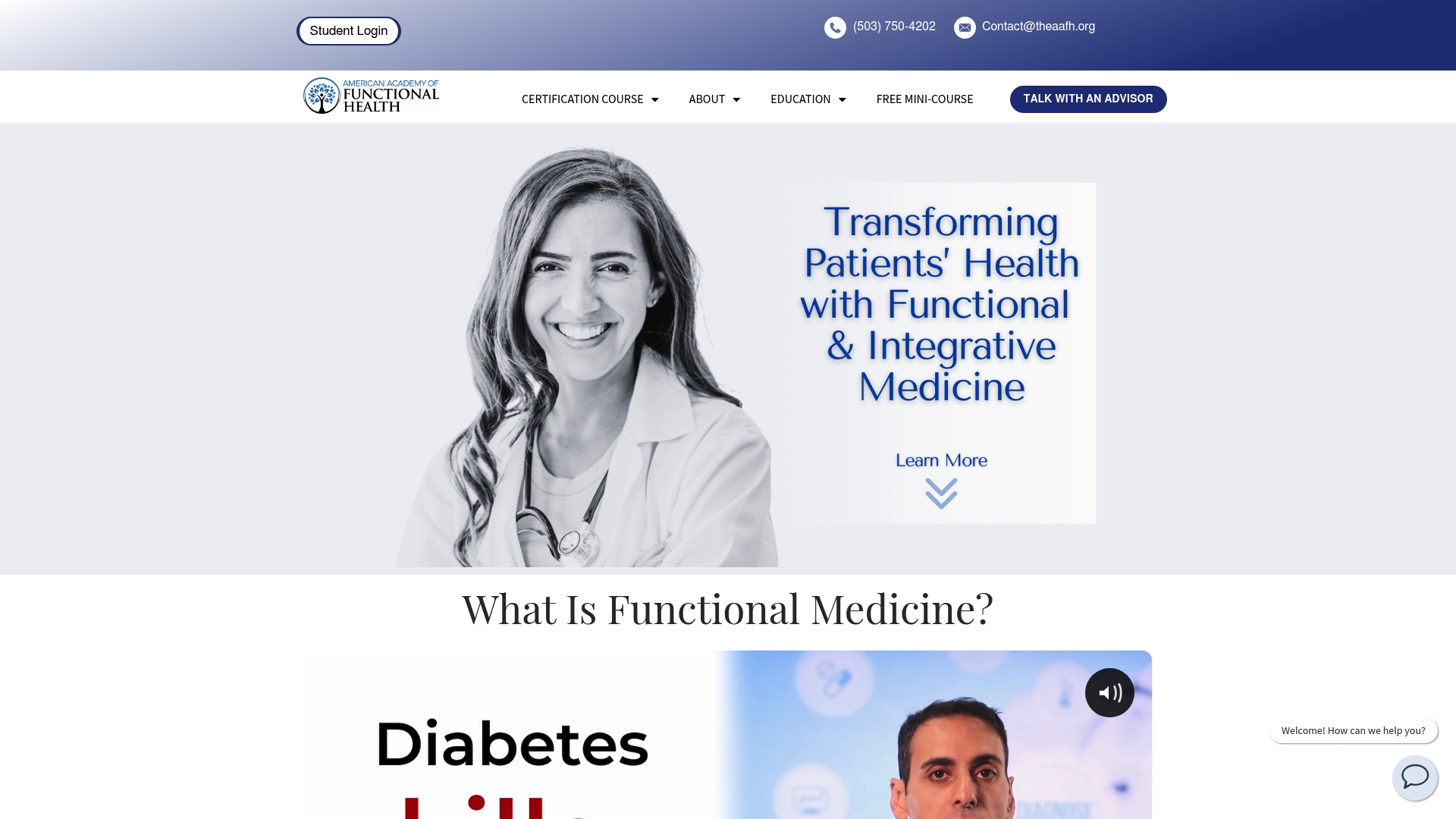
Certification courses can cost as much as $12,950 for advanced tracks. The AAFH states its programs are evidence based and clinically oriented. Courses pair clinical content with practice building, live events, and mini classes for practical skills.
Core Features
Self paced online courses deliver certification options such as Functional Medicine Mastery and Nutritional Coach. The curriculum includes clinical management of chronic inflammatory conditions and nutritional approaches. Practice development modules cover marketing, patient acquisition, and fee structuring, plus live events for hands on application.
Key Differentiator
That evidence based claim pairs clinically oriented training with explicit practice growth instruction from experienced clinicians and educators. The program focuses equally on clinical skills and business skills to help clinicians add billable services and expand practice offerings. That mix separates clinical certification from purely academic programs.
Pros
Programs culminate in certifications that many practitioners treat as professional development and specialization. The online format is self paced, which fits clinicians balancing practice and study. Practice building modules add concrete marketing and business lessons alongside clinical instruction. Community events and live classes provide networking and opportunities to rehearse patient pathways.
Cons
- Higher tier certifications are expensive, which may put them out of reach for some clinicians.
- Publicly available detail on course outcomes and independent validation is limited.
- Content targets licensed healthcare providers, so laypersons will find the material unsuitable.
When It May Not Fit
If you are not a licensed clinician this program is likely the wrong fit. Clinicians with tight budgets should compare lower cost options or single topic mini classes. Institutions seeking externally validated outcome studies will need to request specifics from the academy.
Who It’s For
Healthcare professionals who want certification in functional and nutritional medicine will find relevant tracks. Those aiming to add billable services and restructure practice operations gain practical lessons on marketing and fee models. Clinicians who prefer self paced learning and occasional live workshops will get useful options.
Real World Use Case
A physician enrolls in the Functional Medicine Certification Course to expand diagnostic approaches for chronic disease. They adopt nutritional protocols and new referral pathways from the practice building modules. Patient management changes focus on root cause assessments and longer term follow up.
Pricing
Course pricing varies by program and depth. Certification courses typically run from $3,600 to over $12,950 while mini classes are free or low cost. Some bundles offer financing options for clinicians spreading payments.
Website: https://theaafh.org
Institute for Functional Nursing
At a Glance
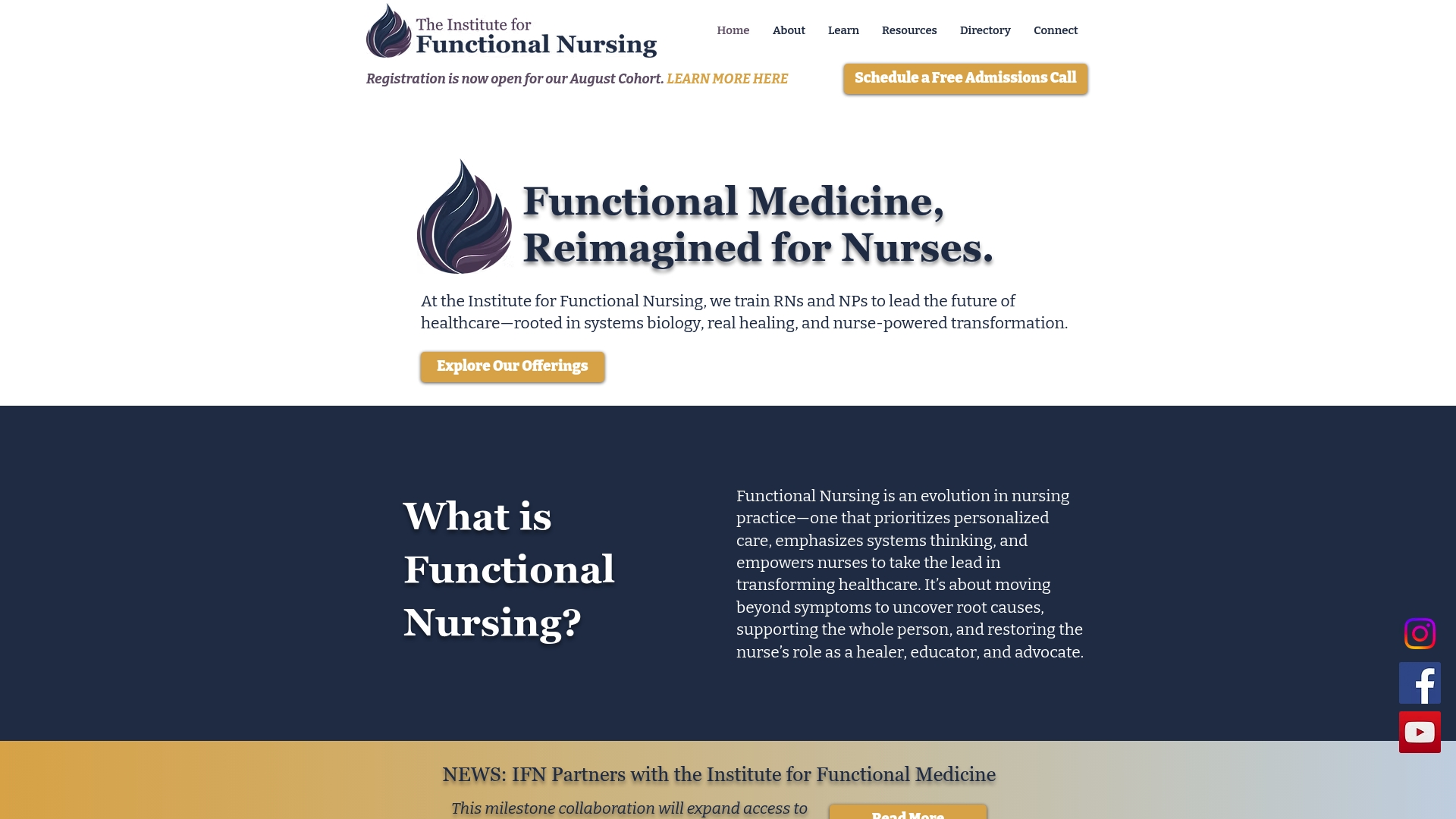
Institute for Functional Nursing reports 152 nursing contact hours available as part of its core curriculum. The program centers on systems thinking and root cause assessment tailored to nursing scope. It combines live sessions, mentorship, and self paced materials to move clinical practice toward integrative care.
Core Features
According to the company, the curriculum spans a two semester training with 48 live MeetUps, mentorship, and an active community for peer case review. The platform also offers self paced courses, case based learning, and a dedicated Holistic Nurse Entrepreneur Program™ for practice building. The structure emphasizes clinical application so nurses can adapt lessons directly into patient care.
Key Differentiator
The program deliberately focuses on nursing practice and scope, aligning functional medicine principles to clinical nursing workflows. That nurse centric angle separates it from broader programs at Functionalacademy and other generalist offerings. The mentorship and community elements are designed to support clinical translation and small practice startup work.
Pros
Curriculum content is framed for registered nurses and nurse practitioners, which makes clinical examples and documentation relevant to nursing workflows. The course mixes live interaction with on demand study, and that hours figure supports continuing education credit needs. Strong mentorship and an entrepreneur track help nurses who want to transition into integrative or private practice.
Cons
- No detailed pricing is publicly listed. That limits budget planning for individual nurses and employers.
- Limited information about a dedicated learning platform or software features. The offering reads as education first, not a platform solution.
- Emphasis on education and clinical practice means it does not function as a practice management or telehealth tool.
When It May Not Fit
If you need a software platform with APIs, practice management tools, or clinical documentation systems, this program is not the right match. Teams seeking integrated tech workflows for billing or scheduling will find missing capabilities. Organizations that require clearly posted pricing or platform integration lists will need to contact the vendor directly.
Who It’s For
Registered nurses and nurse practitioners who want to integrate functional medicine into clinical nursing care will get the most from this program. Nurse entrepreneurs launching holistic practices will value the entrepreneur track and mentorship. Clinical educators looking for nursing specific continuing education may also find the format useful.
Real World Use Case
A registered nurse enrolls in the Functional Nursing Program to learn structured root cause assessment methods and apply them in a primary care clinic. They join live MeetUps for case consultation and use the entrepreneur track to create a referral packet for integrative services. Patients receive more personalized care and the nurse expands their scope of practice.
Pricing
Pricing is not specified on the site. The offering appears to be course fee based or subscription based, and prospective students must request enrollment or pricing details from the institute. Employers and clinicians should contact the vendor for group rates and continuing education pricing.
Website: https://fxnursing.com
Comparison of alternatives
Among the array of functional medicine certification options, Functional Academy stands out for uniquely focusing on nurse practitioners, offering relevant certifications complemented by practice-building support. Here, we delve into how these programs compare, highlighting each one’s strengths and suitability for various professional scenarios.
Nurse-focused programs versus interdisciplinary mentorship
While Functional Academy provides targeted certifications and entrepreneurial training tailored to nurses, the Kresser Institute emphasizes live mentorship tied to case studies for applied clinical practice. This environment fosters communal learning with experienced clinicians. Practitioners prioritizing direct mentorship in varied clinical situations may favor the Kresser offering.
Cost flexibility and entry-level options
Functional Medicine Coaching Academy provides accessible pricing structures starting at $300/month, accommodating both new entrants and experienced practitioners’ financial plans. This contrasts with Functional Academy’s unlisted pricing, which necessitates direct inquiries for precise financial planning.
Best fit
- Nursing professionals seeking functional medicine certifications with integrated business skills training will appreciate Functional Academy’s tailored approach.
- Clinicians valuing sustained, real-case mentorship can benefit from Kresser Institute’s in-depth and supervised model.
- Those prioritizing cost-effective, flexible certification options should explore Functional Medicine Coaching Academy’s structured pricing and NBHWC accreditation.
- Providers drawn to community interaction through live events and hands-on modules will find the American Academy of Functional Health suitable.
Our pick
Functional Academy excels in delivering a curriculum meticulously aligned with the needs of nursing professionals seeking functional medicine expertise alongside business acumen development. While alternative programs may provide unique advantages, the focused approach of Functional Academy ensures substantial growth for nursing clinicians aiming for professional advancement in their field.
The following table compares certification programs geared toward functional medicine, focusing on accreditation, curriculum strength, and professional applicability to guide clinicians in selecting the best option.
| Program Name | Key Differentiator | Target Audience | Pricing | Limitation |
|---|---|---|---|---|
| Functionalacademy | Nurse-specific certifications plus business coaching | Nurses and licensed practitioners | Price not published | Requires self-discipline for remote learning |
| School of Applied Functional Medicine | Sustained mentorship with practical case reviews | Licensed medical and wellness practitioners | Starts at $300/month | High detail may overwhelm without clinical background |
| Kresser Institute | Live case studies with expert clinician mentorship | Licensed functional medicine clinicians | Price not published | Cohort format and duration may not suit all schedules |
| Functional Medicine Coaching Academy | Collaboration with the Institute for Functional Medicine | Clinicians and aspiring health coaches | Several thousand dollars | Limited hands-on opportunities |
| American Academy of Functional Health | Evidence-based training with practice growth modules | Healthcare professionals | $3,600 to $12,950 | High costs for advanced certifications |
| Institute for Functional Nursing | Nursing-specific curricula with live mentorship | Registered nurses and nurse practitioners | Price not published | Limited tech features for practice management |
Which Functional Medicine Academy Alternative Truly Fits Nurses and Clinicians?
Choosing the right functionalmedicine.academy alternatives can feel confusing, especially when you want certification and clinical skills built for nurses and licensed healthcare providers. The key challenge is finding a program that not only teaches root cause assessment but also aligns with nursing workflows and practice growth. Functionalacademy stands out by delivering a fully accredited, evidence-based curriculum designed specifically for nurses and healthcare practitioners who need practical, board-certifiable training without overwhelming time demands.
Functionalacademy empowers clinicians with proven strategies to expand skills and boost marketability in a rising sector focused on personalized care. Get clinical tools blended with business insights to launch or enhance your integrative functional medicine services.
Ready to move beyond generic courses and integrate real clinical application tailored to your profession? Visit Functionalacademy to explore how this nurse-centric program builds your expertise and confidence while supporting your practice development needs.
FAQ
How does Functionalacademy support registered nurses in their practice?
Functionalacademy provides a curriculum specifically tailored for registered nurses and nurse practitioners. The program focuses on systems thinking and root cause assessment, aligning functional medicine principles with nursing workflows. Enroll to integrate these concepts directly into your patient care.
What is the difference between Kresser Institute and Functionalacademy?
Kresser Institute emphasizes live mentorship and patient case studies, which helps clinicians build real-world clinical judgment. Functionalacademy, on the other hand, focuses on flexible self-directed learning that suits busy nurses and clinician-practitioners who prefer a more structured approach to certification and business development. This makes Functionalacademy an excellent option for those looking to combine clinical training with practice-building support.
Which program offers business coaching alongside clinical training?
Functionalacademy includes business coaching and marketing support in its curriculum. This feature helps clinicians convert their new skills into revenue and build functional medicine practices successfully. Opt for this program if you’re looking to grow your practice while enhancing your clinical competence.
Can I use the training from Functionalacademy to launch my own practice?
Yes, Functionalacademy provides valuable mentorship and an entrepreneur track designed for nurse entrepreneurs. This track helps you develop essential skills for launching and growing a functional medicine practice. Be ready to take your career into your own hands with the appropriate support from this program.
What kind of certification can I expect from Functionalacademy?
Functionalacademy offers certifications like Functional Integrative Medical Practitioner (FIM-P) and Board Certified Functional Medicine Practitioner (BC-FMP). These recognized certifications can significantly increase your professional credibility and marketability as a clinician. Prepare to expand your qualifications and impact on health care.