Functional Nutrition Counseling for Nurses: 2026 Guide
Functional Nutrition Counseling for Nurses: 2026 Guide
Functional nutrition counseling is the process by which nurses use an integrative approach to address the underlying causes of illness through personalized dietary and lifestyle interventions. Unlike conventional symptom management, this method, formally recognized as integrative and functional nutrition practice, examines how genetics, environment, sleep, stress, and diet interact to drive disease. Early individualized nutrition counseling improves body weight, nutritional status, quality of life, and treatment adherence across patient populations. That evidence makes functional nutrition counseling for nurses not just a career differentiator but a clinical obligation. The demand for nurses who can deliver this level of care is growing fast, and the window to lead that shift is open right now.
What skills do nurses need for functional nutrition counseling?
Effective functional nutrition counseling requires a specific set of clinical competencies that most nursing programs do not fully cover. Nurses need a working knowledge of nutritional biochemistry, the gut-brain axis, micronutrient metabolism, and the principles of functional medicine. They also need proficiency in evidence retrieval and the ability to translate research into patient-specific recommendations.
Research shows nurses demonstrate moderate confidence in evidence retrieval (mean score 2.76 out of 4) but significantly lower confidence when using validated malnutrition screening tools (mean 2.57 out of 4). That gap matters because accurate nutritional risk assessment is the foundation of every counseling plan. Without it, interventions miss the mark.
The core skills nurses must build include:
- Nutritional assessment literacy: Proficiency with validated tools such as the Malnutrition Universal Screening Tool (MUST) and the Patient-Generated Subjective Global Assessment (PG-SGA)
- Motivational interviewing: Techniques that draw out patient goals and barriers without triggering defensiveness
- Functional medicine history-taking: Gathering a comprehensive patient history that covers sleep, stress, toxin exposure, and dietary patterns
- Collaborative care coordination: Knowing when and how to refer to functional medicine dietitians, naturopaths, and physicians
- Evidence-based supplementation knowledge: Understanding when to recommend nutrients and how to document clinical reasoning to protect licensure
Pro Tip: Enroll in a board certification program that includes clinical application modules, not just theory. Functionalacademy’s Institute for Functional Nurses is accredited for Board Certification and built specifically for working nurses who need to apply these skills immediately.
How do nurses integrate functional nutrition counseling into patient care?
Integration starts with a structured workflow. Nurses who add functional nutrition to their practice without a clear process quickly find it adds time without adding value. A repeatable system changes that.
- Screen every patient for nutritional risk. Use validated malnutrition screening tools at intake. Flag patients who score above threshold for a full functional nutrition assessment before any other intervention.
- Conduct a root-cause history. Go beyond chief complaint. Ask about food quality, meal timing, bowel patterns, sleep duration, stress levels, and environmental exposures. A functional nursing care plan built on this data is far more precise than one built on vitals alone.
- Formulate a personalized care plan. Prioritize dietary changes, targeted supplementation, and lifestyle modifications based on the patient’s specific root causes, not a generic protocol.
- Coordinate with the interdisciplinary team. Loop in registered dietitians, physicians, and specialists early. Interprofessional collaboration between nurses, doctors, and dietitians produces better nutritional outcomes than any single provider working alone.
- Document everything with clinical precision. Record your reasoning for every recommendation, especially supplement suggestions. This protects your license and creates a clear record for the rest of the care team.
- Schedule follow-up touchpoints. Functional nutrition counseling is not a one-visit fix. Build in 30-day and 90-day check-ins to assess progress and adjust the plan.
“The biggest shift in functional nutrition counseling is slowing down the consultation. Nurses trained to move fast must learn to sit with a patient’s story long enough to find the real driver of their symptoms. That pause is where the clinical insight lives.”
Documentation is not optional. Specialty lab tests like DUTCH (Dried Urine Test for Comprehensive Hormones) and GI-MAP require documented medical necessity to protect licensure and reduce liability exposure. Build that documentation habit from day one.
What tools and tests support functional nutrition assessment?
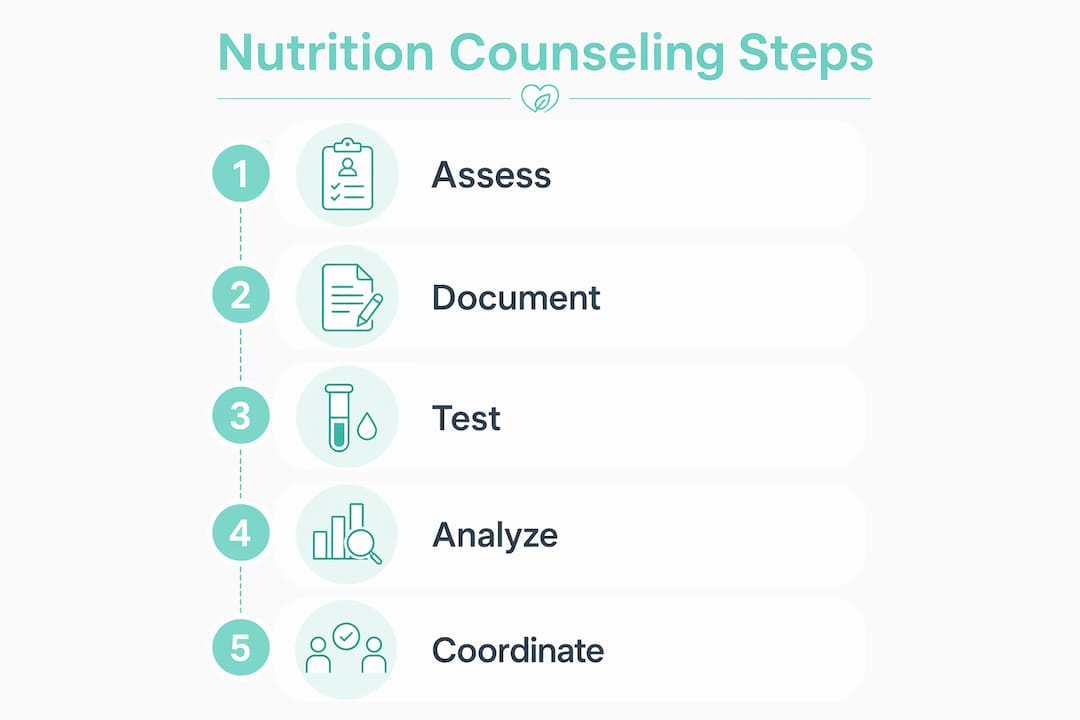
Nurses in functional nutrition practice use a combination of validated questionnaires, specialty labs, and clinical guidelines to build a complete picture of each patient’s nutritional status.

| Tool or Test | Primary Use | Key Limitation |
|---|---|---|
| MUST (Malnutrition Universal Screening Tool) | Rapid malnutrition risk screening | Does not capture micronutrient deficiencies |
| PG-SGA (Patient-Generated Subjective Global Assessment) | Detailed nutritional status in oncology and chronic disease | Requires training to score accurately |
| DUTCH Test | Comprehensive hormone and cortisol metabolite analysis | Not covered by most insurance plans |
| GI-MAP | Functional gut microbiome and pathogen assessment | Requires careful documentation of medical necessity |
| Organic Acids Test (OAT) | Mitochondrial function, nutrient cofactor status | Interpretation requires advanced training |
Validated screening tools and evidence-based assessment protocols are the non-negotiable starting point. Specialty labs add depth, but they carry medicolegal weight. Using DUTCH and GI-MAP without documented medical necessity creates real liability risk. Always justify the test in the chart before ordering it.
For clinical guidelines, the Academy of Nutrition and Dietetics and the American Society for Parenteral and Enteral Nutrition (ASPEN) publish evidence-based nutrition support standards that nurses can reference directly. Pair those with continuing education from Functionalacademy’s functional medicine testing panels resource to build interpretation confidence.
Pro Tip: Before adding specialty labs to your practice, complete at least one structured training on result interpretation. Ordering a GI-MAP without knowing how to act on the findings creates confusion for you and your patient.
How can nurses build effective interdisciplinary nutrition care teams?
Functional nutrition counseling works best inside a coordinated team. No single provider, regardless of training, can address every dimension of a patient’s nutritional health alone. Nurses are uniquely positioned to serve as the connective tissue in these teams because they spend the most time with patients.
Collaboration between nurses, dietitians, and physicians produces integrated nutritional care that no single discipline can replicate. The practical benefits include faster identification of nutritional risk, more consistent follow-through on care plans, and better patient adherence over time.
Strategies that make interdisciplinary collaboration work in practice:
- Establish shared documentation standards. Every team member should use the same nutritional assessment language and scoring system so handoffs are clean.
- Hold brief weekly case reviews. A 15-minute standing meeting focused on high-risk nutritional patients keeps the team aligned without consuming clinical time.
- Define clear referral triggers. Nurses should know exactly when to escalate to a registered dietitian or functional medicine physician. Ambiguity in referral criteria delays care.
- Use patient-centered language across the team. A patient-centered counseling approach reduces clinical anxiety and builds the trust patients need to follow through on recommendations.
- Address turf barriers directly. Scope-of-practice concerns between nurses and dietitians are real. Resolve them through written team agreements, not informal assumptions.
The nurses who lead the most effective nutrition teams are the ones who communicate proactively, document thoroughly, and treat every referral as a collaboration rather than a handoff.
What are the biggest challenges nurses face in functional nutrition practice?
Time, reimbursement, and scope clarity are the three barriers nurses hit first. None of them are insurmountable, but all three require a deliberate plan.
Time constraints are real in any clinical setting. The solution is not to compress functional nutrition into a standard 15-minute visit. It is to redesign the visit structure. Use intake forms that collect dietary and lifestyle history before the appointment. That shifts the data-gathering burden off the live consultation and gives you more time for clinical reasoning.
Reimbursement gaps are a structural problem. Insurance rarely covers extended functional nutrition counseling sessions or specialty lab tests. Many nurses who build functional nutrition practices move to cash-pay or hybrid models. A functional medicine revenue model that blends insurance billing with direct-pay packages is the most sustainable approach in 2026.
Liability and documentation require constant attention. Nurses must document clinical reasoning for every supplement recommendation and every specialty lab order. The liability risk is not hypothetical. Supplement recommendations without documented rationale expose nurses to licensure and legal risk.
- Slow down the consultation. Root-cause questions take longer than symptom-focused ones. Build that time into your scheduling model.
- Set realistic patient expectations. Functional nutrition produces results over weeks and months, not days. Patients who understand this timeline stay engaged longer.
- Stay current. Nutritional science moves fast. Commit to at least one structured continuing education course per year in functional or integrative nutrition.
Pro Tip: Build a one-page intake questionnaire covering diet quality, sleep, stress, bowel habits, and supplement use. Patients complete it before the visit. You walk in already knowing the root-cause candidates.
Key Takeaways
Functional nutrition counseling gives nurses a proven clinical framework to address root causes of illness, but it requires specific skills, structured workflows, and interdisciplinary collaboration to deliver real results.
| Point | Details |
|---|---|
| Root-cause focus | Functional nutrition targets diet, sleep, stress, and environment, not just symptoms. |
| Assessment gaps are real | Nurses score lower on validated screening tool confidence than on evidence retrieval. |
| Documentation protects you | Every specialty lab order and supplement recommendation needs a documented clinical rationale. |
| Teams outperform solo providers | Interprofessional collaboration with dietitians and physicians improves patient nutritional outcomes. |
| Reimbursement requires a plan | Cash-pay or hybrid practice models are often necessary for sustainable functional nutrition counseling. |
Why I believe nurses are the most underutilized force in nutrition care
I have watched nurses absorb functional nutrition principles faster than almost any other clinical group. The reason is simple: nurses already know how to sit with patients. They already ask the follow-up question. They already notice when the story does not add up. What they have been missing is a clinical framework that matches that instinct.
The philosophical shift that functional nutrition demands, treating food, sleep, and stress as clinical prescriptions rather than lifestyle suggestions, is not a stretch for nurses. It is a natural extension of what good nursing already looks like. The nurses I have seen build the most effective functional nutrition practices are not the ones with the most credentials. They are the ones who slowed down, asked better questions, and stopped accepting “I don’t know” as a final answer from their patients.
The outcomes are real. Patients who receive individualized, root-cause nutrition counseling show measurable improvements in weight, energy, and treatment adherence. That is not a wellness trend. That is clinical evidence. Nurses who build this competency are not just improving patient outcomes. They are positioning themselves as indispensable in a healthcare system that is finally starting to ask the right questions.
— Lauren
Advance your practice with Functionalacademy
Nurses who want to build real competency in functional nutrition counseling need more than a weekend workshop. They need a structured, accredited program that covers clinical application, not just theory.
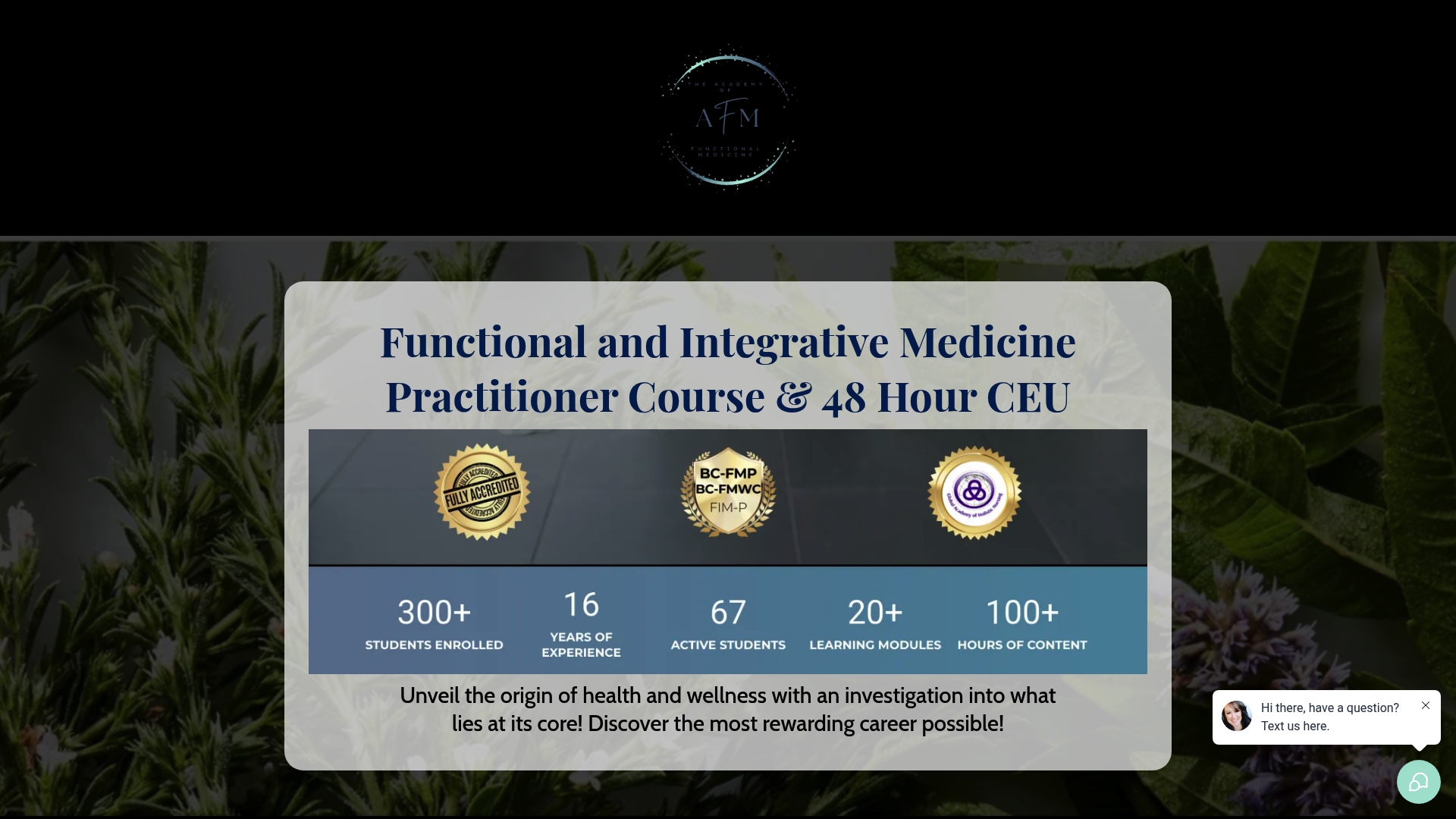
Functionalacademy’s Institute for Functional Nurses offers a fully accredited online program designed for Board Certification. The curriculum covers functional medicine principles, nutritional assessment, root-cause clinical reasoning, and interdisciplinary care coordination. You apply what you learn directly to your current patients. Nurses who complete the program report stronger clinical confidence, expanded career options, and the ability to deliver the kind of personalized care that patients are actively seeking. If you are ready to lead that shift, Functionalacademy is where that work begins.
FAQ
What is functional nutrition counseling for nurses?
Functional nutrition counseling is an integrative clinical approach where nurses assess diet, lifestyle, genetics, and environment to identify root causes of illness and build personalized nutrition interventions, rather than managing symptoms alone.
What certifications support nurses in functional nutrition?
Board certification programs through accredited institutions like Functionalacademy’s Institute for Functional Nurses provide nurses with the clinical training and credentials needed to practice functional nutrition counseling professionally.
How do nurses use specialty labs in functional nutrition practice?
Nurses use tests like DUTCH and GI-MAP to assess hormone balance and gut health, but each order requires documented medical necessity to protect licensure and reduce liability risk.
Can nurses bill insurance for functional nutrition counseling?
Insurance coverage for extended functional nutrition sessions is limited. Many nurses adopt cash-pay or hybrid models to sustain a functional nutrition practice financially.
How does interdisciplinary collaboration improve nutrition outcomes?
Collaboration between nurses, dietitians, and physicians produces integrated nutritional care that improves recovery, treatment adherence, and long-term patient outcomes more effectively than any single provider working alone.