
3 Nurse Centered Moves to Start Functional Medicine Pharmacology
3 Nurse Centered Moves to Start Functional Medicine Pharmacology
Yes, nurses and NPs can safely integrate functional medicine pharmacology into practice, and the right move is accredited, nurse-focused training paired with clinical mentorship, not a scattershot of webinars. Start with three moves: audit a patient’s full medication and supplement list, confirm what your state license actually permits, and pick one accredited course built for nurses rather than a generalist wellness certificate. The sections ahead walk through each step.
TL;DR:
- Nurses and NPs must verify their scope of practice and collaborate with physicians before implementing functional medicine pharmacology to avoid legal risks.
- Strict attention to drug-nutrient and supplement interactions, especially with narrow therapeutic drugs, is essential to prevent adverse events.
- Accreditation, clinical mentorship, and nursing-specific curricula are crucial for credible training and professional recognition in functional medicine pharmacology.
- Building this skill set enables nurses to manage medication plans, coordinate across providers, and expand roles in private practice or integrative clinics.
- Practical addition of supplement and lifestyle screening, along with monitoring protocols, integrates seamlessly into existing nursing workflows for improved patient care.
Table of Contents
- What Functional Medicine Pharmacology Looks Like in Nursing Practice
- What Are the Scope-of-Practice Boundaries for RNs and NPs?
- Essential Pharmacology Concepts for Functional Medicine Nursing
- Which Certification Path Fits Your Career Goals?
- How to Add Functional Medicine Pharmacology to Your Workflow
- What Career Paths Reward These Skills?
- Why an Accredited, Nurse-Focused Program Matters Here
- An Editorial Take on Realistic Expectations
- Ready to Build Your Functional Medicine Skill Set?
- Sources
What Functional Medicine Pharmacology Looks Like in Nursing Practice
Functional medicine pharmacology is the practice of choosing, monitoring, and adjusting medications and supplements through a root-cause lens instead of a symptom-suppression one. It treats the body as an interconnected system where a thyroid medication, a magnesium supplement, and a patient’s sleep schedule all influence each other. This is patient-centered care built around systems thinking, and it maps almost exactly onto skills nurses already use every shift.
Functional medicine is a patient-centered approach that seeks root causes, and the research backing it isn’t fringe. A JAMA Network Open study tied this model of care to measurable improvements in patient-reported quality-of-life outcomes, which is the kind of data that matters when you’re explaining this shift to a physician colleague or a skeptical charge nurse.
Here’s where the pharmacology piece gets real: a patient on a statin who’s also taking red yeast rice extract isn’t getting redundant support. They’re potentially doubling their risk of muscle toxicity. A patient on levothyroxine who takes their calcium supplement at the same time isn’t optimizing absorption. They’re blocking it. Functional medicine pharmacology means catching these interactions before they become problems, then building a plan that accounts for the whole picture: medications, supplements, diet, sleep, and stress load.
In daily practice, this shows up in a handful of concrete nursing roles:
- Medication reconciliation with a wider lens. You’re not just checking for drug-drug interactions anymore. You’re screening for drug-nutrient and drug-supplement conflicts too.
- Patient coaching on the “why.” Explaining why a magnesium deficiency might be driving a patient’s anxiety symptoms, not just handing over a prescription.
- Care coordination across silos. Bridging the gap between a patient’s cardiologist, their naturopath, and their primary care provider, who often never talk to each other.
- Root-cause intake. Asking about gut health, sleep quality, and stress before assuming a symptom needs a new prescription.
This isn’t a career pivot for most nurses. It’s an amplification of skills you’ve built for years: holistic assessment, patient education, and the instinct to ask “what’s really going on here?” A deeper look at integrative nursing practice shows how closely this philosophy already overlaps with standard nursing training.
What Are the Scope-of-Practice Boundaries for RNs and NPs?
Scope of practice for functional medicine pharmacology varies enormously by state and by license type, and getting this wrong is the single biggest risk in this field. An RN in Texas cannot order labs or adjust dosing independently, no matter how many functional medicine courses they’ve completed. A nurse practitioner in a full-practice-authority state like Arizona or Oregon has far more latitude to order testing and manage medication plans solo. A collaborative-practice state sits somewhere in between, and the exact boundary depends on your specific agreement with a supervising physician.
The American Association of Nurse Practitioners publishes standards of practice that lay out these expectations clearly, and checking them against your own state’s board of nursing rules should be step one before you order a single functional lab panel.
Building safe boundaries into your workflow comes down to a short list of habits:
- Confirm your license’s authority first. Check your state board of nursing site for lab-ordering and prescribing rules specific to your credential.
- Document every recommendation. Note the clinical reasoning behind any supplement suggestion or lifestyle change, not just medications.
- Formalize collaboration agreements. If you’re an NP in a restricted or reduced-practice state, get the supervising physician relationship in writing and keep it current.
- Set escalation triggers in advance. Decide, before you need it, at what point a patient’s labs or symptoms require an immediate handoff to a specialist.
Certain situations demand extra caution regardless of your state. Narrow therapeutic-index medications like warfarin, lithium, and digoxin leave almost no room for supplement interference. Patients on five or more medications (true polypharmacy) need a more careful reconciliation pass than a quick chart review. And unfamiliar supplements, especially ones sourced from international suppliers with inconsistent dosing, deserve a hard pause before you sign off on anything.
Pro Tip: Keep a running “watch list” of the five supplement-drug interactions you see most often in your patient population. Reviewing it monthly keeps pattern recognition sharp without requiring you to memorize an entire pharmacology textbook.
Essential Pharmacology Concepts for Functional Medicine Nursing
Functional medicine pharmacology leans hard on the same foundational concepts taught in any nursing pharmacology course. The difference is how aggressively you apply them. ADME (absorption, distribution, metabolism, excretion) determines how a supplement interacts with a prescription drug in a patient’s bloodstream, and pharmacodynamics tells you what that combination actually does once it gets there. These aren’t academic exercises. Foundational pharmacology concepts including ADME, therapeutic window, and peak/trough monitoring are what keep a well-intentioned supplement recommendation from becoming an adverse event.
Some interactions come up often enough that every nurse working in this space should have them memorized:
- Warfarin and vitamin K-rich supplements or high-dose fish oil, which can swing INR values dangerously in either direction.
- St. John’s Wort and SSRIs, birth control, or immunosuppressants, since it induces liver enzymes that metabolize dozens of common drugs faster than expected.
- Calcium or iron supplements taken alongside thyroid medication, which blocks absorption if timing isn’t separated by several hours.
- Grapefruit-derived supplements and statins, which inhibit the CYP3A4 enzyme pathway and can spike drug levels to unsafe concentrations.
- Magnesium and certain antibiotics, like fluoroquinolones, which bind together and reduce the antibiotic’s effectiveness.
Monitoring and titration follow the same logic you already use for high-risk medications, just applied to a broader set of variables. Peak and trough labs still matter for narrow-index drugs. Baseline and follow-up panels (thyroid function, vitamin D, inflammatory markers) become part of routine monitoring rather than an occasional add-on. Document the starting values, the intervention, and the recheck interval every time, because a functional medicine plan without a monitoring paper trail is a liability wearing a lab coat.
By the Numbers: Nursing pharmacology education overhauled its structure around the 2023 NCLEX test plan, reflecting how central drug-interaction competency has become to entry-level nursing practice, let alone specialized functional care.
Which Certification Path Fits Your Career Goals?
Three realistic tiers exist for building functional medicine pharmacology skills, and picking the wrong one wastes both time and tuition. The lightest option is a short CEU course, often a handful of hours covering a single topic like supplement interactions or hormone basics. The middle tier is a specialist certificate, typically 20 to 60 hours, that goes deeper into one clinical area. The top tier is a full accredited board-style certification, the kind that takes months and produces a credential you can list after your name.
Experts in nursing continuing education consistently recommend nurse-specific programs with clinical mentorship over generic wellness courses built for health coaches or the general public. The distinction matters because a course written for a lay audience skips the pharmacology depth, the documentation standards, and the scope-of-practice nuance a licensed nurse actually needs.
When comparing programs, run through this checklist before enrolling:
- Clinical mentorship included, not just recorded lectures with no feedback loop.
- Curriculum written in nursing language, referencing charting, scope of practice, and collaborative agreements rather than generic health-coach terminology.
- CEU and accreditation status confirmed, ideally recognized by ANCC or AANP for continuing education credit.
- A supervised clinical practicum, giving you real patient-facing practice before you apply the skills independently.
- Business or practice-integration support, especially if your goal involves private practice or a wellness clinic role down the line.
Cost and timeline vary by tier. Single CEU courses typically cost less and complete quickly. Specialist certificates usually involve more hours over a few months. Full board-style certification programs require longer commitments and higher tuition, reflecting their added mentorship, practicum hours, and credentialing weight. Many employers offer continuing-education reimbursement for accredited programs, so check your facility’s tuition-assistance policy before assuming the cost falls entirely on you.
How to Add Functional Medicine Pharmacology to Your Workflow
Integrating this into a real patient visit doesn’t require rebuilding your entire intake process. It requires a few deliberate additions layered onto what you already do.
- Expand your intake questions. Add specific prompts for supplements, over-the-counter products, and dosing frequency, since patients routinely omit these unless asked directly.
- Reconcile the full list against active prescriptions. Cross-check every supplement and OTC product against the patient’s medications for known interaction risks before the visit ends.
- Order or request labs strategically. Within your scope, pull baseline panels (thyroid, vitamin D, inflammatory markers) that inform a root-cause plan rather than defaulting to symptom-only testing.
- Loop in the prescribing provider early. Flag any planned supplement recommendation that could affect a current medication’s efficacy or dosing before, not after, the patient starts taking it.
- Set a monitoring cadence. Schedule a follow-up specifically to recheck labs or symptoms tied to the new plan, typically four to eight weeks out.
Pro Tip: Build a one-line script for patients: “Tell me every pill, powder, and tea you take, even if it’s not a prescription.” Patients hear “medication list” and mentally exclude their turmeric capsules and protein powder. Broadening the question broadens the answer.
Applying pharmacology in functional medicine requires actively screening for supplement-drug interactions and documenting every OTC and complementary product as part of standard medication reconciliation, not a side note.
What Career Paths Reward These Skills?
Wellness clinics, integrative primary care practices, telehealth platforms, and private practice all pay a premium for nurses who can bridge conventional pharmacology with functional assessment. NPs with this training often carry more autonomy in these settings because they can manage medication plans and lifestyle interventions under one roof, which patients increasingly seek out and pay for directly.
- Certification signals depth to employers, separating you from nurses who’ve read a few blog posts on the topic.
- Telehealth and concierge models reward this skill set specifically, since patients booking those visits are often already supplement users seeking coordinated guidance.
- Outcome tracking builds your case for higher rates, whether that’s symptom scores, lab trends, or patient retention data you can show a potential employer or your own clients.
Board certification tends to move income and marketability in a nurse’s favor, particularly in markets where integrative care demand outpaces the supply of qualified providers. The Bureau of Labor Statistics tracks broader nurse practitioner wage trends that give useful context when negotiating a specialized role.
Why an Accredited, Nurse-Focused Program Matters Here
Not every functional medicine course on the market was built with a nurse’s license, documentation standards, or scope-of-practice questions in mind. Programs that hold ANCC or AANP-recognized CEU credit, pair coursework with clinical mentorship, and teach in nursing-specific language solve a problem generic wellness certificates simply weren’t designed to address.
Clinical mentorship in practice means a working nurse or NP reviewing your case approach, not just a passing quiz score. It means curriculum that references charting standards, collaborative agreements, and lab-ordering scope rather than assuming an unlicensed audience. That distinction is exactly what separates a credential that holds weight with an employer from one that reads as a hobby course on a resume.
An Editorial Take on Realistic Expectations
The honest version of this transition: it takes real hours, and the payoff isn’t instant. Expect a few months of deliberate study before functional pharmacology decisions feel as automatic as your existing clinical instincts. Track early wins narrowly (one patient’s lab trend, one successful medication taper) rather than expecting a transformed practice overnight. Mentorship matters more than course length. A shorter program with real clinical feedback will serve you better than a long one built around video lectures alone. Accreditation isn’t a formality either. It’s what protects your license when a colleague or auditor asks why you made a specific call.
— Lauren
Ready to Build Your Functional Medicine Skill Set?
Functionalacademy’s Institute for Functional Nurses was built around the exact checklist covered above: accredited CEU credit, curriculum written in nursing language, and clinical mentorship rather than a stack of unsupervised video modules. The FIM-P and BC-FMP certification pathways include a supervised practicum, so you’re applying pharmacology reconciliation and root-cause assessment skills on real cases before you use them solo in your own practice.
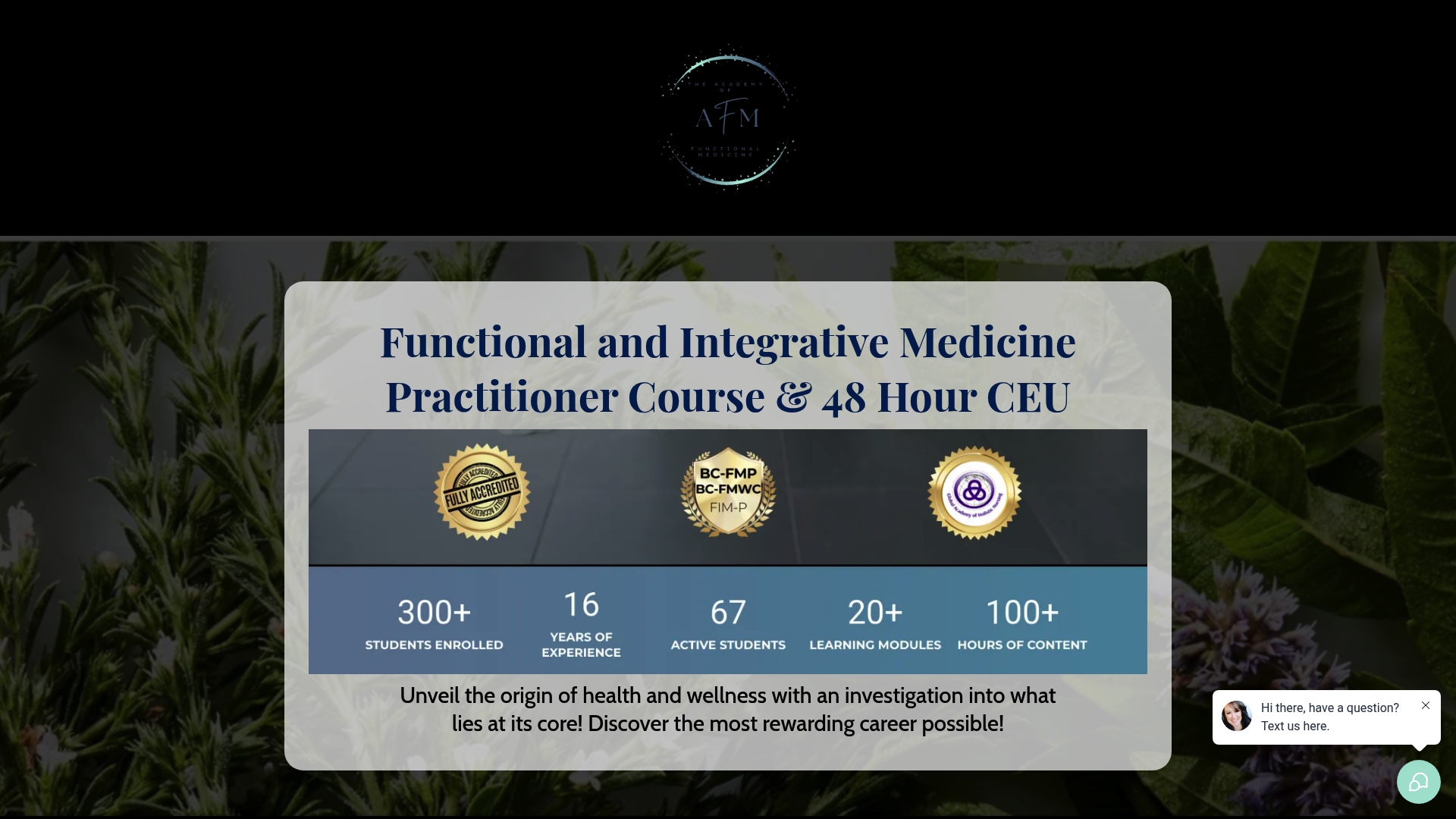
Nurses juggling full-time shifts consistently ask about time-to-completion, and the self-paced module structure is designed around that reality rather than a rigid classroom schedule. For nurses eyeing private practice or a wellness clinic role, the program also folds in business and marketing coaching, since building a functional medicine caseload takes more than clinical knowledge alone. Tuition and financing details, along with current cohort start dates, are listed on the Institute for Functional Nurses program page, where you can review the certification tracks and start an application today.
Sources
For deeper study, the NCBI Nursing Pharmacology textbook covers ADME and monitoring fundamentals in detail, while the Open RN pharmacology OER offers a free, NCLEX-aligned refresher. For scope-of-practice standards, consult AANP’s position statements, and for a broader primer on the model itself, see this guide to holistic health.
This article is general information, not a substitute for advice from a qualified doctor. Consult a qualified healthcare professional about your own circumstances before acting on anything here.
- Functional Medicine in Nursing
- Functional Medicine in Nursing: Transforming Patient Outcomes through Holistic Care (AJN)
- Nursing Pharmacology, 2nd edition (NCBI Bookshelf)
- Bureau of Labor Statistics - Occupational Employment Statistics