Clinicians' Playbook: Functional Medicine Curriculum & Mentorship
Clinicians’ Playbook: Functional Medicine Curriculum & Mentorship
A functional medicine curriculum trains clinicians to organize patient data around root causes, using a systems-biology framework instead of a symptom checklist. It suits nurses, nurse practitioners, and licensed providers who want board-recognized certification and skills they can use in practice this year, not someday. The move that separates a strong career shift from a wasted enrollment: choose an accredited, clinically supervised program with real mentorship, not a self-paced video library.
TL;DR:
- Enrolling in an accredited, clinically supervised functional medicine program with real mentorship ensures practical competency, not just theoretical knowledge.
- A comprehensive curriculum covers systems-biology foundations, clinical assessment skills, biomarker interpretation, therapeutics hierarchy, and outcome tracking.
- Certification programs typically range from a few thousand dollars up to $8,000, with accreditation and supervised clinical cases as key factors for value.
- Practical clinical training, mentorship, case review, and structured case logs are essential to translate knowledge into actionable patient care.
- Most professionals use certification to expand careers by integrating root-cause approaches, building niches, and increasing earning potential in diverse clinical settings.
Table of Contents
- What a Functional Medicine Curriculum Actually Covers
- Certification, Fellowship, or Degree: What Each Credential Actually Signals
- A Sample Syllabus: What a Well-Sequenced Program Looks Like
- The Clinical Training Piece Most Programs Skip
- Bringing Functional Medicine Into Your Practice Without Overhauling It Overnight
- How the Institute for Functional Nurses Approaches Curriculum Design
- Career Outcomes and Job Prospects After Certification
- Comparing Program Types Before You Enroll
- What Functional Medicine Education Actually Costs
- Where Curriculum Design Should Go Next
- Get Board-Level Functional Medicine Competency With the Institute for Functional Nurses
- Sources
- FAQ
What a Functional Medicine Curriculum Actually Covers
A functional medicine curriculum is not a rebrand of nutrition school. Its backbone is the Functional Medicine Matrix, a framework that organizes a patient’s antecedents, triggers, and mediators so a clinician can trace symptoms back to a physiological cause instead of chasing them one by one. Serious programs build every module around that structure.
Here’s what shows up in a curriculum worth your time and tuition:
- Systems-biology foundations. How the GI, immune, endocrine, and detoxification systems interact, and where imbalance in one system shows up as symptoms in another.
- Clinical assessment skills. Building a patient timeline, structured intake, and illness narrative that surfaces the “antecedents” a fifteen-minute visit never catches.
- Lab and biomarker interpretation. Reading functional ranges for GI panels, metabolic markers, immune markers, and mitochondrial or bioenergetic indicators, not just flagging “normal” versus “abnormal.”
- A therapeutics hierarchy. Lifestyle-first interventions, escalating to targeted nutraceuticals or referral only when the data supports it.
- Outcome tracking. Structured use of patient-reported outcome measures to prove an intervention worked, not just that a patient feels better this week.
A curriculum missing any one of these tends to produce practitioners who can talk about root causes convincingly but can’t actually operationalize the model with a real patient chart in front of them.
Certification, Fellowship, or Degree: What Each Credential Actually Signals
Not every functional medicine credential means the same thing, and that distinction matters for how you market yourself and what your scope allows. A certificate program typically runs weeks to several months and signals foundational competency in the model. A fellowship, usually tied to an academic medical center, runs one to two years, layers in supervised clinical practice, and signals deeper integration skill. An academic degree track is rarer and slower, aimed more at researchers or educators than working clinicians.
For most nurses and practitioners, the practical middle ground is a board-recognized certification. Here’s what to check before enrolling:
- Program length and hours. Reputable certification programs typically report a range of contact hours varying by depth and clinical components, depending on depth and clinical components.
- CEU counts. Confirm the CEUs are recognized by your state board or nursing organization, not just self-issued.
- Cost range. Certification programs commonly cost from a few thousand dollars up to higher amounts, depending on mentorship intensity and clinical hours included.
- Accreditation verification. Look up the accrediting body directly rather than trusting a program’s own claims. ACCME is the standard reference point for continuing medical education accreditation in the United States, and similar bodies exist for nursing-specific CE.
If a program can’t tell you exactly which body accredits its CEUs, or dodges the question with vague language about “industry recognition,” treat that as a warning sign, not a technicality.
A Sample Syllabus: What a Well-Sequenced Program Looks Like
Sequencing matters more than most applicants realize. A curriculum that dumps organ-system modules on you before you understand the Matrix framework produces clinicians who memorize protocols without understanding why one intervention comes before another. Programs built around what’s sometimes called the “sequence gap” problem teach the order of operations, not just the content.
A representative sequence looks like this:
- Foundations module. The Matrix, systems biology basics, and the clinical reasoning model that ties everything else together.
- Organ-system modules. GI health, bioenergetics and mitochondrial function, endocrine and hormone balance, immune regulation, detoxification pathways, and often a module on psychiatric and pain presentations through a functional lens.
- Labs and testing module. Interpreting functional lab panels and matching testing choices to the clinical picture instead of ordering everything available.
- Clinical integration and capstone. Case write-ups, a capstone project, and often an objective observed assessment where you demonstrate the full reasoning process on a real or simulated case.
Expect a weekly time commitment somewhere between three and eight hours for a self-paced or hybrid program, more during clinical immersion phases. Assessment formats vary, but the strongest programs use case-based write-ups and capstone projects over multiple-choice tests, because clinical reasoning doesn’t show up well on a scantron.
The Clinical Training Piece Most Programs Skip
Knowledge without supervised practice is the single biggest gap in weaker functional medicine programs. You can watch every video module twice and still freeze on your first real patient with five overlapping chronic conditions. That’s what mentorship, grand rounds, and supervised cases are for.
Look for these elements specifically:
- Longitudinal mentorship. Not a one-time webinar, but ongoing access to an experienced practitioner who reviews your reasoning on live cases over months.
- Case-based grand rounds. Group review of real (de-identified) patient cases, where you see how experienced clinicians sequence their interventions.
- Clinical immersion options. Preceptorships, live rounds, or structured simulations that force you to apply the Matrix under time pressure.
- Competency measurement. Case logs, observed assessments, and patient outcome tracking, not just a certificate of completion.
Programs that end the moment you pass a final exam, with no continued mentorship pathway, tend to produce lower sustained clinical uptake. Clinicians drift back to old habits within months without a working relationship to lean on when a case doesn’t fit the textbook pattern.
Pro Tip: Ask any program directly how many supervised or reviewed cases a graduate typically completes before certification. If the honest answer is zero, that program is teaching theory, not clinical skill.

Bringing Functional Medicine Into Your Practice Without Overhauling It Overnight
Finishing a functional medicine curriculum doesn’t mean you flip your whole practice model on day one. Start smaller and build from there.
- Start with lifestyle pillars. Sleep, stress regulation, movement, and nutrition are the foundational interventions to address before ordering advanced labs. They’re lower-risk, cheaper for the patient, and often resolve a surprising share of complaints on their own.
- Restructure your visit flow. Intake and timeline first, then a prioritized short list of interventions, then a scheduled follow-up with a specific metric to measure change.
- Document defensively. Your notes should show the clinical reasoning behind each intervention choice, both for continuity of care and for scope-of-practice protection.
- Know your referral lines. Functional medicine training doesn’t expand your legal scope of practice. Build referral relationships early for anything outside your license.
- Track individual cases. Structured single-patient tracking, sometimes called N-of-1 evidence, gives you a defensible record of what worked for a specific patient even when no large trial covers their exact presentation.
A lifestyle medicine coaching framework can give you a ready-made structure for that first pillar-focused phase instead of building one from scratch.
How the Institute for Functional Nurses Approaches Curriculum Design
The Institute for Functional Nurses built its program around the exact gap most clinicians run into: plenty of theory, not enough clinically applicable skill. The curriculum focuses on practical application from the first module, so what you learn maps directly onto patient charts you’re already managing.
What stands out in the design:
- Board-certification pathway. Credentials provide graduates recognized designations tied to specific competency levels.
- Blended online format. Self-paced modules paired with clinical application assignments, designed for practitioners unable to pause a full-time caseload for extended residential programs.
- Mentorship incorporated into the program structure, rather than offered separately.
- Business and marketing coaching aimed at nurse entrepreneurs interested in building a practice, not solely adding a certificate to a resume.
Graduates often report increased competency and stronger marketability in a sector experiencing rising interest in complementary and integrative care.
Career Outcomes and Job Prospects After Certification
Certified functional medicine practitioners typically move into one of three tracks: integrating the model into an existing clinical role, launching a private cash-pay or hybrid practice, or consulting for wellness-focused organizations. Registered nurses and nurse practitioners with certification often report expanded earning potential, since board certification tends to correlate with higher nurse income across specialty tracks.
Demand is being pulled by patient behavior, not just clinician interest. More patients are actively seeking complementary and integrative approaches for chronic pain and long-standing conditions that conventional visits haven’t resolved. That shift creates room for certified practitioners inside hospital systems building integrative service lines, inside concierge and functional medicine clinics, and inside solo or small-group private practices built entirely around root-cause care.
The practitioners who see the strongest career lift tend to be the ones who pair certification with a clear niche. A nurse practitioner who markets specifically around autoimmune conditions or metabolic syndrome, backed by a defensible certification and documented outcomes, differentiates faster than one offering generalized “wellness” services. Health coaches who complete certification often use it to justify premium pricing and to work more closely with prescribing clinicians, since the shared vocabulary and framework make referrals and collaboration smoother.
The credential alone won’t build a practice. But it removes the credibility gap that keeps many capable clinicians from charging appropriately or marketing confidently in this space.
Comparing Program Types Before You Enroll
Functional medicine education comes in three broad structures, and each fits a different career stage. Academic fellowships, typically housed inside university health science centers, combine asynchronous coursework with live mentoring, grand rounds, and residential retreats over one to two years. UCI’s Integrative & Functional Medicine Fellowship is a well-documented example of this model, built for physicians and advanced practitioners who can commit significant time and expect a slower, deeper immersion.
Standalone certification programs sit at the other end: shorter, more accessible, priced for individual practitioners rather than institutions, and built for working clinicians who need flexibility more than a two-year residential commitment. One program in this category is designed specifically for nurses and health coaches rather than physicians pursuing academic fellowships.
A third category, general online nursing education platforms, offers broader continuing education without a functional medicine specialization. These can supplement your understanding of program delivery formats in nursing education generally, but they rarely provide the clinical depth or mentorship structure a dedicated functional medicine certification builds in from the start.
The right fit depends on your current license, your available time, and whether you need academic prestige or practical, billable clinical skill faster. Most working nurses and NPs get more direct career value from a focused certification than from a multi-year academic fellowship designed around a different professional track.
What Functional Medicine Education Actually Costs
Tuition for functional medicine programs varies widely based on format and depth. Standalone certification programs for nurses and health coaches commonly range from roughly $2,000 to $8,000, depending on how much mentorship, clinical hours, and business coaching are bundled in. Academic fellowships tied to university health centers tend to run considerably higher once you factor in the extended timeline, travel for residential components, and institutional overhead.
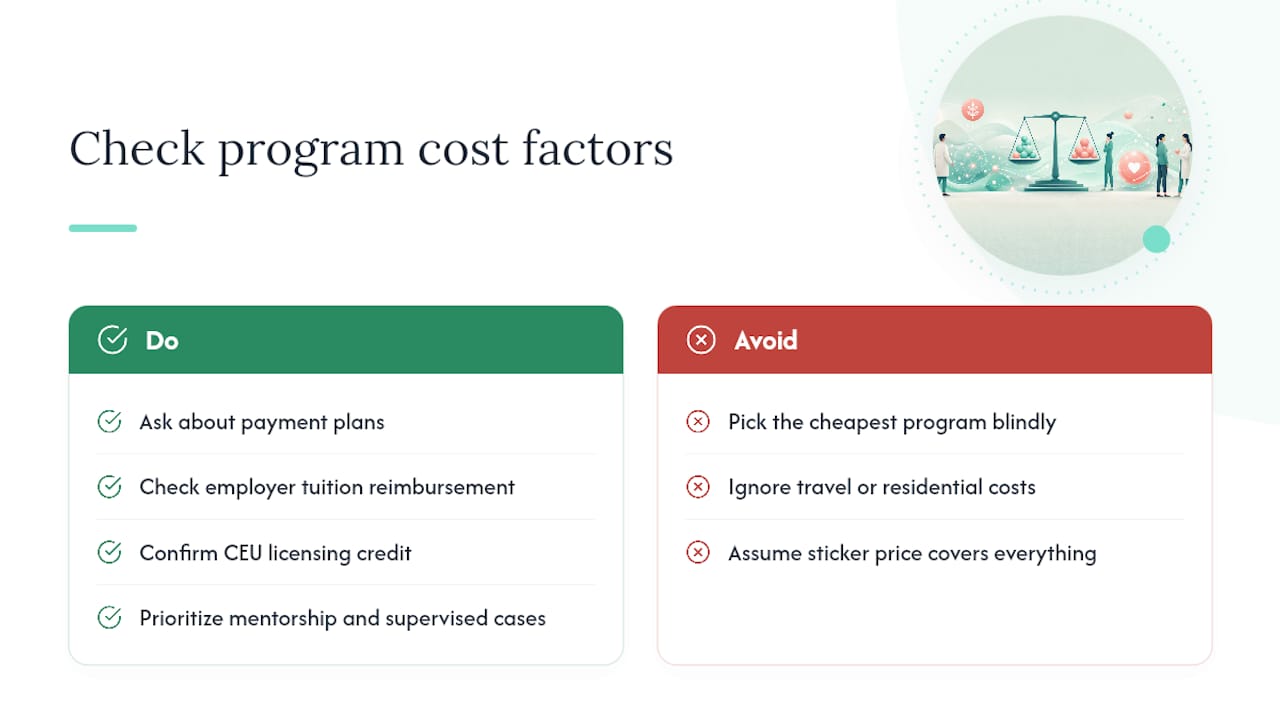
A few cost factors matter more than the sticker price:
Financing structures vary by program. Some certification providers offer payment plans that break tuition into monthly installments, which matters if you’re paying out of pocket rather than through employer tuition assistance. Ask directly whether a program offers payment plans, since this isn’t always advertised on the main landing page.
Employer tuition reimbursement is worth checking before you assume you’re covering the full cost yourself. Many hospital systems and larger clinical employers reimburse continuing education tied to a recognized credential, particularly when the certification expands the services a nurse or NP can offer patients.
CEU value also factors into cost calculations indirectly. If a program’s CEUs count toward your state licensing renewal requirements, you’re effectively getting two outcomes from one tuition payment: a specialized credential and mandatory continuing education you’d otherwise have to pay for separately.
The lowest-cost option isn’t always the best value. A cheaper program with no supervised cases and no mentorship pathway can cost you more in the long run through lost confidence, slower client acquisition, and a credential that doesn’t hold up under scrutiny from patients or referring physicians.
Where Curriculum Design Should Go Next
The biggest weakness in current functional medicine education isn’t content depth. It’s sequencing and evidence integration. Too many programs teach protocols as static lists instead of teaching clinical judgment: what to prioritize first in a patient with five overlapping systems in disarray, and why.
Curricula also need to catch up on evidence. Real-world outcomes, patient-reported measures, and N-of-1 case tracking deserve as much classroom time as the biochemistry does. And mentorship shouldn’t be an optional add-on. It should be the mechanism that turns a certificate into an actual clinical skill.
— Lauren
Get Board-Level Functional Medicine Competency With the Institute for Functional Nurses
If you’ve read this far, you already know what separates a real functional medicine curriculum from a glorified video library: accreditation, supervised clinical application, and mentorship that doesn’t end when the course does. The Institute for Functional Nurses builds its program around exactly that, at a fraction of the time investment a multi-year academic fellowship demands.
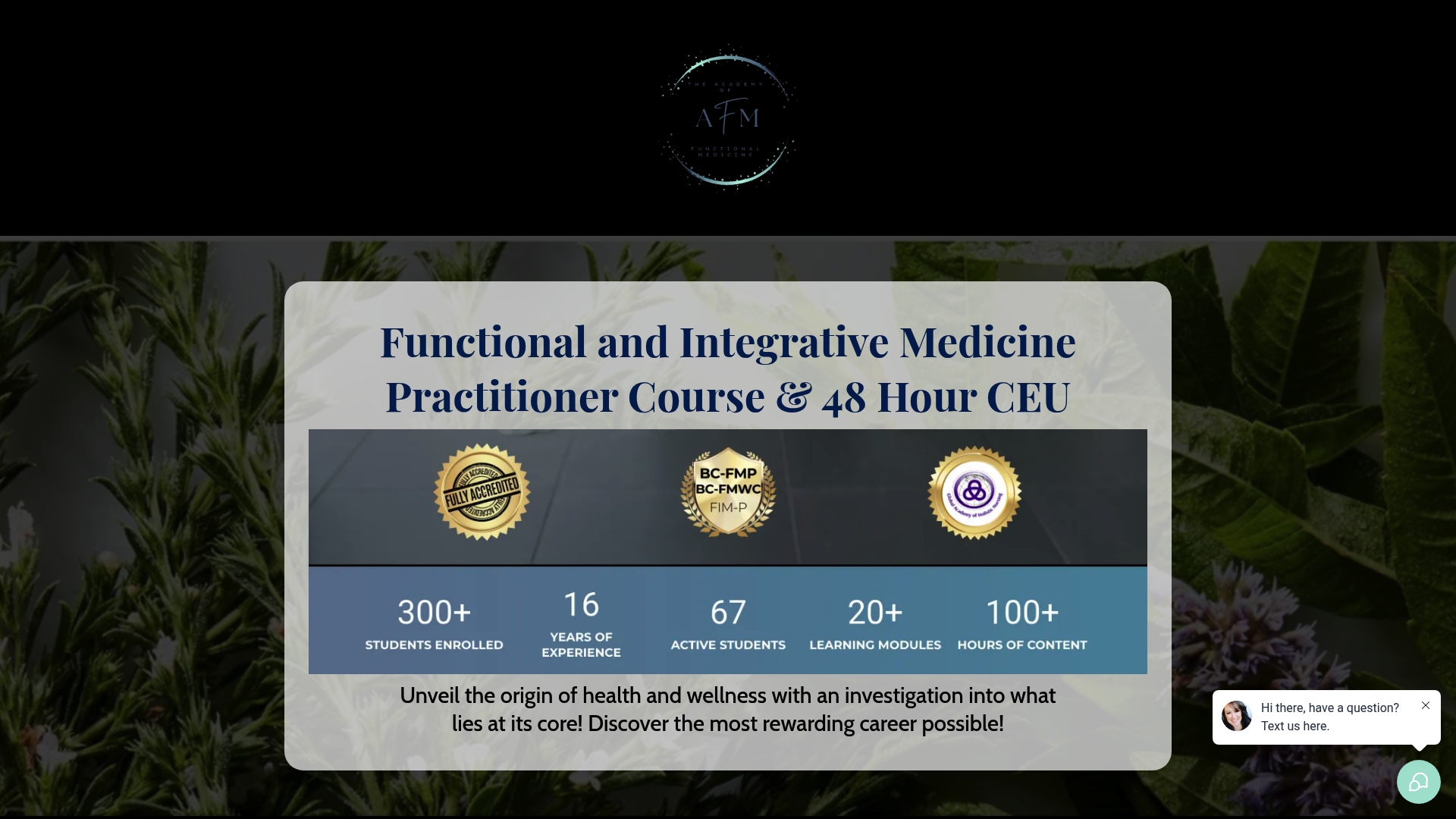
The program includes board-certification pathways and integrates practical clinical application and mentorship throughout. It is designed for healthcare professionals seeking to increase competency and marketability without extensive time away from their current practice.
If you’re ready to see how the curriculum maps to your license and career goals, view the full program details at Functionalacademy and request enrollment information today.
Sources
- Form follows function: A functional medicine overview (PMC)
- Curriculum – Integrative & Functional Medicine Fellowship – UCI SSIHI
- ACCME — Accreditation Council for Continuing Medical Education
FAQ
What Are the 5 R’s of Functional Medicine?
The 5 R’s framework, taught in many curricula as a treatment sequence for gut and systemic imbalance, generally covers Remove, Replace, Reinoculate, Repair, and Rebalance. Programs vary slightly in how they name or order these steps, so confirm the specific model a program teaches before assuming it matches another course’s terminology.
What Is the Controversy With Functional Medicine?
Critics argue that some functional medicine practices rely on tests and interventions without strong randomized trial support, while proponents point to a growing case for real-world evidence and patient-reported outcomes as a legitimate complement to traditional trial data for individualized care. A credible curriculum should teach you to recognize that gap, not paper over it.
Is There a Free Course That Teaches Functional Medicine?
Free introductory materials exist across various platforms, but they typically cover only surface-level concepts without the supervised clinical practice, mentorship, or accredited CEUs that board-recognized certification requires. Treat free content as an orientation, not a substitute for a credentialed program.
What Education Does a Functional Medicine Practitioner Need?
Most functional medicine practitioners are already licensed clinicians, such as registered nurses, nurse practitioners, or physicians, who add a certification or fellowship focused on systems-biology assessment and the Functional Medicine Matrix. The credential builds on an existing license rather than replacing standard medical or nursing education.