
Functional Medicine Corporate Wellness: A 2026 Guide
Functional Medicine Corporate Wellness: A 2026 Guide
Functional medicine corporate wellness is a systems biology approach that identifies the root causes of employee health problems rather than managing symptoms after they appear. The standard industry term is “functional medicine,” a clinical framework that integrates conventional diagnostics with biomarker analysis, metabolic testing, and personalized care protocols. Corporate wellness programs built on this model treat each employee as a unique biological system shaped by genetics, lifestyle, and environment. The result is a shift from reactive sick care to proactive, measurable health building across your entire workforce.
What is functional medicine corporate wellness, and how does it differ from traditional programs?
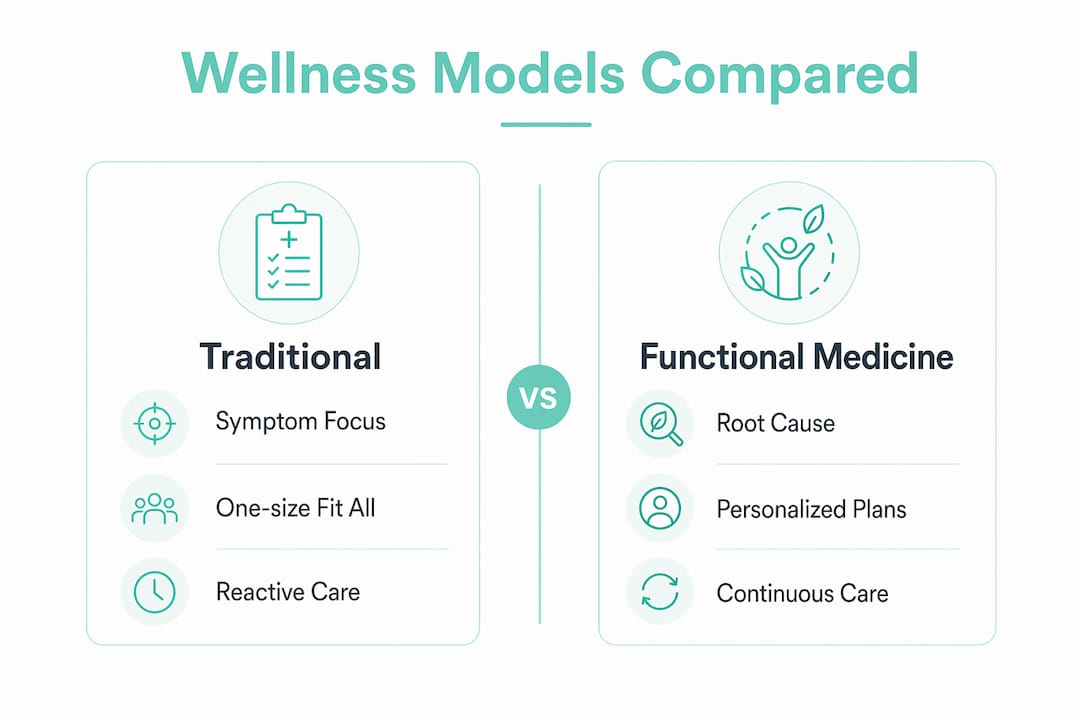
Functional medicine is a root-cause clinical framework that integrates systems biology with conventional diagnostics to identify drivers like inflammation, hormonal imbalance, and gut dysbiosis. Traditional corporate wellness programs typically offer gym discounts, annual health screenings, and generic nutrition seminars. Functional medicine in the workplace goes several layers deeper, using advanced biomarker panels and metabolic assessments to build individualized health plans for each employee.
The core difference is personalization. Standard programs apply the same intervention to every employee regardless of their biology. Functional medicine practitioners recognize that normal lab ranges often mask subtle dysfunction, meaning an employee can pass a routine screening while still experiencing chronic fatigue, poor sleep, or declining mental clarity. Catching those gaps early is where functional medicine earns its place in corporate health strategy.

The table below shows the practical differences between the two models.
| Feature | Traditional corporate wellness | Functional medicine corporate wellness |
|---|---|---|
| Focus | Symptom management and general prevention | Root-cause identification and resolution |
| Assessment | Annual biometric screening | Advanced biomarker, metabolic, and stress profiling |
| Intervention | Group programs and generic health content | Personalized nutrition, supplementation, and coaching |
| Care model | One-time or annual touchpoints | Iterative, ongoing adjustment based on employee response |
| Outcome tracking | Participation rates and self-reported satisfaction | Measurable health metrics: energy, sleep, PROMIS scores |
Functional medicine care is iterative and personalized, adjusting treatment plans based on each employee’s response rather than following a fixed protocol. That continuous feedback loop is what separates it from the one-and-done wellness challenges most coordinators have tried before.
What does the science say about outcomes?
The evidence for functional medicine in corporate settings is concrete and growing. Patients receiving functional medicine care report significantly better physical health quality of life improvements compared to conventional care, measured by statistically significant higher PROMIS global physical health scores at 6 and 12 months. PROMIS is a validated National Institutes of Health measurement system, so these are not soft survey results. They are clinically recognized benchmarks.
The financial case is equally strong. Corporate programs using functional medicine can reduce unnecessary healthcare claims by about 45% within one year by cutting repeat specialist visits and redundant testing. That figure comes from pilot program data, and it reflects a structural change in how employees use the healthcare system, not just a temporary dip in claims.
Key outcomes documented across functional medicine workplace programs include:
- Improved energy and stress recovery measured through cortisol and adrenal biomarkers
- Better mental clarity and focus linked to optimized metabolic and nutritional status
- Reduced chronic disease incidence through early detection of metabolic dysfunction
- Higher employee engagement tied to visible, personalized health improvements
- Lower healthcare utilization from fewer unnecessary specialist referrals
Organizations that implement functional medicine see measurable improvements in workforce resilience and job performance. That outcome is not accidental. When employees feel genuinely well, not just symptom-free, their output and engagement reflect it.
The shift from crisis management to continuous resilience building defines the future of corporate health strategy. Functional medicine makes that shift operational by giving coordinators measurable markers to track and adjust over time.
How do you implement functional medicine in a corporate wellness program?
Implementation follows a structured sequence. Skipping phases is the most common reason programs underdeliver. Corporate functional medicine programs typically run through design phases lasting 4–8 weeks, including on-site or virtual workshops, one-on-one coaching, and biometric monitoring.
Here is a proven implementation sequence for wellness coordinators:
- Conduct an organizational health assessment. Survey current healthcare claims, absenteeism rates, and employee-reported health concerns. This baseline tells you where the highest-burden conditions are concentrated.
- Run metabolic and stress profiling. Offer employees advanced biomarker testing covering thyroid function, inflammatory markers, cortisol patterns, and nutrient status. This replaces the standard annual screening with data that actually drives decisions.
- Build personalized intervention plans. Use biomarker results to assign each employee a tailored protocol covering nutrition, supplementation, sleep hygiene, and stress management. Customized plans based on biomarker data outperform generic supplement programs because corporate depletion patterns vary widely across individuals.
- Deploy workshops and coaching touchpoints. Combine group education sessions on topics like metabolic health and sleep with individual coaching check-ins every 4–6 weeks.
- Track biometrics and adjust protocols. Retest key biomarkers at 3 and 6 months. Adjust interventions based on measurable change, not self-reported satisfaction alone.
- Report outcomes to leadership. Translate health metrics into business language: reduced claims, lower absenteeism, improved productivity scores. This keeps executive buy-in strong.
Pro Tip: Engage one internal champion per department before launch. A respected team lead who visibly participates in the program drives peer adoption faster than any company-wide email campaign.
Coordinators who want a deeper look at care sequencing and patient engagement strategies will find the clinical timeline framework directly applicable to corporate program planning.
What are the real benefits and challenges for employers and employees?
The benefits of functional medicine in the workplace are measurable and documented. The challenges are real but solvable with the right framing.
Benefits for employers:
- Reduced healthcare claims through fewer specialist referrals and repeat diagnostics
- Lower absenteeism tied to resolution of chronic fatigue, headaches, and metabolic dysfunction
- Stronger retention because employees feel the organization invests in their actual health
- A wellness culture that attracts health-conscious talent in competitive hiring markets
Benefits for employees:
- Personalized care that addresses symptoms their primary care physician never fully resolved
- Improved energy, mental clarity, and sleep quality within the first 3–6 months
- A clear understanding of their own biomarkers and what drives their health
- Access to functional medicine practitioners who spend real time on root-cause analysis
The primary challenge is upfront investment. Functional medicine assessments and personalized protocols cost more than a gym subsidy. Perceived high costs are the most cited barrier, but the long-term math favors the investment when you account for reduced claims and improved productivity. The 45% reduction in unnecessary healthcare claims documented in pilot programs makes the ROI case clearly.
Employee buy-in is the second challenge. Some employees distrust anything beyond conventional medicine. Others simply do not want to share detailed health data with their employer.
Pro Tip: Position the program as a voluntary, confidential benefit rather than a mandatory health initiative. Employees who choose to participate show higher engagement and better outcomes than those enrolled by default.
Coordinators building the evidence base for leadership approval will find lifestyle medicine’s impact on chronic disease a useful resource for framing the business case.
Key Takeaways
Functional medicine corporate wellness delivers measurable health and financial outcomes by replacing generic wellness programs with personalized, root-cause care built on biomarker data and iterative treatment protocols.
| Point | Details |
|---|---|
| Root-cause focus | Functional medicine targets inflammation, hormonal imbalance, and metabolic dysfunction rather than managing symptoms. |
| Proven outcomes | Programs show significantly higher PROMIS physical health scores and up to 45% fewer unnecessary healthcare claims within one year. |
| Structured implementation | A 4–8 week design phase with biomarker profiling, personalized coaching, and biometric tracking drives the best results. |
| Cost barrier is solvable | Long-term ROI from reduced claims and lower absenteeism outweighs the higher upfront cost of personalized assessments. |
| Personalization is non-negotiable | Generic protocols miss the wide variation in employee depletion patterns. Biomarker-driven plans are what produce lasting change. |
Why I believe functional medicine is the only corporate wellness model worth building
I have watched corporate wellness programs cycle through the same playbook for years. Biometric screenings that flag cholesterol. Step challenges that spike in january and collapse by march. Meditation apps that get downloaded and forgotten. None of it moves the needle on the chronic conditions that actually drive healthcare costs and absenteeism.
What changes with functional medicine is the unit of analysis. You stop treating the workforce as a population and start treating each employee as a biological individual. That sounds obvious, but it is a radical departure from how most corporate health programs are designed. When you run advanced biomarker panels and find that 30% of your workforce has subclinical thyroid dysfunction or elevated inflammatory markers, you have something to act on. Generic wellness content does not give you that.
The caution I would offer is this: the quality of the functional medicine provider you select determines everything. Not every practitioner who uses the term “functional medicine” operates from a rigorous, evidence-based framework. Look for providers who use validated diagnostic tools, document outcomes systematically, and adjust protocols based on measurable response. Credentials matter here. Practitioners trained through accredited programs, like those offered by Functionalacademy, bring a level of clinical rigor that separates real functional medicine from wellness theater.
The programs that succeed long-term are the ones that treat employee health as a measurable organizational input, not a benefit checkbox. That mindset shift is the real work.
— Lauren
Functionalacademy: training the practitioners who power corporate wellness
Corporate wellness coordinators are only as effective as the practitioners they partner with. Finding functional medicine providers who combine clinical depth with practical workplace application is the real challenge.
Functionalacademy offers a fully accredited, board certification program for registered nurses and healthcare practitioners who want to deliver evidence-based functional medicine care. The curriculum covers root-cause diagnostics, personalized protocol design, and clinical application, exactly the skills your corporate wellness program needs from its provider partners. Coordinators who want to vet or train practitioners for their programs can explore the full curriculum at Functionalacademy. Building a program on practitioners with verified functional medicine training is the fastest way to get measurable results from your wellness investment.
FAQ
What is functional medicine corporate wellness?
Functional medicine corporate wellness is a personalized, root-cause approach to employee health that uses advanced biomarker testing and individualized care protocols instead of generic wellness programs. It is grounded in systems biology and targets drivers like inflammation, hormonal imbalance, and metabolic dysfunction.
How does a functional medicine corporate wellness program work?
Programs begin with organizational health assessments and employee metabolic profiling, followed by personalized nutrition, supplementation, and coaching plans. Biometrics are tracked at regular intervals and protocols are adjusted based on measurable outcomes.
What are the proven benefits of functional medicine in the workplace?
Documented benefits include significantly higher PROMIS physical health scores, up to 45% fewer unnecessary healthcare claims within one year, and measurable improvements in employee energy, mental clarity, and stress recovery.
How much does a corporate functional medicine program cost?
Costs vary by program scope and provider. The upfront investment is higher than standard wellness benefits, but pilot data shows the reduction in healthcare claims and absenteeism produces a positive return within the first year.
Who delivers functional medicine services in a corporate setting?
Qualified practitioners include physicians, registered nurses, and health coaches trained in functional medicine. Coordinators should prioritize providers with accredited training and documented clinical outcomes to ensure program quality.