
U.S. Clinicians' Road to Accredited Functional Medicine CEUs That Count
U.S. Clinicians’ Road to Accredited Functional Medicine CEUs That Count
A functional medicine CEU is an accredited continuing-education activity, recognized by bodies like ANCC, ACPE, ACCME, or IPCE, that teaches root-cause clinical strategies and awards credit you can apply toward licensure or board certification. The fastest path to earning one is enrolling in an accredited on-demand module or an IPCE activity that lists a clear credit value on its course page. The Institute for Functional Nurses offers accredited CE and board-certification pathways built specifically for U.S. clinicians who want both.
TL;DR:
- Accredited courses must explicitly show a credit amount, activity number, and the accrediting body’s name to be recognized for license renewal.
- Functional medicine CE can be delivered through on-demand courses, live webinars, or structured certification programs, each offering different flexibility and credit amounts.
- Reporting credits promptly through the correct channels, such as CPE Monitor for pharmacists or state boards for nurses, is essential to validate earning the CEUs.
- Costs vary: single modules often cost less but offer fewer credits, while bundled programs can provide more hours at a lower rate per credit.
- The Institute for Functional Nurses offers structured, clinically focused CE combined with board certification, designed to impact clinical practice directly.
Table of Contents
- Which Credits and Accreditations Actually Count?
- What Formats Offer Functional Medicine CEUs?
- How Do You Choose an Accredited Functional Medicine CE Course?
- How Do You Claim and Report Your CEUs After You Finish?
- What Do Functional Medicine CEUs Typically Cost?
- How Does the Institute for Functional Nurses Fit Into This Picture?
- Why Functional Medicine CEUs Change How You Practice, Not Just What You’re Certified In
- Ready to Request Your Syllabus?
- Sources
- FAQ
Which Credits and Accreditations Actually Count?
Not every functional medicine course you find online will satisfy your license renewal requirements. The accrediting body attached to a course determines whether your state board, employer, or certification program will actually recognize the hours, and each profession has its own gatekeeper.
ANCC (American Nurses Credentialing Center) accredits the CE that most registered nurses and nurse practitioners use for license renewal. ACPE (Accreditation Council for Pharmacy Education) governs pharmacy continuing education, often called CPE, and pharmacists must report those hours through CPE Monitor. ACCME (Accreditation Council for Continuing Medical Education) oversees physician CME.

Then there’s IPCE, or Interprofessional Continuing Education, jointly accredited activities designed so multiple professions can earn credit from the same course. A MedStar Health IPCE activity demonstrates this at scale, offering up to 24.0 IPCE credits through joint accreditation by ACCME, ACPE, and ANCC together. That single design lets a nurse, a pharmacist, and a physician on the same care team walk away with credit that counts for each of their licenses.
Before enrolling in anything, verify these details on the course page:
- A Universal Activity Number (UAN) or activity number tied to the accrediting body
- A joint-accreditation statement if the course claims IPCE credit
- A clearly listed credit amount, not a vague “CE available” claim
- An expiration or release date showing the accreditation is current
What Formats Offer Functional Medicine CEUs?
Functional medicine CE shows up in a handful of formats, and each one fits a different kind of schedule and learning style.
- On-demand courses. These are the most convenient option for clinicians juggling shift work, typically issuing anywhere from 1 to 6 CE credits per module, with a downloadable certificate generated automatically once you pass an assessment.
- Live webinars and multi-day events. These tend to offer more interactivity, deeper Q&A with faculty, and larger credit packages. IPCE team activities, like the MedStar Health example above, often run in this format because they need real-time coordination across professions.
- Certificate and board-certification programs. These bundle CE credit into a longer, structured curriculum that pairs coursework with clinical application, so you walk away with both hours and a credential.
One practical note: pharmacy CE runs through CPE Monitor, which requires your NABP e-Profile ID at the time you complete the course, not weeks later. Nursing credits, by contrast, usually route through your state board’s own portal or your employer’s education tracking system, and the documentation requirements can vary depending on how your employer credentials continuing education.
How Do You Choose an Accredited Functional Medicine CE Course?
Plenty of courses use the words “functional medicine” without ever stating who accredited them or how many credits they’re worth. That’s your first red flag, not a minor omission.
Run every course through this checklist before you pay for it:
- Accreditation transparency. The accreditor’s name, the exact credit amount, a UAN or activity number, and the intended profession should all be visible on the course page, not buried in a syllabus PDF.
- Clinical relevance. Look for case-based learning and tools you can use in a patient visit next week, not abstract theory. Course descriptions built around patient assessment, lab interpretation, and treatment planning tend to translate directly into practice.
- Logistics. Confirm the cost, the time commitment, whether there’s an assessment you need to pass, and the provider’s refund policy before you enroll.
- Faculty and framing. Check who’s teaching, whether they hold clinical credentials in the subject matter, and whether the marketing describes actual learning objectives instead of just vague promises.
Pro Tip: Open a course’s accreditation statement in a separate tab before you buy. If you can’t find the UAN, credit amount, or accrediting body within thirty seconds, move on. That’s exactly how a course gets rejected during license renewal audits.
How Do You Claim and Report Your CEUs After You Finish?
Finishing the course is only half the job. Credit that never gets documented and reported doesn’t exist as far as your license renewal is concerned.
- Download your certificate immediately. Don’t wait until renewal season. Confirm the accreditor’s name and exact credit hours are printed on it before you close the browser tab.
- Report through the right channel for your profession. Pharmacists submit completed activities to CPE Monitor using their NABP e-Profile ID, usually within 60 days of completion. Nurses typically hold onto the certificate and log the credits directly with their state board or employer education system, since processes reference this reporting step explicitly on course pages.
- Follow up if credits don’t post. Most providers post credit within a few business days. If it hasn’t shown up after two weeks, contact the provider directly and request a duplicate certificate with the original UAN attached.
What Do Functional Medicine CEUs Typically Cost?
Expect a wide range depending on format and depth. Short webinars and single modules usually run in the 1 to 6 credit range and cost less, often issuing a single UAN for one sitting. Certificate programs and IPCE bundles sit at the other end. One pharmacy-focused module offers several credit hours on its own, while a full IPCE activity can bundle up to 24.0 IPCE credits into a single structured event.
- Ask your employer about CE reimbursement before you pay out of pocket.
- Bundled certificate programs often cost less per credit hour than buying single modules repeatedly.
- Confirm whether the assessment inside a course also counts toward a broader certification, so you’re not paying twice for overlapping content.
How Does the Institute for Functional Nurses Fit Into This Picture?
The Institute for Functional Nurses, part of the Academy of Functional Medicine, was built around the exact gap this checklist exposes: courses that hand out credit without teaching anything you can use on Monday morning. Its accredited online board certification program bundles CE credit with case-based clinical training, so the hours you earn double as skill-building rather than a box to check.
The curriculum leans on evidence-based strategies for identifying root causes instead of just managing symptoms, which is the clinical philosophy functional medicine CE is supposed to teach in the first place. It’s structured for working clinicians:
- Self-paced modules that fit around shift schedules
- Clinical application built into every module, not tacked on as an afterthought
- Certification pathways (FIM-P, BC-FMP, BC-FMWC) that stack CE credit with a credential you can list on a résumé
Nurses weighing whether certification is worth the time investment should also look at how it affects earning potential down the line, since credentialing and income tend to move together in this field. Before enrolling anywhere, request the syllabus and confirm the exact credit designation against your state board’s requirements.
Why Functional Medicine CEUs Change How You Practice, Not Just What You’re Certified In
The real value of functional medicine CE isn’t the certificate. It’s what happens the next time a patient with three unresolved symptoms sits across from you and you have an actual framework, beyond “refer out” or “manage the labs,” for connecting the dots. Most nursing CE keeps clinicians current on protocols. Functional medicine training does something different: it hands you a lens for asking why a symptom exists in the first place, which is the piece routine CE quietly skips over.
I’d push back on one common assumption, though: that any accredited hours “count the same.” They don’t, clinically speaking. A course that pairs credit with case-based application will change your Monday morning differently than one that’s just recorded lecture and a quiz. Graduates who go on to build integrative practices tend to be the ones who chose the harder, more applied path over the fastest one.
**
Ready to Request Your Syllabus?
If the checklist above left you wondering whether a course actually delivers, the Institute for Functional Nurses skips the guessing. Unlike a scattered mix of single-module CEUs from different providers, it gives you one accredited pathway that stacks your credit hours directly into a board certification, so the hours you’re already required to earn build toward a credential instead of disappearing into a renewal file.
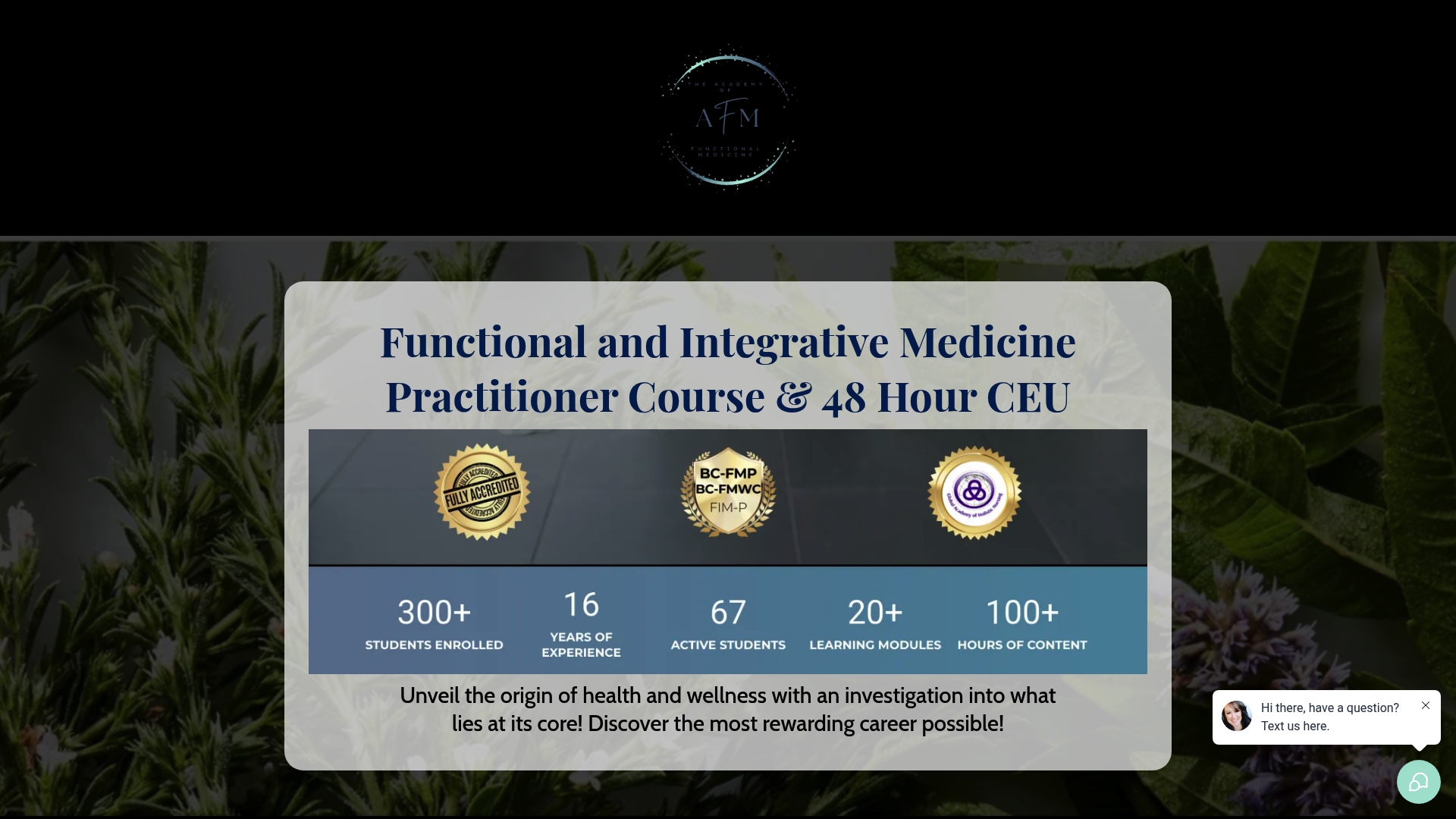
Clicking through gets you the full program overview, the exact credit designation attached to each module, and a clear breakdown of enrollment steps. From there, request the syllabus, confirm the credit hours will satisfy your state board’s requirements, and ask your employer whether the program qualifies for CE reimbursement. Start by visiting the Institute for Functional Nurses program page and requesting the syllabus directly.
This article is general information, not a substitute for advice from a qualified doctor. Consult a qualified healthcare professional about your own circumstances before acting on anything here.
FAQ
What counts as an accredited functional medicine CEU?
An accredited functional medicine CEU is a continuing-education activity recognized by ANCC, ACPE, ACCME, or an IPCE joint-accreditation statement, with a stated credit value and activity number listed on the course page.
What’s the difference between ANCC and AANP CEUs?
ANCC accredits the continuing education activity itself, while AANP is a certifying body for nurse practitioners that accepts CE from ANCC-accredited and other approved sources toward its own renewal requirements.
Can health coaches earn functional medicine CEUs?
Health coaches can complete functional medicine CE content, though the credit typically applies to certification maintenance with their coaching credentialing body rather than a state nursing or pharmacy license.
How many CE credits do functional medicine courses typically offer?
Single modules and webinars usually range from 1 to 6 credits, while certificate and IPCE bundles can reach up to 24.0 IPCE credits in one activity.
Does the Institute for Functional Nurses offer CEUs alongside certification?
Yes. The Institute for Functional Nurses bundles accredited CE credit with its board certification pathways, so completing coursework builds toward both license renewal and a professional credential.