
Functional Medicine Accreditation in 2026: What You Need to Know
Functional Medicine Accreditation in 2026: What You Need to Know
Functional medicine accreditation is the formal credentialing process that verifies a healthcare provider’s expertise in delivering root-cause, systems-biology-based patient care aligned with evidence-based functional medicine protocols. In 2026, this process is governed primarily by the International Board of Functional Medicine Certification (IBFMC) and the Institute for Functional Medicine (IFM), with standards aligned to the National Commission for Certifying Agencies (NCCA). For physicians, nurses, nurse practitioners, and allied health professionals, earning this credential signals far more than course completion. It signals clinical competence, payer recognition, and a commitment to personalized medicine that patients increasingly demand.
What is the functional medicine certification process in 2026?
The accreditation process for functional medicine follows a structured pathway with defined eligibility, curriculum, examination, and maintenance requirements. Here is how it works step by step.
-
Confirm eligibility. The IFM Certified Practitioner (IFMCP) designation is open to licensed clinicians including MDs, DOs, NPs, PAs, DCs, and other credentialed providers. You must hold an active clinical license before applying.
-
Complete the core curriculum. The Applied Functional Medicine in Clinical Practice (AFMCP) course serves as the foundational module. It covers systems-biology frameworks, root-cause analysis, and advanced lab interpretation including organic acids, microbiome panels, hormone testing, and nutrient assessments. Consultations in this model typically run 60 to 90 minutes, which reflects the depth of clinical engagement required.
-
Advance through specialty modules. After AFMCP, candidates complete advanced practice modules covering areas such as cardiometabolic health, hormone health, and immune function. Each module builds clinical depth and prepares candidates for examination.
-
Pass written and oral exams. The IFMCP requires both a written examination and a patient case oral exam. As of 2026, IFM has updated its pilot program structure to strengthen case-based assessment, ensuring candidates demonstrate real-world clinical reasoning, not just theoretical knowledge.
-
Maintain certification through continuing education. Recertification requires ongoing education every two years. This keeps certified practitioners current with evolving research and practice standards.
-
Register with credentialing systems. Once certified, update your CAQH (Council for Affordable Quality Healthcare) profile to reflect your functional medicine credentials. This step directly affects payer panel access and reimbursement eligibility.
Pro Tip: Do not wait until renewal season to update your CAQH profile. Add your IFMCP or other functional medicine credentials immediately upon certification to avoid claim denials and missed panel opportunities with major insurers.
The IBFMC was established in September 2025 as the first dedicated certifying board for functional medicine, overseeing the certification program in alignment with NCCA gold standards. This is a landmark shift. Before IBFMC, functional medicine credentialing lacked a unified governing body, which created inconsistency in how credentials were recognized across institutions and payer networks.
How do major functional medicine certifications compare?
Not all credentials in this space carry equal weight. Understanding the difference between board-level certification and a training certificate is critical for practitioners who want their credentials to hold up under payer scrutiny and institutional review.

IFM certification is widely regarded as the gold standard in the field. Over 100,000 practitioners have trained through IFM, but fewer than 2,000 worldwide held the full IFMCP designation as of mid-2026. That selectivity matters. It signals that IFMCP holders have met rigorous clinical and examination standards, not just attended a seminar.
The American Board of Integrative Medicine (ABOIM) offers a separate board certification in integrative medicine. ABOIM targets physicians and focuses on integrative approaches broadly, whereas IFMCP is specifically functional medicine focused and open to a wider range of licensed clinicians including nurses and nurse practitioners.
Here is how the major credentials compare:
| Credential | Governing Body | Eligible Providers | Exam Required | Scope |
|---|---|---|---|---|
| IFMCP | IFM / IBFMC | MD, DO, NP, PA, DC, RN, others | Yes (written + oral) | Functional medicine specific |
| ABOIM | American Board of Integrative Medicine | MD, DO primarily | Yes | Integrative medicine broad |
| Health coach certificates | Various (non-accredited) | Non-clinical providers | Varies | Wellness coaching only |
| Training certificates | Various programs | Open enrollment | Often no | Education only, no board status |
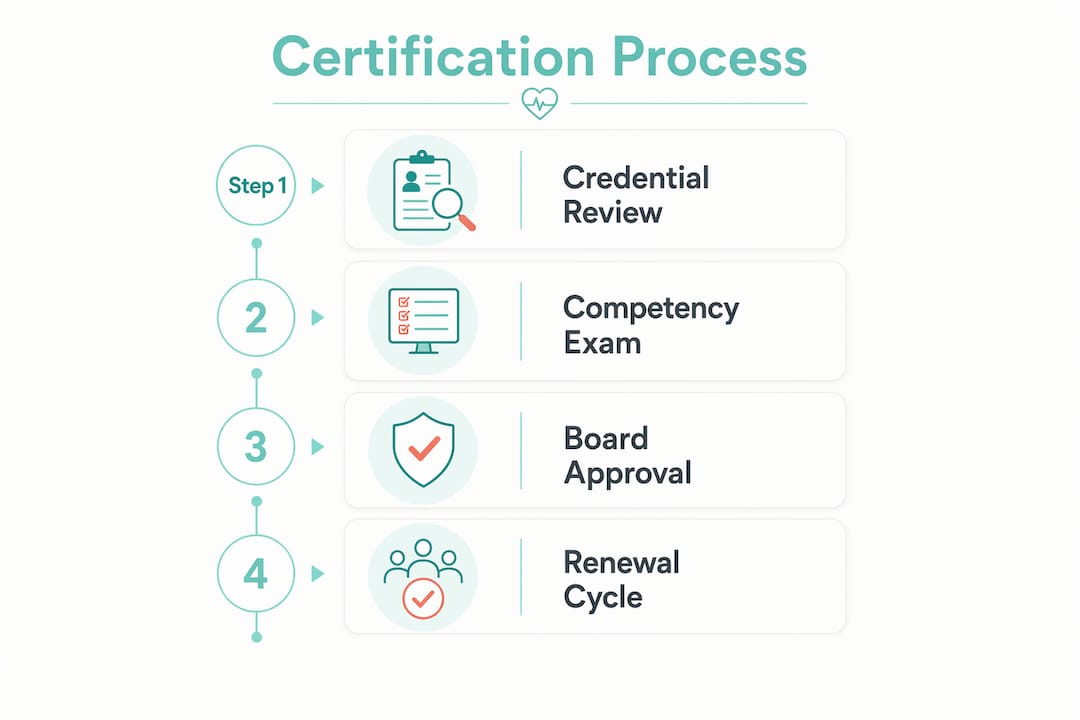
The distinction between board-level certification and a training certificate is not semantic. Board-level certification requires demonstrated clinical competency, patient encounter documentation, and formal examination. A training certificate confirms attendance. Payers, hospitals, and credentialing committees recognize the difference, and so should you.
Key factors that define credential credibility:
- Alignment with NCCA or equivalent accreditation standards
- Requirement for active clinical licensure as a prerequisite
- Formal written and practical examination components
- Mandatory continuing education for maintenance
- Recognition by major payers and credentialing bodies
For nurses exploring this space, understanding integrative nursing practice provides important context for how formal accreditation fits within a broader clinical identity.
How does accreditation impact clinical practice and reimbursement?
Functional medicine remains primarily cash-pay, with initial patient costs ranging from $2,000 to $8,000 and consultation fees between $300 and $1,500. That pricing reflects the time-intensive, personalized nature of the model. However, the reimbursement picture is shifting, and accreditation is the key that unlocks it.
Major payers including Aetna, Cigna, and UnitedHealthcare are actively creating panels for certified integrative and functional medicine providers. This is not a rumor. It is a documented trend driven by patient demand for personalized care and payer interest in preventive models that reduce downstream costs. Accreditation is what gets you in front of those panels.
Here is what accreditation directly enables in practice:
- CAQH profile recognition. Updating your CAQH profile with functional medicine certifications reduces claim scrutiny and positions you for in-network status with integrative-friendly payers.
- Expanded clinical scope. Accredited practitioners can bill for extended evaluation and management codes, nutritional counseling, and care coordination services that non-credentialed providers cannot justify to payers.
- Patient trust and referral credibility. Patients researching functional medicine providers actively look for IFMCP or equivalent credentials. Certification is a visible signal of clinical seriousness.
- Institutional access. Hospitals and integrated health systems increasingly require formal credentials before granting privileges for functional medicine services.
The challenge is that functional medicine certification is not a state-regulated medical specialty. The American Board of Medical Specialties does not recognize it as a standalone specialty. Your primary board certification remains your legal and professional foundation. Functional medicine accreditation builds on top of that foundation, adding a recognized clinical framework that expands what you can offer and how you can bill for it.
Pro Tip: When applying for payer panels as a functional medicine provider, submit your IFMCP certificate alongside your primary board credentials. Payers like Aetna and Cigna have specific credentialing pathways for integrative providers, and leading with both credentials strengthens your application significantly.
Accreditation also functions as what practitioners in this space call a clinical passport. It signals to patients, institutions, and payers alike that you meet a defined standard of competency. That signal is increasingly worth real money as functional medicine improves patient outcomes and payers take notice.
What are the 2026 guidelines shaping accreditation standards?
The 2026 accreditation environment is defined by the formal governance structure that IBFMC introduced in late 2025. Here is what that means in practice.
| Standard | Details |
|---|---|
| IBFMC governance | Established September 2025 as the first dedicated functional medicine certifying board |
| NCCA alignment | Certification program meets gold standard criteria for valid, reliable, and ethical credentialing |
| Curriculum design | Education providers must align programs with IBFMC competency frameworks to qualify graduates for board certification |
| Continuing competency | Practitioners must demonstrate ongoing education every two years to maintain certification status |
| Access initiatives | IFM and IBFMC have introduced scholarship and access programs to reduce financial barriers for underrepresented practitioners |
The NCCA alignment is particularly significant for educators and program designers. NCCA accreditation is the same standard applied to nursing boards, physical therapy boards, and other established healthcare credentialing bodies. Aligning functional medicine certification with that standard removes the “alternative medicine” stigma that has historically limited payer and institutional recognition.
For education providers, this means curriculum must now meet defined competency benchmarks, not just cover a list of topics. Programs that do not align with IBFMC standards will produce graduates who hold training certificates, not board-eligible credentials. That distinction will matter more with every passing year as payer requirements tighten and patient expectations rise.
Key takeaways
Functional medicine accreditation in 2026 is a board-level credentialing process governed by IBFMC, aligned with NCCA standards, and directly tied to payer recognition, clinical scope, and patient trust.
| Point | Details |
|---|---|
| IBFMC governs accreditation | Established in 2025, IBFMC is the first certifying board dedicated to functional medicine credentialing. |
| IFMCP is the gold standard | Fewer than 2,000 practitioners worldwide hold IFMCP, making it a highly selective and credible designation. |
| Accreditation unlocks payer access | Aetna, Cigna, and UnitedHealthcare are opening panels to accredited functional medicine providers. |
| CAQH profile updates are mandatory | Registering your functional medicine credentials in CAQH prevents claim denials and supports network inclusion. |
| Certification complements, not replaces, primary licensure | Functional medicine accreditation builds on your existing board status and expands your clinical framework. |
Why accreditation is the credential you cannot afford to skip
I have watched this field evolve for years, and the practitioners who treat functional medicine certification as optional are making a costly mistake. The market is not waiting. Payers are building panels right now, and they are filling them with credentialed providers. If your CAQH profile does not reflect an IFMCP or equivalent credential, you are invisible to those opportunities.
What I find most telling is the selectivity of the IFMCP. Fewer than 2,000 practitioners worldwide hold it. That is not a barrier. That is a competitive advantage. When a patient searches for a functional medicine provider and sees that designation, it communicates something that a training certificate never can. It says you passed a rigorous examination, documented real patient encounters, and committed to ongoing education.
The IBFMC’s alignment with NCCA standards is the structural shift that changes everything. Functional medicine is no longer a fringe credential operating outside mainstream healthcare governance. It is entering the same credentialing ecosystem as nursing boards and physical therapy boards. That legitimacy will accelerate payer recognition faster than most practitioners expect.
My honest advice: do not wait for your institution to require it. Get credentialed now, update your CAQH profile immediately, and position yourself ahead of the curve. The practitioners who move first will build the practices and the reputations that define this field for the next decade.
— Lauren
Start your accreditation journey with Functionalacademy
If you are ready to pursue functional medicine accreditation and want a program built specifically for the 2026 standards, Functionalacademy is where you start. The Institute for Functional Nurses offers a fully accredited online program designed for registered nurses and healthcare practitioners who want to implement root-cause medicine without stepping away from their current practice.
Functionalacademy’s curriculum aligns with IBFMC competency frameworks and prepares you for board certification while fitting around your existing schedule. You will gain the clinical tools, the credential recognition, and the marketability that today’s integrative healthcare market demands. Graduates report stronger patient outcomes, expanded practice scope, and real career differentiation. Explore how nurses attract wellness clients and build practices that last. The opportunity is here. Take it.
FAQ
What is functional medicine accreditation?
Functional medicine accreditation is a formal credentialing process that certifies a healthcare provider’s competency in root-cause, systems-biology-based clinical care. In 2026, it is governed by the IBFMC and aligned with NCCA gold standards.
Who is eligible for IFMCP certification?
Licensed clinicians including MDs, DOs, NPs, PAs, DCs, and registered nurses with active clinical licenses are eligible to pursue the IFM Certified Practitioner designation.
How long does it take to earn functional medicine certification?
The timeline varies by individual pace, but most practitioners complete the core curriculum, advanced modules, and examination process within one to three years of beginning the program.
Does functional medicine accreditation affect insurance reimbursement?
Yes. Major payers including Aetna, Cigna, and UnitedHealthcare are creating panels for accredited integrative providers. Updating your CAQH profile with your functional medicine credentials is required to access those panels and reduce claim denials.
Is functional medicine a recognized medical specialty?
Functional medicine certification is not recognized by the American Board of Medical Specialties as a standalone specialty. It functions as an advanced credential that complements your primary board certification and expands your clinical framework.