
Functional Lab Interpretation Basics for Clinicians
Functional Lab Interpretation Basics for Clinicians
Functional lab interpretation means reading standard blood work against narrower, optimal ranges rather than the wide population-based “normal” that a lab prints on the report, then weighing that against symptoms, history, and trends over time. The single action to take now: set a testing threshold before you order anything, and treat every result as one data point in a pattern, not a verdict.
Three markers reward this approach immediately:
- TSH, free T3, and free T4 together, not TSH alone
- Fasting insulin, which flags metabolic dysfunction years before glucose or HbA1c move
- hs-CRP, which catches low-grade inflammation invisible to a standard chemistry panel
Pro Tip: A 20-test panel gives a healthy patient a 64.2% chance of at least one “abnormal” result purely from statistical noise. Order fewer tests, ask better questions first.
Key Takeaways
Functional lab interpretation works because it pairs narrower optimal ranges with pre-test probability, patient context, and serial trends, rather than reacting to isolated numbers.
| Point | Details |
|---|---|
| Set a testing threshold first | Establish pre-test probability from history and exam before ordering or reacting to labs. |
| Use functional ranges as a lens | Layer narrower optimal targets onto standard ranges; never replace clinical judgment with a cutoff. |
| Watch trends, not single points | Repeat surprising results and track serial trends from the same accredited lab. |
| Respect the three lab phases | Preanalytical, analytical, and postanalytical errors can all distort a result before you see it. |
| Build the skill through training | Functionalacademy’s accredited certification pathways teach test selection and documentation that reduce misinterpretation. |
Table of Contents
- What Are Functional (Optimal) Lab Ranges, and Why Do They Matter?
- Key Biomarkers Every Functional Interpretation Starts With
- How to Read a Test Result Without Getting Fooled by It
- Building a Practical Workflow: Ordering, Retesting, and Charting
- Where This Approach Can Go Wrong
- How Accredited Training Builds Safer Functional Interpretation
- Why Pattern Recognition Beats the Single Abnormal Value
- Get Formal Training in Functional Lab Interpretation
- Sources
What Are Functional (Optimal) Lab Ranges, and Why Do They Matter?
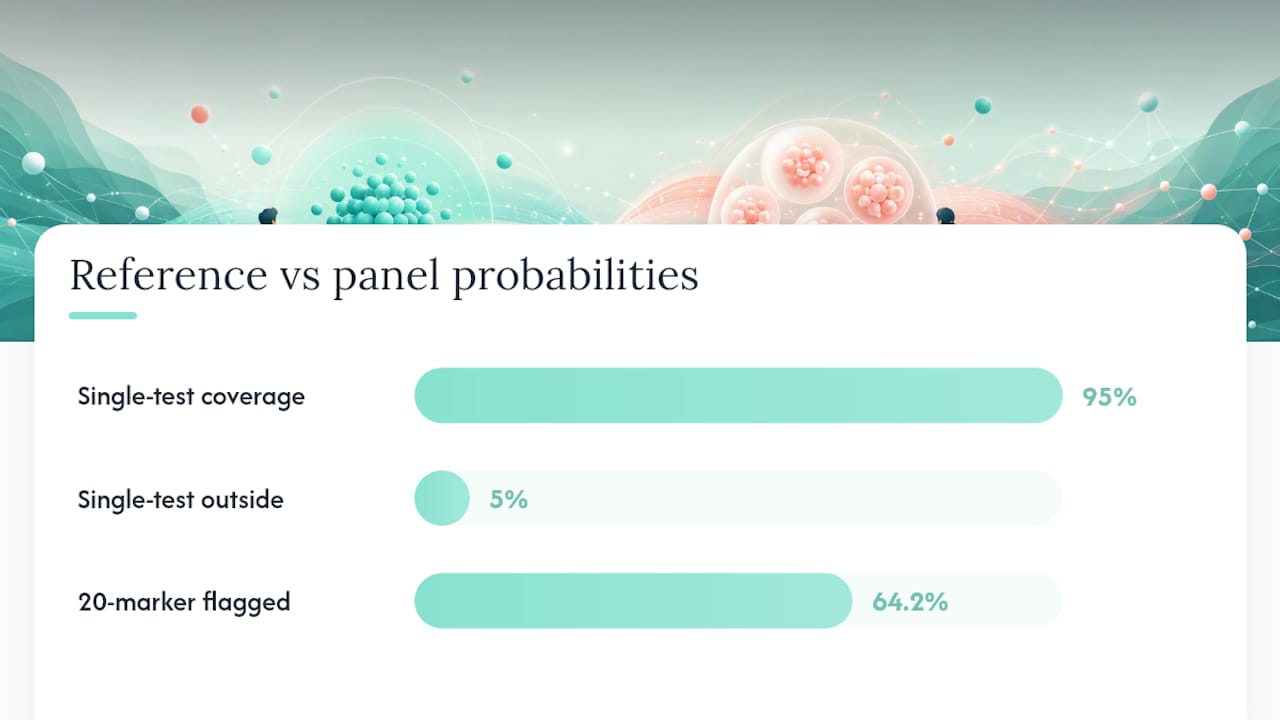
Standard reference ranges come from the central 95% of a reference population. That convention is a statistical convenience, not a health verdict. It means roughly 5% of healthy people fall outside “normal” on any single test, and the wider the panel, the worse the math gets: a 20-marker panel produces at least one flagged result in a healthy patient 64.2% of the time.
Functional or optimal ranges narrow that band based on where dysfunction tends to show up clinically, before a value crosses into pathology. A TSH of 4.2 mIU/L sits inside most labs’ standard range but well outside a functional target most clinicians use to catch early thyroid strain. That gap is the whole argument for functional interpretation.
The risk runs both directions. Narrow the range too aggressively without symptom correlation, and you manufacture “abnormal” findings in people who feel fine, driving unnecessary treatment. The fix is not to treat every out-of-optimal-range number, but to ask: does this number match a symptom pattern, a history, or a trend? If it stands alone, functional ranges work best as a lens layered onto conventional readouts, not a replacement for them.
- Standard ranges answer: is this outside the population?
- Functional ranges answer: is this person actually thriving?
- Neither answer alone should drive a treatment decision.
Key Biomarkers Every Functional Interpretation Starts With
A handful of markers carry most of the clinical signal. Here’s how to read each one against both standard and functional framing.
Thyroid panel. TSH alone misses conversion problems. Run TSH, free T4, free T3, and reverse T3 together, and check thyroid antibodies once if there’s any suspicion of autoimmune involvement. A functional target for TSH often runs narrower than the standard lab range, though the exact cutoff varies by lab and assay, so anchor decisions to the patient’s symptom picture rather than a single number.
Metabolic and insulin markers. Fasting insulin paired with fasting glucose catches early insulin resistance long before HbA1c budges. A triglyceride-to-HDL ratio above 2 suggests insulin resistance worth investigating further. Add apoB or Lp(a) when cardiovascular risk assessment matters and the patient can access those assays.
Inflammation. hs-CRP under 1.0 mg/L is optimal; 1 to 3 mg/L signals moderate cardiovascular risk; above 3.0 mg/L points to active systemic inflammation. ESR adds context but reacts more slowly and less specifically.

Hormones. DHEAS and sex hormones shift with cycle timing, time of day, and recent stress. Standardize collection timing before comparing values across visits.
Nutrients. Vitamin D [25(OH)D], ferritin, and B12 are the highest-yield nutrient checks. Ferritin is an acute-phase reactant, so an elevated result can reflect inflammation rather than iron stores. Always pair it with hs-CRP before concluding iron overload.
Gut and detox markers. Reserve organic acids testing and specialized stool panels for patients with persistent GI symptoms, unexplained fatigue, or non-response to first-line interventions. These are second-tier tests, not baseline screening.
How to Read a Test Result Without Getting Fooled by It
Before ordering anything, establish a pre-test probability, sometimes called a testing threshold. If a patient’s history and presentation already make thyroid dysfunction unlikely, a borderline TSH result changes very little. A test result only matters clinically when it meaningfully shifts your estimate of what’s going on.
This is Bayesian reasoning applied at the bedside: start with a prior probability from history and exam, then update it with the test result.
- Estimate pre-test probability from symptoms, history, and exam.
- Choose a test whose sensitivity and specificity will actually move that probability.
- Interpret the result as a revision of your estimate, not a standalone fact.
Low prior probability blunts even a highly sensitive, highly specific test’s positive predictive value. Order a test with good operating characteristics on a patient with a low pretest likelihood, and a positive result still may not mean much. That’s why context always outranks the number on the page.
Errors compound across three phases. Preanalytical issues include collection timing, fasting status, and medications taken before the draw, which can be better understood by exploring the roles of magnesium and potassium. Analytical variability comes from differences in assay method between labs. Postanalytical errors happen in reporting and transcription. Any one of these can quietly compromise an otherwise sound interpretation.
When a result surprises you, repeat it before acting. A single outlier rarely justifies a treatment change; a confirmed trend does.
Building a Practical Workflow: Ordering, Retesting, and Charting
A workable baseline panel keeps things focused: CBC with differential, comprehensive metabolic panel, full thyroid panel, fasting insulin plus glucose, hs-CRP, vitamin D, and ferritin. That set covers thyroid, metabolic, inflammatory, and nutrient status without ordering blind.
- Order the baseline panel and correlate every flagged value with a specific symptom or history point.
- Layer in advanced testing, such as organic acids or stool analysis, only when the presentation (chronic GI symptoms, unexplained fatigue, non-response to first-line care) justifies it.
- Set a retest interval based on the intervention: nutritional repletion often needs 8 to 12 weeks to show movement, while medication changes may need reassessment in 4 to 6 weeks.
- Chart the specific functional target you’re tracking toward, not just “monitor labs.”
- Use the same accredited lab for serial monitoring whenever possible; method variability between labs can look like a real trend when it’s actually noise.
- Frame results for patients in plain terms: “in range but trending toward a target we want to watch” lands very differently than “abnormal.”
Pro Tip: Document the functional target alongside the lab value in the chart note itself. Six months from now, you want to see what you were aiming for, not just what the number was.
Where This Approach Can Go Wrong
Functional ranges are a pattern-recognition tool, not a diagnostic upgrade, and treating every narrow-range deviation as pathology invites overtesting and unnecessary intervention. A patient chasing a slightly high reverse T3 with supplements they don’t need is a real cost, not a hypothetical one.
- Method variability between labs can manufacture a false trend; stick with one accredited lab for serial comparisons.
- Escalate to endocrinology, cardiology, or another specialty when values suggest disease processes outside primary or functional scope.
- Chart uncertainty honestly. “Elevated ferritin, likely inflammatory, repeat with hs-CRP” is more useful than an overconfident label.
- Know your scope. Functional interpretation supports clinical judgment; it does not replace referral when red-flag findings appear.
How Accredited Training Builds Safer Functional Interpretation
Reading labs well is a trained skill, not an intuition. Functionalacademy’s board certification pathways build exactly this kind of competency: test selection discipline, integration of results with patient history, and documentation habits that hold up to scrutiny.
- Curriculum grounded in evidence-based functional medicine, not trend-driven protocols
- Clinical application modules that translate straight into charting and patient conversations
- CEUs that count toward certification pathways like FIM-P, BC-FMP, and BC-FMWC
Coursework built around case-based reasoning, rather than isolated marker memorization, reduces the single biggest interpretation error: treating a number instead of a person.
Why Pattern Recognition Beats the Single Abnormal Value
The conventional wisdom on lab interpretation treats “in range” and “out of range” as the whole conversation. That framing misses the point. A patient with a TSH of 3.8 mIU/L, chronic fatigue, and a family history of thyroid disease deserves a different conversation than a patient with the same number and no symptoms at all. Functional ranges exist to make that distinction possible, not to manufacture a diagnosis out of statistical noise.
What’s overrated: chasing every borderline marker with a supplement or a referral. What’s underrated: the discipline of setting a pre-test probability before you order anything, then reading the result as one point in a pattern rather than a verdict on its own. Clinicians who skip that step end up treating numbers instead of patients, and that habit is far more common than it should be at this stage in a career.
Prioritize the workflow over the range chart. Learn to ask whether a result changes your management plan before you decide it’s meaningful, and the rest of functional interpretation gets a lot less confusing.
— Lauren
Get Formal Training in Functional Lab Interpretation
Reading this primer gets you the framework. Turning it into confident, defensible clinical practice takes structured training, and that’s the gap Functionalacademy’s board certification pathways close for working nurses and practitioners who can’t step away for a residency-style program.
The FIM-P, BC-FMP, and BC-FMWC certification tracks walk you through case-based test selection, documentation standards, and patient communication strategies built specifically around functional and optimal range interpretation, all self-paced around a full clinical schedule. You also get systems-based frameworks for mapping biomarker patterns to root causes rather than isolated lab flags, which is the exact skill this article has been building toward. For clinicians who want the metabolic and coaching side covered too, the coursework extends into practical counseling skills for metabolic health that translate straight into patient visits. Review the certification pathways and enrollment details, and pick the track that matches where you want your practice to go next.
This article is general information, not a substitute for advice from a qualified doctor. Consult a qualified healthcare professional about your own circumstances before acting on anything here.
Sources
- Interpretating Normal Values and Reference Ranges for Laboratory Tests - PMC
- Understanding medical tests and test results — MSD Manuals
- Clinical decision-making / Bayes’ theorem chapter - NCBI Bookshelf