For Clinicians: Apply Clinical Functional Medicine Skills in 90 Days
For Clinicians: Apply Clinical Functional Medicine Skills in 90 Days
Clinical functional medicine training teaches licensed healthcare professionals to identify root causes of chronic illness through systems-based assessment, lab interpretation, and personalized care planning, and to apply those skills directly in practice. If you’re a physician, nurse practitioner, RN, or health coach, the next move is simple: evaluate accredited, clinician-focused certification programs that pair coursework with supervised clinical practice.
TL;DR:
- Programs with supervised clinical practice require a set number of patient encounters or case work to demonstrate readiness, not just coursework completion.
- Certification from recognized bodies ensures better career recognition, eligibility for CEUs, and verified skill levels, similar to traditional healthcare credentials.
- The most effective training combines didactic learning with applied clinical skills, including history-taking, lab test selection, and care plan development, validated through assessments.
- Costs range from tuition to practicums and exam fees, with longer, comprehensive pathways offering the strongest market value due to increasing patient demand for root-cause approaches.
- Choose programs that are accredited, require supervised practice, have practicing clinician instructors, reference peer-reviewed research, and confirm CEU and board eligibility for your state license.
Table of Contents
- What Clinical Functional Medicine Training Actually Covers
- Certification Pathways: What the Credential Names Actually Mean
- The Clinical Components That Make Training Actually Useful
- Time, Cost, and What Results Actually Look Like
- How to Choose the Right Program: A Clinician’s Checklist
- Why the Institute for Functional Nurses Program Fits Clinician Priorities
- A Clinician-Educator’s Take on Getting Started
- Start Your Clinical Functional Medicine Certification
- Sources
What Clinical Functional Medicine Training Actually Covers
Most curricula build around the same core skill set, even when the branding differs. Systems-based root-cause assessment sits at the center, teaching you to trace a patient’s symptoms back through interconnected body systems rather than treating each complaint in isolation. From there, programs layer in the clinical mechanics that make the framework usable at the bedside or in the exam room.
Expect coursework in these areas:
- Root-cause clinical assessment across body systems (gut, hormonal, immune, neurological)
- Laboratory testing selection, ordering rationale, and result interpretation
- Nutrition science, lifestyle medicine, and therapeutic supplement or prescribing considerations where scope of practice allows
- Care plan development that integrates conventional and functional strategies
Delivery formats vary widely. Some programs run entirely self-paced online, letting you move through modules around shift work. Others use cohort models with scheduled live sessions, hybrid tracks that mix online learning with in-person intensives, and supervised practicums that require real patient interaction. University-based clinical nutrition programs often model this hybrid approach, blending distance coursework with concentrated on-site training. Pick the format that matches how you actually learn and how much clinical bandwidth you have this year.
Certification Pathways: What the Credential Names Actually Mean
Not every credential carries the same weight, and confusing a certificate with a board certification is one of the most common mistakes clinicians make when shopping programs. A certificate of completion simply confirms you finished coursework. A clinical credential typically requires demonstrated competency through case work or exams. A board certification sits above both, usually tied to a recognized credentialing body with defined standards for education, supervised practice, and testing.
That distinction matters for three practical reasons:
- Scope of recognition: Employers, insurers, and referral sources increasingly ask which body issued your credential.
- CEU eligibility: Many state boards only accept continuing education units from accredited providers toward license renewal.
- Career leverage: A board certification signals a verified skill level, not just attendance.
RDN credentialing offers a useful parallel outside functional medicine: it requires an accredited graduate program, supervised practice, a national exam, and ongoing professional development, with specialty credentials layered on top for subspecialties. Functional medicine certification pathways are converging toward that same structure.
Pro Tip: Before enrolling, ask the program directly which accrediting or credentialing body backs the certificate, and confirm your state board accepts its CEUs for license renewal. Get this in writing, not just a verbal assurance.
The Clinical Components That Make Training Actually Useful
Didactic modules teach concepts. Clinical components prove you can use them. This is where clinical functional medicine training separates from a weekend continuing-education seminar, and it’s the section clinicians should scrutinize hardest before paying tuition.
Look for these elements in any program you’re considering:
- Supervised hours or case-based requirements. Serious programs require a defined number of supervised patient encounters or documented case work, not just quiz completion.
- Applied clinical skills. History-taking that surfaces root-cause clues, lab test selection tied to presenting symptoms, and care plan development that a preceptor reviews and critiques.
- Competence measurement. Programs validate skill through case logs, observed patient encounters, written or oral exams, or a combination of all three.
ACEND-accredited clinical nutrition programs illustrate this model well: supervised experiential practice sits alongside coursework specifically to prepare graduates for national board exams. Functional medicine programs that skip supervised practice entirely are teaching theory, not clinical readiness.
Time, Cost, and What Results Actually Look Like
Program length varies by intensity and format, ranging from several months for focused certificate tracks to a year or more for comprehensive board-certification pathways with practicum requirements. Self-paced tracks let you stretch the timeline; cohort models keep you on a fixed schedule with classmates and deadlines.
Costs typically fall into three buckets:
- Tuition for coursework and modules
- Practicum or supervised-hours fees where clinical placement is required
- Exam or credentialing fees charged separately from tuition
The financial case for enrolling gets stronger every year. NIH data shows a significant rise in patient use of complementary health approaches, particularly for pain management, which means patients are actively asking their providers about root-cause and integrative strategies whether or not those providers are trained to answer. Clinicians who complete certification typically walk away with new assessment skills, CEU credits toward license renewal, and in many cases stronger referral relationships once colleagues know they offer this service. Practice growth isn’t automatic, but the market signal is real.
How to Choose the Right Program: A Clinician’s Checklist
Five criteria separate a program worth your tuition from one that wastes it. Run every option you’re considering through this list before you enroll.
- Accreditation or recognized credentialing. Confirm the issuing body is one licensing boards and employers actually recognize.
- Clinical supervised hours. A program with zero supervised practice is a lecture series, not clinical training.
- Faculty clinical credentials. Instructors should be practicing clinicians, not just content creators.
- Evidence-based syllabus. The curriculum should reference peer-reviewed research, not exclusively proprietary protocols.
- CEU and board eligibility. Verify your specific state board accepts the program’s CEUs before you pay.
When you talk to admissions, ask directly: How many supervised clinical hours are required? What are faculty members’ clinical backgrounds? How is competence assessed, exam, case log, or observed encounter? What do alumni report about practice integration afterward? What’s the refund policy if the format doesn’t fit your schedule?
Pro Tip: Treat vague answers to the “how is competence assessed” question as a red flag. A program confident in its clinical rigor will describe its assessment method in specific, concrete terms, not marketing language.
Walk away from any program that can’t name its accrediting body, refuses to disclose faculty credentials, or offers a credential with no supervised clinical component at all.
Why the Institute for Functional Nurses Program Fits Clinician Priorities
A functional medicine program built around important clinician criteria includes an accredited, clinician-focused curriculum with defined certification pathways and clinical application built into the coursework, not bolted on afterward.
What that looks like in practice:
- Board-certification pathways designed for working clinicians, not academic researchers
- Clinical application woven through coursework so skills transfer directly to patient encounters
- CEU opportunities that support license renewal alongside new credentialing
This section draws on the editorial perspective of Lauren, whose work for Functionalacademy focuses on translating functional medicine research into practical guidance for licensed clinicians. Enrolling means gaining a credential built for integration into an existing practice, evaluated against the same accreditation and clinical-hours standards outlined above, without asking you to abandon your current caseload to get there.
A Clinician-Educator’s Take on Getting Started
Don’t wait for a “perfect” block of free time. Block two hours weekly for coursework and commit to finishing one module before starting the next; momentum matters more than speed. Within 30 days, pick your specific accredited program. Within 90, complete your first clinical module and apply one root-cause assessment technique with an actual patient.
The clinicians who integrate this fastest treat it like continuing education they already do, not a second degree. Small, consistent application beats a marathon study weekend every time.
— Lauren
Start Your Clinical Functional Medicine Certification
A functional medicine program aligned with the checklist above offers accreditation, clinical application, CEU eligibility, and a certification pathway built specifically for licensed clinicians, not general wellness consumers. Unlike scattered weekend seminars that hand you a certificate with no supervised practice behind it, this program ties coursework directly to patient-facing skills you can use the same week you learn them.
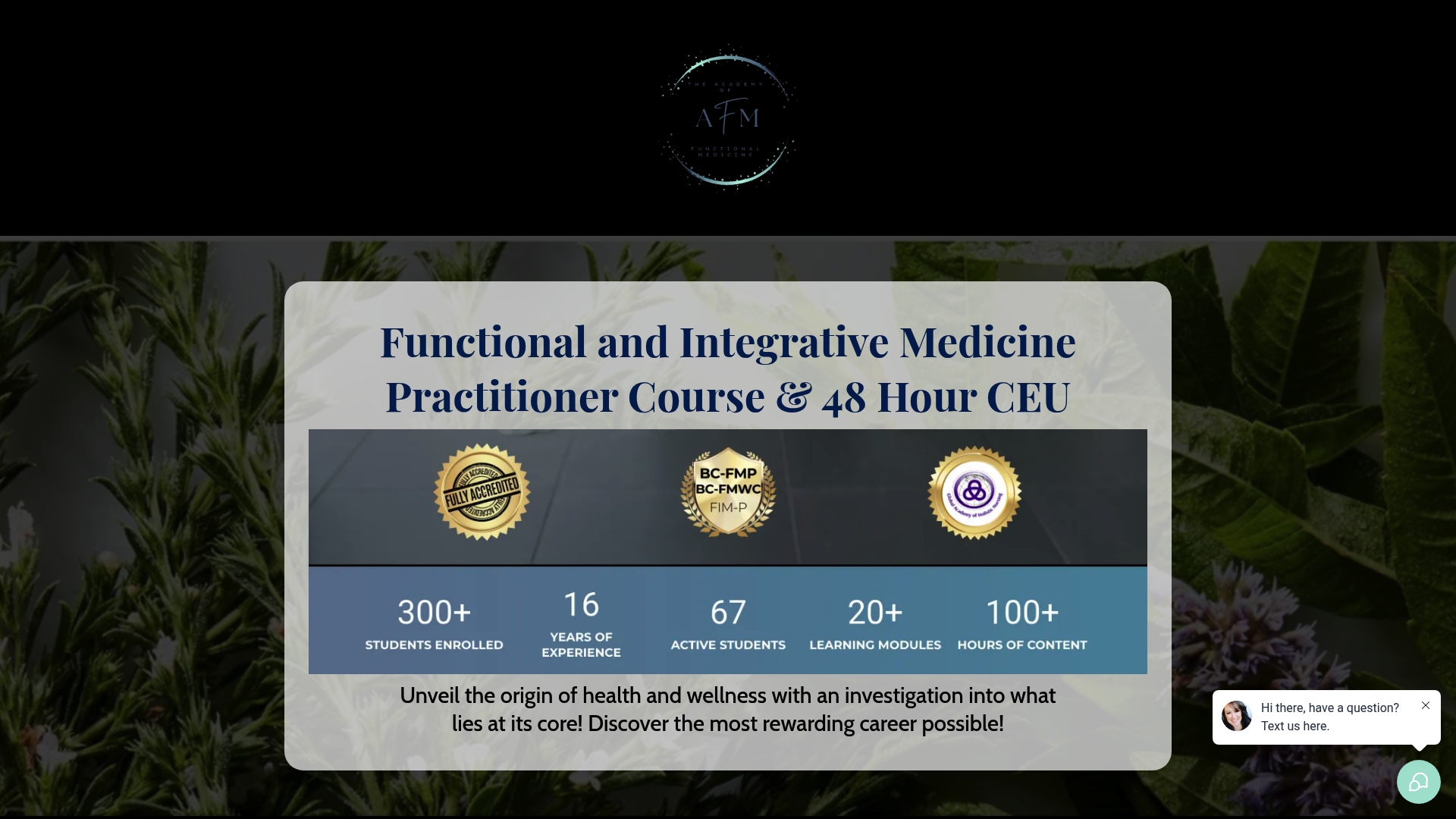
Formats stay flexible enough to fit around shift work or an existing practice, so you’re not choosing between finishing your training and keeping your caseload. If you’re ready to compare your options against real accreditation and clinical-hours standards, visit the Institute for Functional Nurses program page and request enrollment details today. See how the curriculum maps to the functional medicine matrix clinicians use daily, and how certified nurses report improved patient outcomes after completing the program.
Sources
- Master of Science in Clinical Nutrition | Nell Hodgson Woodruff School of Nursing
- NIH analysis reveals significant rise in use of complementary health approaches
This article is general information, not a substitute for advice from a qualified doctor. Consult a qualified healthcare professional about your own circumstances before acting on anything here.