
U.S. Nurses: What RNs Can Do Versus APRNs in Functional Medicine
U.S. Nurses: What RNs Can Do Versus APRNs in Functional Medicine
Yes, nurses can practice functional medicine principles through a scope-appropriate approach called functional nursing. RNs apply it through assessment, education, and coaching; APRNs can go further, ordering tests and prescribing where state law allows. Every nurse still answers to the same authority: their state board of nursing.
TL;DR:
- Nurses can practice functional nursing by assessing lifestyle, stress, and symptoms to identify systemic imbalances within their legal scope.
- RNs can educate and coach patients but cannot order or interpret labs or prescribe, while APRNs have broader authority depending on state laws.
- Certification enhances clinical skills and documentation but does not expand legal scope, making accredited coursework essential for safe practice.
- RN documentation should focus on patterns and use NANDA-I language; all supplement and lab discussions must be appropriately referred to prescribers.
- Effective integration involves team collaboration with RNs handling assessment and coaching, and APRNs managing diagnosis and treatment decisions.
Table of Contents
- Can Nurses Practice Functional Medicine? What Functional Nursing Really Means
- RN vs. APRN: What Each License Actually Allows
- Certifications and Training Worth Considering
- Where the Legal Line Sits: Labs, Supplements, and Documentation
- Building Functional Nursing Into Your Practice, Step by Step
- Knowing When to Refer: Red Flags and Collaboration
- Why Accredited, Board-Aligned Training Matters
- Federal Regulatory Realities Nurses Should Understand
- Ethics and Professional Guidelines to Keep in View
- What Nurse-Led Functional Care Looks Like in Practice
- How Nurses and Other Providers Work Together
- Does This Approach Improve Patient Outcomes?
- What Nursing Already Gets Right About Root-Cause Care
- Get Trained to Practice Functional Nursing With Confidence
- Sources
- FAQ
Can Nurses Practice Functional Medicine? What Functional Nursing Really Means
Functional nursing takes the root-cause thinking behind functional medicine and channels it through activities nursing licenses already permit. It is not a rebrand of medical diagnosis, and it is not a workaround for prescriptive authority you do not hold. A narrative review on functional medicine in nursing describes it as a patient-centered approach built on identifying underlying patterns rather than just managing symptoms, and nurses are well positioned to apply those principles inside their existing scope.
Where a physician trained in functional medicine might order a comprehensive metabolic panel to hunt for a root cause, a nurse practicing functional nursing does something adjacent but distinct:
- Assesses lifestyle, stress, sleep, and nutrition patterns during intake
- Identifies clusters of symptoms that suggest a systems-level imbalance
- Educates patients on how those systems connect
- Coaches behavior change using motivational interviewing
The safe frame for all of this is the nursing process itself, paired with NANDA-I language. Instead of writing “adrenal fatigue” in a chart, a nurse documents a pattern like “activity intolerance related to disrupted sleep, as evidenced by fatigue reports,” which is language NANDA International already recognizes as standard nursing diagnosis terminology.
RN vs. APRN: What Each License Actually Allows
The gap between an RN and an APRN is the single most important distinction in this entire conversation, and it is where most confusion starts. Here is how the authority splits in practice:
- RNs can assess, educate, and coach. You can recognize patterns, ask deeper intake questions, and teach patients how nutrition, sleep, and stress interact. You can reference existing lab results to educate a patient on what a marker might suggest lifestyle-wise, but you are not the one ordering or diagnosing from that data.
- APRNs and NPs can diagnose, order and interpret labs, and prescribe. This authority is real but never universal. It runs through your state’s practice act, and in some states, it still requires a collaborative agreement with a physician.
- Every nurse verifies locally before acting. Scope of practice is set nationally in broad strokes by bodies like the American Nurses Association, but the enforceable rules live with your state board of nursing.
The Bureau of Labor Statistics describes diagnostic and prescriptive authority as typical roles for NPs, though exact scope varies by state. Nurses must check local regulations before implementing such practices.
Certifications and Training Worth Considering
A certification does not expand what your license permits. It builds the clinical competence to use your existing authority well, and it signals that competence to employers, collaborating physicians, and patients.
Programs worth evaluating generally fall into a few categories:
- Practitioner-level functional medicine courses, often built around the Institute for Functional Medicine (IFM) model of systems-based assessment
- Integrative or functional nursing certificates that translate those concepts specifically into nursing language and workflows
- ANCC-aligned continuing education units (CEUs) that satisfy relicensure requirements while building applied skill
Before enrolling, check three things: whether the course carries CE approval you can actually use toward relicensure, whether it includes clinical application rather than theory alone, and whether faculty hold credentials relevant to nursing practice specifically, not just functional medicine broadly. A syllabus that shows case-based modules and documentation practice is a stronger signal than a syllabus built entirely around lecture hours.
Where the Legal Line Sits: Labs, Supplements, and Documentation
Boundary confusion is where good nurses get into trouble, usually with good intentions. Ordering and interpreting diagnostic labs for the purpose of forming a diagnosis is APRN territory, not RN territory. If you are an RN and a patient’s labs already exist from another provider, you can absolutely use them to educate, just not to diagnose.
Supplement conversations follow the same logic. Educating a patient on the general role of magnesium in sleep regulation is different from directing a specific therapeutic dose to treat a diagnosed deficiency. The second one belongs with a prescriber.
Practical boundary rules that hold up:
- Frame findings as patterns, not diagnoses, using NANDA-I language
- Route any supplement recommendation that resembles treatment through a collaborating prescriber
- Document referrals and collaborative decisions explicitly, not just informally in a note
- Get informed consent documented whenever you introduce a functional assessment tool that is not standard of care
Pro Tip: Chart the mechanism, not the verdict. Instead of “low B12 causing fatigue,” write “pattern of fatigue consistent with reported nutritional gaps; referred to NP for lab review and possible supplementation.” That protects your scope and your patient.
Building Functional Nursing Into Your Practice, Step by Step
Turning this from a concept into a workflow takes a handful of concrete moves:
- Rebuild your intake form to capture sleep, stress load, diet patterns, and symptom clusters, not just chief complaint and history.
- Add short lifestyle modules to routine visits, targeting the one or two patterns that showed up strongest on intake.
- Write goal-based care plans instead of purely symptom-based ones, with measurable behavior targets tied to follow-up.
- Practice motivational interviewing deliberately; it is the actual mechanical skill behind sustained behavior change, more than any supplement list.
- Set up a referral network in advance, so when a finding needs a prescriber, you already know who to call.
If you are building toward a private coaching or wellness practice on top of clinical work, a health coach scope of practice guide is worth reading before you set pricing or intake structure, since coaching and clinical scope carry different rules.
Knowing When to Refer: Red Flags and Collaboration
Functional nursing works best when you know exactly where your lane ends. Certain findings should trigger an immediate handoff rather than a coaching conversation:
- Unexplained rapid weight change, chest pain, or neurological symptoms
- Lab values (when available) suggesting acute organ dysfunction
- Signs of disordered eating masked as “clean eating” enthusiasm
- Medication interactions with supplements a patient is already taking
Set up collaborative agreements in writing before you need them, not after. A simple referral template helps: state the pattern observed, the education already given, and a specific question for the prescriber (“Patient reports chronic fatigue with disrupted sleep over eight weeks; requesting lab review to rule out thyroid involvement”). Clear, pattern-focused language gets a faster, better response than a vague forward.
Why Accredited, Board-Aligned Training Matters
Board-aligned CEUs are not paperwork. They give you a documented competency trail, standardized clinical tools, and CE hours that satisfy relicensure, all at once. Accredited coursework structured around the nursing process and NANDA language makes the transition from “interested in functional medicine” to “practicing it safely” much shorter. Look for programs that map explicitly to clinical documentation, not just conceptual education. That mapping is what turns a certificate into a usable clinical skill.
Federal Regulatory Realities Nurses Should Understand
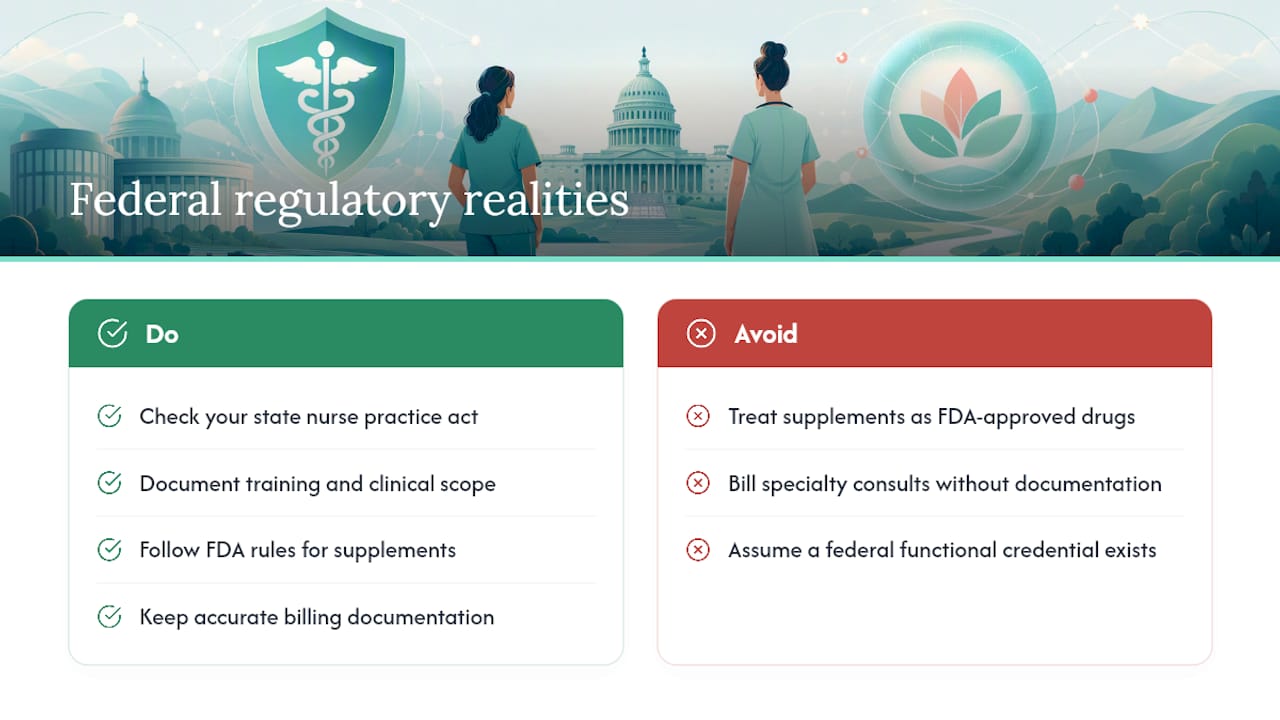
Functional medicine itself carries no federal licensing framework. There is no federal “functional medicine practitioner” credential that grants prescriptive authority or diagnostic rights. That authority flows entirely through state nurse practice acts, which means federal law is mostly silent on functional nursing specifically, but very much present on adjacent issues.
Two federal areas matter more than people expect. First, supplement recommendations sit inside FDA regulation of dietary supplements, which are not reviewed for efficacy the way prescription drugs are. Recommending a specific brand or dose as though it carries the same evidentiary weight as a prescribed medication creates real liability exposure, especially if a patient experiences an adverse reaction. Second, any functional assessment tool, questionnaire, or “root cause” test you use in a clinical setting still falls under general healthcare documentation and billing rules if you bill insurance for the visit. Billing a routine visit as a specialized functional medicine consult without matching documentation is a compliance problem, not just a scope problem.
The safest read: federal law does not carve out functional nursing as its own regulated category, so the practical guardrails come from state licensure, FDA supplement rules, and standard billing compliance rather than a dedicated federal statute. That gap is exactly why relying on your state board and documented training matters more here than in more heavily federally regulated specialties.
Ethics and Professional Guidelines to Keep in View
The ethical tension in functional nursing is subtle. Root-cause thinking is genuinely valuable, but it can tempt practitioners toward overpromising, especially with patients who arrive frustrated after being told “your labs are normal” one too many times.
A few guidelines keep that temptation in check. Informed consent should explicitly cover when you are offering a functional assessment that goes beyond standard of care, so patients understand what they are opting into. Claims of benefit should stay tied to what the evidence actually supports; the growing but still developing research base on lifestyle-focused interventions justifies cautious optimism, not guarantees of a cure. Nurses should also be transparent about scope with patients directly. If a patient wants supplement dosing you cannot legally provide, saying so plainly, and referring promptly, is both an ethical obligation and a liability safeguard.
The ANA’s practice standards remain the backbone here: honesty, patient autonomy, and staying within demonstrated competence apply just as much to functional nursing as to any other specialty area.
What Nurse-Led Functional Care Looks Like in Practice
The clearest examples of successful functional nursing tend to share a pattern: a nurse spots a cluster of symptoms that a fifteen-minute visit would have missed, and slows down long enough to connect the dots.
Consider a patient presenting repeatedly with fatigue, brain fog, and mild digestive complaints, each addressed separately across three visits with three different symptom-specific plans. A nurse applying a functional lens instead maps those complaints together during intake, documents a pattern consistent with disrupted sleep and dietary gaps, educates the patient on the sleep-metabolism connection, and refers to an APRN for targeted lab review. The outcome is not a dramatic cure story. It is a faster, more coordinated path to an actual explanation, instead of three more prescriptions aimed at three separate symptoms.
That coordination is the real value nurses add. RNs already spend more unhurried time with patients than most other clinical roles, which makes them naturally suited to catching cross-system patterns that a rushed visit would fragment into unrelated complaints.
How Nurses and Other Providers Work Together
Functional nursing works best as a team model, not a solo act. The most sustainable structure pairs an RN or health coach handling assessment, education, and behavior coaching, with an APRN or physician handling diagnosis, testing, and prescribing.
A workable collaboration model looks like this: the RN conducts the extended intake and pattern-based assessment, documents findings using nursing diagnosis language, and prepares a concise summary for the collaborating prescriber. The prescriber reviews that summary, orders any needed labs, and makes prescribing decisions. The RN then handles follow-up coaching once a plan is in place, closing the loop on adherence and behavior change over time.
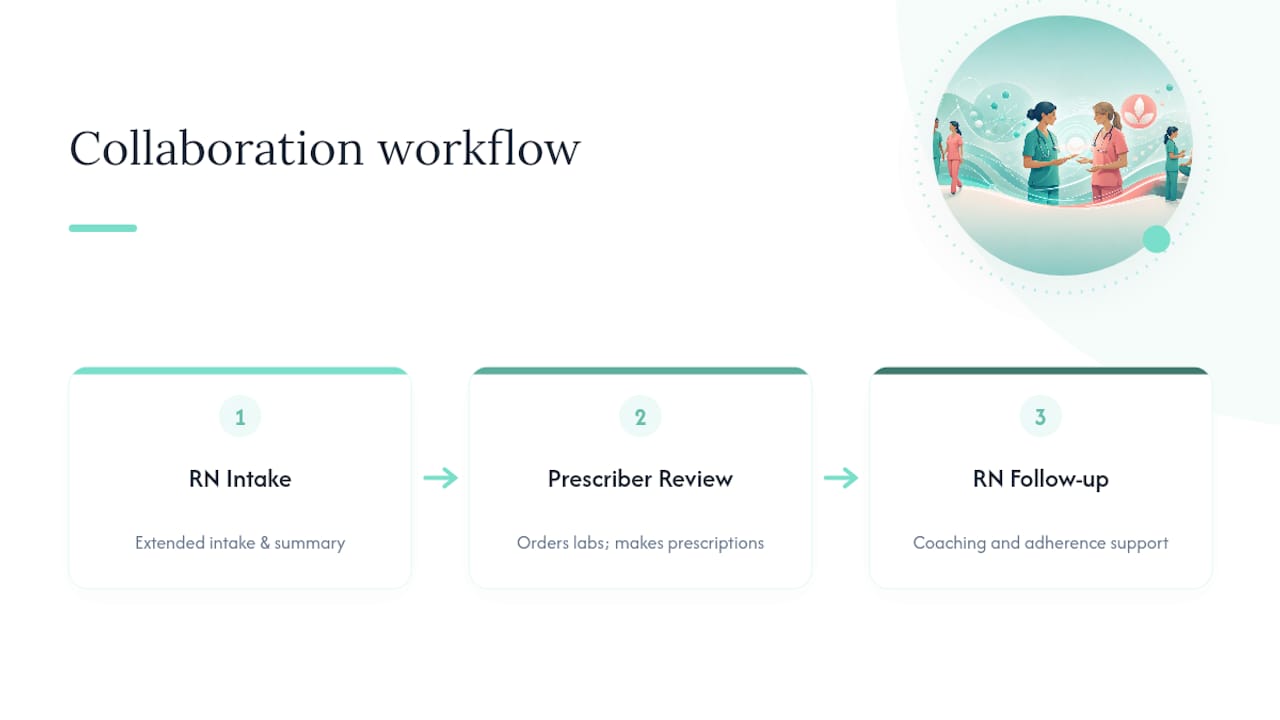
This division plays to each role’s strength. Prescribers get pre-filtered, pattern-organized information instead of raw complaints, which speeds up their decision-making. Nurses get to spend their time on the coaching and education work that actually drives outcomes, without stepping outside licensed authority. The Inursecoach frames this kind of division as the safest and most sustainable way to integrate functional approaches into an existing practice.
Does This Approach Improve Patient Outcomes?
The honest answer is that functional nursing’s biggest measurable impact so far shows up in patient engagement and satisfaction, more clearly than in hard clinical endpoints. Patients frequently report feeling heard in a way that shorter, symptom-focused visits do not allow, largely because the intake process itself surfaces connections no one had asked about before.
That satisfaction effect matters clinically, not just as a nice-to-have. Patients who feel understood tend to follow through on behavior-change recommendations at higher rates, which is where most of the actual health improvement in lifestyle-driven conditions comes from. The PubMed review on functional medicine in nursing notes this collaborative, personalized approach as a core strength of the model, even as it stops short of claiming it as a cure-all.
The honest caveat: evidence specific to nurse-led functional interventions is still developing, and outcomes vary by condition, patient adherence, and how well the nurse stays within scope of practice. Nurses should describe expected benefits in terms the current evidence actually supports, not in terms of guaranteed resolution.
What Nursing Already Gets Right About Root-Cause Care
Nurses spend more unhurried time with patients than almost any other role in healthcare, and that time is the real asset functional medicine needs to work. You already think in systems, you already build the kind of longitudinal relationships that surface patterns a fifteen-minute physician visit misses, and you already know how to educate rather than just prescribe. The opportunity here is not becoming something other than a nurse. It is leading team-based, root-cause care exactly as a nurse, with the training to back it and the discipline to stay inside your scope.
— Lauren
Get Trained to Practice Functional Nursing With Confidence
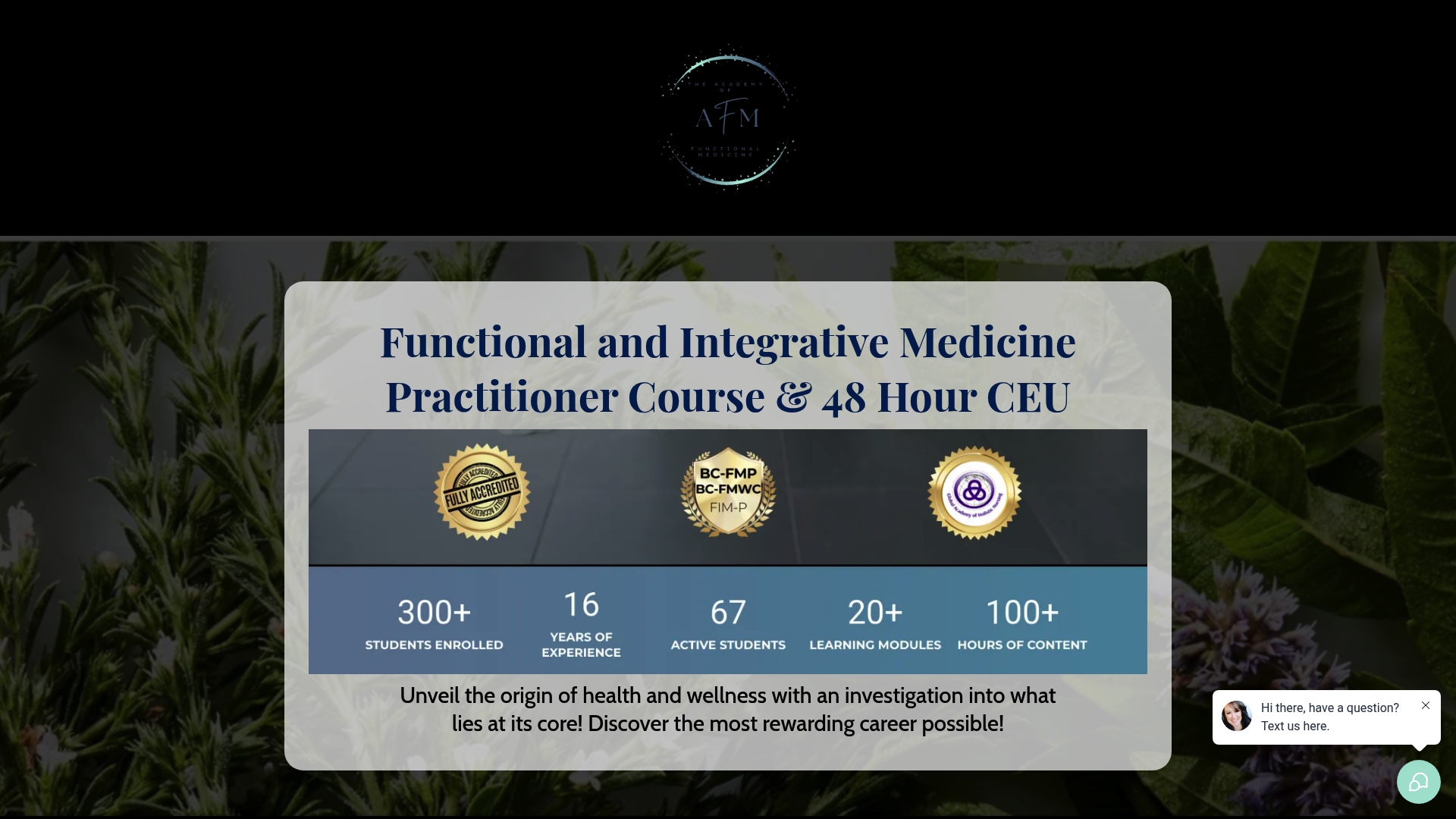
There are accredited paths to practicing functional nursing with real clinical competence behind it, not just enthusiasm for the concept. The Functional and Integrative Medicine Practitioner Course & 48 Hour CEU is built specifically for nurses and healthcare practitioners, mapping functional medicine concepts directly onto clinical application and nursing-aligned documentation, so what you learn translates immediately into practice.
If you want to see how the material feels before committing, the Free 4-DAY Functional Medicine Course for Nurses & Practitioners gives you a no-cost preview of the teaching style and content depth. For nurses building a private practice on top of clinical training, the Weekly Live Business Coaching & Marketing program adds the practice-building side most clinical courses skip entirely, and pairs well with a guide to attracting wellness clients who stay. Visit the Functionalacademy course landing page to review the current curriculum and enroll.
This article is general information, not a substitute for advice from a qualified doctor. Consult a qualified healthcare professional about your own circumstances before acting on anything here.
Sources
- Functional Medicine in Nursing - PubMed
- American Nurses Association — scope of practice
- NANDA International
- Bureau of Labor Statistics — Nurse Anesthetists, Nurse Midwives, and Nurse Practitioners
FAQ
Can an RN Be Certified in Functional Medicine?
Yes, RNs can complete functional medicine and integrative nursing certifications, including practitioner-level courses and ANCC-aligned CEUs. Certification builds clinical competence and documentation skill, but it does not expand your legal scope beyond what your RN license already permits.
How Do RN and APRN Scope Actually Differ in Functional Practice?
RNs assess, educate, and coach patients on lifestyle patterns but cannot diagnose or independently order labs. APRNs and NPs can diagnose, order and interpret tests, and prescribe, subject to their state’s practice act and any required collaborative agreements.
Which States Do Not Allow Nurse Practitioners to Practice Independently?
Independent practice authority for NPs varies significantly by state, with some requiring physician collaboration agreements and others granting full practice authority. Check your specific state board of nursing, since these rules change periodically and directly affect what you can order or prescribe in a functional care model.
What Is the Downside of Functional Medicine?
The main downsides are inconsistent regulation, evidence that is still developing for many interventions, and the risk of overpromising results to patients seeking answers conventional care has not given them. Nurses can offset these risks by grounding recommendations in documented training and referring appropriately when findings exceed their scope.
What Does Functionalacademy’s Practitioner Course Cost?
Current pricing for the Functional and Integrative Medicine Practitioner Course & 48 Hour CEU is available directly on the Functionalacademy site. The free 4-day course offers a no-cost way to preview the curriculum before enrolling in the full program.